多彩な 英語 講師陣から検索…
ポッドキャスト
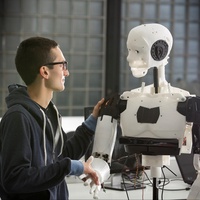
If you think of the jobs robots could never do, you would probably put doctors and teachers at the top of the list. It's easy to imagine robot cleaners and factory workers, but some jobs need human connection and creativity. But are we underestimating what robots can do? In some cases, they already perform better than doctors at diagnosing illness. Also, some patients might feel more comfortable sharing personal information with a machine than a person. Could there be a place for robots in education after all? British education expert Anthony Seldon thinks so. And he even has a date for the robot takeover of the classroom: 2027. He predicts robots will do the main job of transferring information and teachers will be like assistants. Intelligent robots will read students' faces, movements and maybe even brain signals. Then they will adapt the information to each student. It's not a popular opinion and it's unlikely robots will ever have empathy and the ability to really connect with humans like another human can. One thing is certain, though. A robot teacher is better than no teacher at all. In some parts of the world, there aren't enough teachers and 9–16 per cent of children under the age of 14 don't go to school. That problem could be partly solved by robots because they can teach anywhere and won't get stressed, or tired, or move somewhere for an easier, higher-paid job. Teachers all over the world are leaving because it is a difficult job and they feel overworked. Perhaps the question is not 'Will robots replace teachers?' but 'How can robots help teachers?' Office workers can use software to do things like organise and answer emails, arrange meetings and update calendars. Teachers waste a lot of time doing non-teaching work, including more than 11 hours a week marking homework. If robots could cut the time teachers spend marking homework and writing reports, teachers would have more time and energy for the parts of the job humans do best.
Will robots replace teachers? Improve your listening
2022年5月8日
0
2
Hey guys! Today we have some informal words expressions about food. If you like the content you can subscribe to the podcast on the iTalki app, so you don't miss any episodes! Comment any questions below! Here are the words and examples from today: delicious, tasty, so good, nice nasty, gross Have you ever tried Brussel sprouts? Yeah, I think they’re nasty. Most Canadians love poutine, which is a Canadian food, but I think it’s gross, I won’t eat it. an acquired taste. Have you ever tried escargot? Oh, it’s not so bad, I know it might seem strange to eat snails, and it’s a bit of an acquired taste, but once you give it a try, you’ll start to like it. When I first tried very strong mustard, I didn’t like it, but now I put it on everything. It’s an acquired taste, I guess. hot and hot Oh, the food is so hot! Do you mean, like, spicy hot, or like, temperature hot? (Very, very casual) Do you mean that the food is spicy, or that it’s hot in terms of temperature? (formal) to pig out This evening I made myself a huge bowl of pasta and I pigged out. I love going to buffets, but I always pig out and feel awful after. to stuff oneself, to feel stuffed I feel stuffed, I’m so full. When I was a kid, my siblings and I would just stuff ourselves with candy on Halloween. I love to eat popcorn at the movie theatre, but I always feel so stuffed after. Ryan, Meaghan and I went out to dinner last night. The food was so good—it was this Japanese restaurant on Church street. I had this fried chicken that I thought was just amazing, but Meaghan thought it was nasty, I guess she doesn’t like fried food. Ryan didn’t know what wasabi was, so I made him eat a spoonful of it—it was so hot that he turned red and started coughing. Meaghan and I laughed. The three of us just pigged out, I could barely walk home after I was so stuffed.

このコンテンツは削除されました。
2022年5月7日
2
5
さらに表示

ご自宅で快適に語学を学べるチャンスをお見逃しなく。経験豊富な語学講師陣の中からお選びいただき、今すぐ最初のレッスンにお申し込みください!