다양한 영어 선생님을 검색해 보세요...
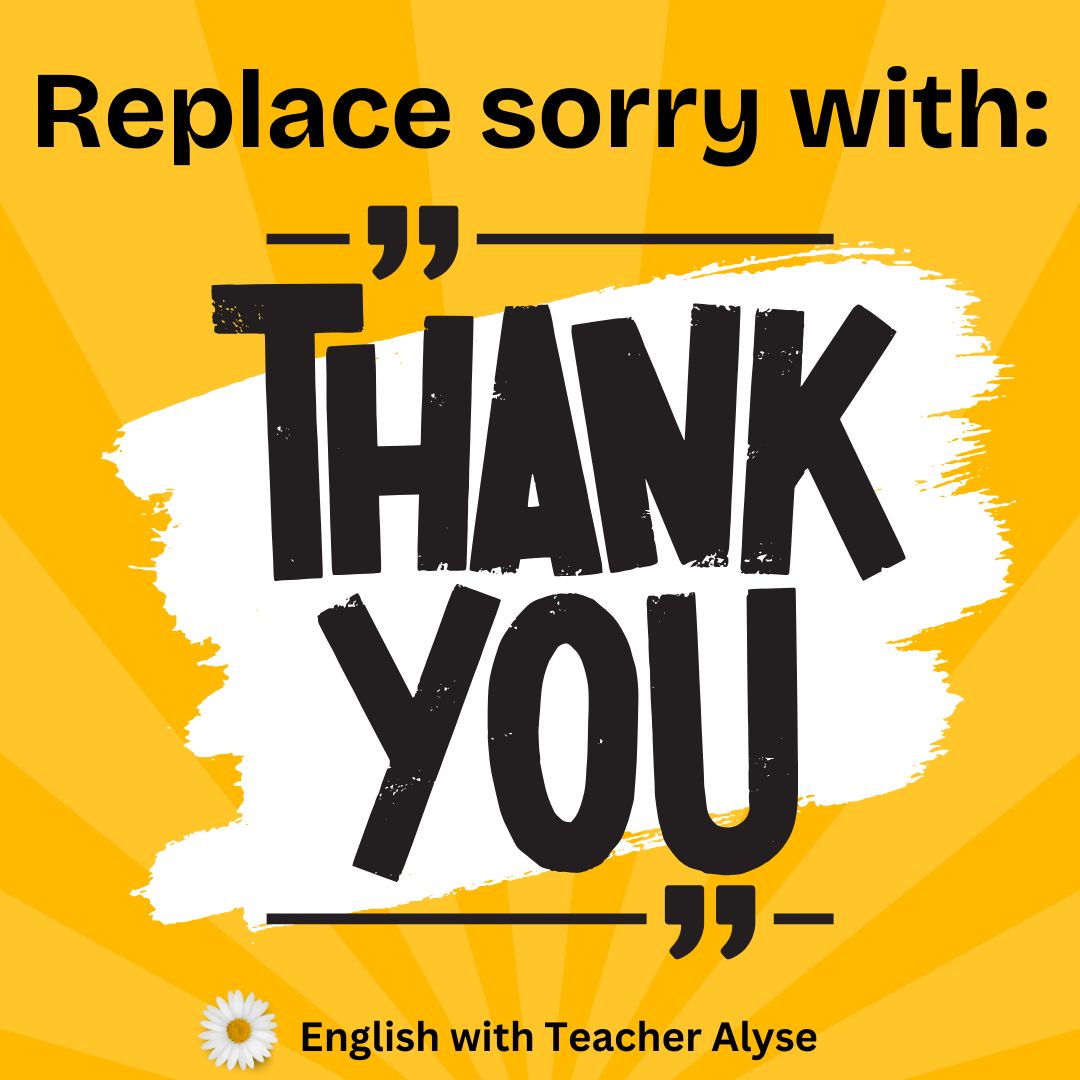
Replace "Sorry" with "Thank You"
 03:48
03:48 03:48
03:48설명
Hi, and welcome back to Everyday English with Teacher Alyse! I’m so happy you’re here. Today, we’re going to talk about a small but powerful change you can make in your daily conversations—replacing the word sorry with thank you.
Many English learners, and even native speakers, use "sorry" too often. While saying sorry is important when you truly make a mistake, overusing it can make you seem less confident and even unnecessary in some situations. Instead, shifting to thank you can make your communication more positive and empowering.
Let’s go through some common situations where you might be tempted to say "sorry" and how to rephrase them in a more confident and appreciative way.
Instead of saying: “I’m sorry I’m late.”
➝ Say: “Thank you for waiting for me.”
→ Why? This shift acknowledges the other person’s patience rather than focusing on your mistake. It creates a more positive tone.
.............................................................................................................................................................................
Why Is It Important to Limit "Sorry"?
Using "sorry" too often can make you seem less confident and even weaken your message. It can also make an issue seem bigger than it actually is. Of course, when you truly make a mistake, a sincere apology is important. But by replacing unnecessary "sorrys" with "thank yous," you turn negative situations into positive interactions.
Full transcript available upon request.
Follow me for more Everyday English.
팟캐스트 채널
Everyday English with Teacher Alyse
작성자
모든 에피소드

马太福音 mǎ tài fú yīn
00:15
L1
00:17
3 Native Phrases That Make You Sound Like a Pro
02:39
제주도는 아름다운 섬이에요
03:22
weather
00:22
【フリーランス】または【会社員】という働き方のメリットとデメリット Advantages and disadvantages of working as a freelancer or company employee.
14:56
Nerede
03:27
“My Success Story” Confidence Building Exercise. Episode 401.
08:37인기 팟캐스트
Read the Bible in Chinese
马太福音 mǎ tài fú yīn
00:15Modern Chinese(時代華語)Book1- Reading(短文)
L1
00:17The Everyday English Podcast
3 Native Phrases That Make You Sound Like a Pro
02:39한국의 문화
제주도는 아름다운 섬이에요
03:22A1 Arabic
weather
00:22[Intermediate-Upper level] Interesting Japanese Not Taught In Schools About Japanese business culture, Japanese habits & Osaka
【フリーランス】または【会社員】という働き方のメリットとデメリット Advantages and disadvantages of working as a freelancer or company employee.
14:56İngilizçe - selamlar
Nerede
03:27Job Interview Preparation | Build Strong Communication Under Pressure
“My Success Story” Confidence Building Exercise. Episode 401.
08:37