
There are four names for the Portuguese spoken in Portugal: European Portuguese, Portuguese from Portugal, Lusitanian Portuguese, or Continental Portuguese. All these names refer to the Portuguese spoken in Portugal and, of course, by Portuguese emigrants around the world.
It is taught a couple of countries as for all the other Portuguese-speaking countries, in the absence of their standardised norms, the other Lusophone countries (except Brazil) follow the conventions of the Portuguese norm of Portugal, so there are around 65 million inhabitants (according to the latest censuses) in regions that adopt Portuguese from Portugal.
Anyone who thought that because Portugal is small, everyone speaks the same language is mistaken! Portugal has several dialects in Portugal (about 10) and sub-dialects.
According to some authors, the norm of Portuguese is made up of all the linguistic uses of the educated classes of the Lisbon-Coimbra region. Other authors consider standard (original) Portuguese to be the central-meridional variety used in Lisbon by educated speakers.
Today I'm just going to focus on the most talked dialects or best known:
Lisbon
The Lisbon dialect belongs to the European Portuguese group and has some phonetic, lexical, and syntactic characteristics that distinguish it from other Portuguese dialects.
Closure of unstressed mid vowels:
Unstressed [e] and [o] vowels (in unstressed syllables) tend to close:
‘cidade’ → [siˈdadɨ]
‘Português’ → [puɾtuˈɣeʃ]
Vowel reduction:
Vowels in final position or in an unstressed syllable tend to be reduced or even elided:
‘rapaz’ → [ʁɐˈpaʃ]
‘muito’ → [ˈmũjtʊ] → almost like [mũit]
Palatalisation of ‘s’ and ‘z’ at the end of the syllable:
The ‘s’ and ‘z’ at the end of the syllable are pronounced like [ʃ] and [ʒ]:
‘mesmo’ → [ˈmeʒmu]
‘os cães’ → [uʃ ˈkɐ̃jʃ]
Apocope (dropping of vowels at the end of words):
Some words lose final syllables or sounds:
‘está’ → [ʃta]
‘para’ → [pɾɐ]
🧠 Grammatical / Syntactic features
Use of the gerund is less common:
Constructions with ‘a + infinitive’ are preferred over the gerund:
‘Está a chover’ instead of “Está chovendo” (Brazilian form).
More frequent use of the pronoun ‘você’ in informal registers (in modern Lisbon):
Traditionally, ‘tu’ was more common, but ‘você’ has been gaining ground, especially in urban Lisbon.

Porto
The dialect of Porto, also known as northern Portuguese or the dialect of Porto, is one of the most marked variants of European Portuguese. It differs greatly from the Lisbon dialect, both in pronunciation and in some grammatical structures and vocabulary.
Less vowel reduction compared to Lisbon
Unstressed vowels (in unstressed syllables) are more open and less reduced:
‘cidade’ → [siˈdadɛ] or [siˈdade]
In Lisbon: [siˈdadɨ]
Less palatalisation of ‘s’ and ‘z’ at the end of syllables
In Lisbon, ‘s’ at the end of a syllable sounds like [ʃ]; in Porto, it sounds more like [s]:
‘os carros’ → [uʃ ˈkaʁuʃ] (Lisbon)
‘os carros’ → [us ˈkaʁus] (Porto
More conservative pronunciation of the final and initial ‘r’
In Lisbon, the ‘r’ can be softened or elided; in Porto, it is stronger:
‘comer’ → [kuˈmeɾ]
‘rápido’ → with a very vibrant “r” at the beginning
More ‘hard’ or ‘closed’ sounds
Speech from Porto is often perceived as more ‘sharp’ or ‘dry’ compared to Lisbon, which is more fluid.
Less use of the gerund, as in the rest of Portugal
Strong identity and regional pride
Porto's speech is distinctive and proudly local. Many people from Porto keep their accent even though they live in other regions, as a symbol of their identity.
It is often associated with an image of candour, courage and authenticity.
Alentejo
The Alentejo dialect is a regional variety of Portuguese spoken predominantly in the Alentejo region of Portugal. It has phonetic, morphological, syntactic and lexical characteristics that distinguish it from standard Portuguese.
Phonetics and Pronunciation
- Closing final unstressed vowels: Eg, "cabra" → cabre, "rapariga" → raparigue.
- Apocope (deletion of vowels at the end of words): "menino" → menin, "mulher" → mulhé.
- Monophthongisation: Diphthongs like ou and ei can be simplified: “muito” → móito or muito, with a more open accent.
Syntax
Frequent use of the gerund: Andava cantando pela rua - although the gerund is more typical of Brazilian Portuguese, in certain areas of the Alentejo it also appears frequently.
Reduction of personal pronouns: replacement or omission of pronouns, as in foi-se embora (without an explicit subject).
Algarve
The Algarve dialect is a regional variant of European Portuguese spoken in the south of Portugal, in the Algarve region. This dialect has very specific features, especially in pronunciation (phonetics), but also in terms of lexicon and intonation. It is strongly influenced by its history of contact with other cultures (Arabic, Andalusian) and by the relative isolation of the south until recent times.
Monophthongisation and elision of diphthongs and consonants
Diphthongs such as -ei, -ou are often monophthongised (reduced to a single vowel):
‘sei’ → [sɛ]
‘foi’ → [fɔ]
‘beijo’ → [bɛʒɔ]
Reduction or elimination of final consonants
Especially r and s:
‘comer’ → [kumé]
‘três’ → [tré]
Pronúncia fricativa do "s" e "z" finais como [ʃ] e [ʒ]
- Tal como em Lisboa, mas com entoação diferente:
- "os cães" → [uʃ kɐ̃jʃ]
Final and intervocalic ‘L’ can be vocalised or elided
‘mal’ → [mau]
‘calor’ → [kaˈloʊ] or [kaˈlo]
Sung intonation and slow cadence
The melody of the Algarvian is very marked, with a paused rhythm and a ‘dragged’ cadence, often considered ‘melodic’ by those from other regions.
There are also differences in vocabulary and regional expressions. The Algarve has always been a region of contact with the sea, with many fishermen, emigrants and, today, international tourism, which brings some diversity to the way people speak.
Despite this, traces of the traditional dialect still persist in rural areas and among older people.
Açores
The Azorean dialect, or rather the Azorean dialects (as there is variation between islands), belong to the group of insular European Portuguese and have very specific characteristics in terms of phonetics, syntax, morphology and vocabulary, often influenced by the geographical isolation of the islands.
The main general characteristics of the Azorean dialect highlight elements common to the various islands, especially São Miguel, Terceira, and Faial.
Palatalisation of vowels and consonants
One of the most striking features:
‘menino’ → [miˈɲiɲu]
‘dinheiro’ → [diˈɲejɾu] or even [ɲejɾu]
‘gente’ → [ˈʒẽtʃi] or [ˈʒẽtʃɨ]
Closing of final unstressed vowels
Similar to the mainland, but with more emphasis:
‘vida’ → [ˈvidɨ]
‘casa’ → [ˈkazɨ]
Diphthongisation of stressed vowels
Some stressed vowels become diphthongs:
‘pé’ → [pjɛ]
‘mão’ → [mɐũ]
Guttural articulation of ‘r’ and ‘rr’
The intervocalic ‘r’ can be very strong (uvular or guttural), especially on islands like Terceira:
‘carro’ → [ˈkaχu] or [ˈkaʁu]
Reduction and elision of final consonants
E.g. ‘dizer’ → [diˈze], ‘do’ → [faˈze]
Grammatical / Syntactic characteristics
Archaic use of verb tenses and moods
Preservation of verb forms now in disuse on the continent:
‘Haja Deus!’ (subjunctive), ’Se eu viesse...’
Use of the pronoun ‘vós’ on some islands (rarer today)
Remnant of older forms:
‘vós ides à missa?’
Use of the definite article before proper names
Very common:
‘A Maria vai chegar.’
‘O João já foi’
Use of gerund and infinitive in variable form
The gerund can be used in hybrid constructions:
‘Tava fazendo isso’ (influence of Brazilian Portuguese via emigration)
Also has typical vocabulary and regional expressions
Madeira
Phonetics and pronunciation
Middle vowel diphthongisation: Words with closed stressed e or o can be diphthongised.
Eg: verde → vêirde, copo → cóupu
Closing final vowels:
Menina can sound like meníne, casa → cáse
Partial nasalisation of nasal vowels:
E.g.: mão → sounds something like mãu
Reduction of diphthongs:
E.g.: muito → mui' or mui-tu
Increased sonority in final consonants:
Words like hot can sound like quente with the final consonant more marked.
Lexicon (Vocabulary)
Use of words specific to the region, many with origins in:
Old Portuguese archaisms
Terms with African and South American influence (due to emigration and trade)
Vocabulary associated with rural and maritime life, with terms for plants, animals and utensils.
Syntax and Morphology
Frequent use of the gerund with auxiliary verbs:
Está chovendo instead of Está a chover (influence of Brazilian Portuguese in some areas)
More frequent use of the personal infinitive.
Intonation
Madeiran intonation is very distinctive: it is musical and rhythmic, with an ascending-descending melody in short phrases.
In some areas, the tone can sound sung, which makes it distinctive to the ears of mainland speakers.
Internal variation
There are variations within Madeira itself, such as between Funchal (closer to the standard) and rural areas or other islands in the archipelago (such as Porto Santo).
People in the north and more isolated areas preserve older, rural features of the dialect.
External influences
Emigration from Madeira (mainly to Venezuela, South Africa, the UK, the USA and Brazil) has brought lexical and even intonational influences, especially among the younger generations and in areas where emigrants have returned.
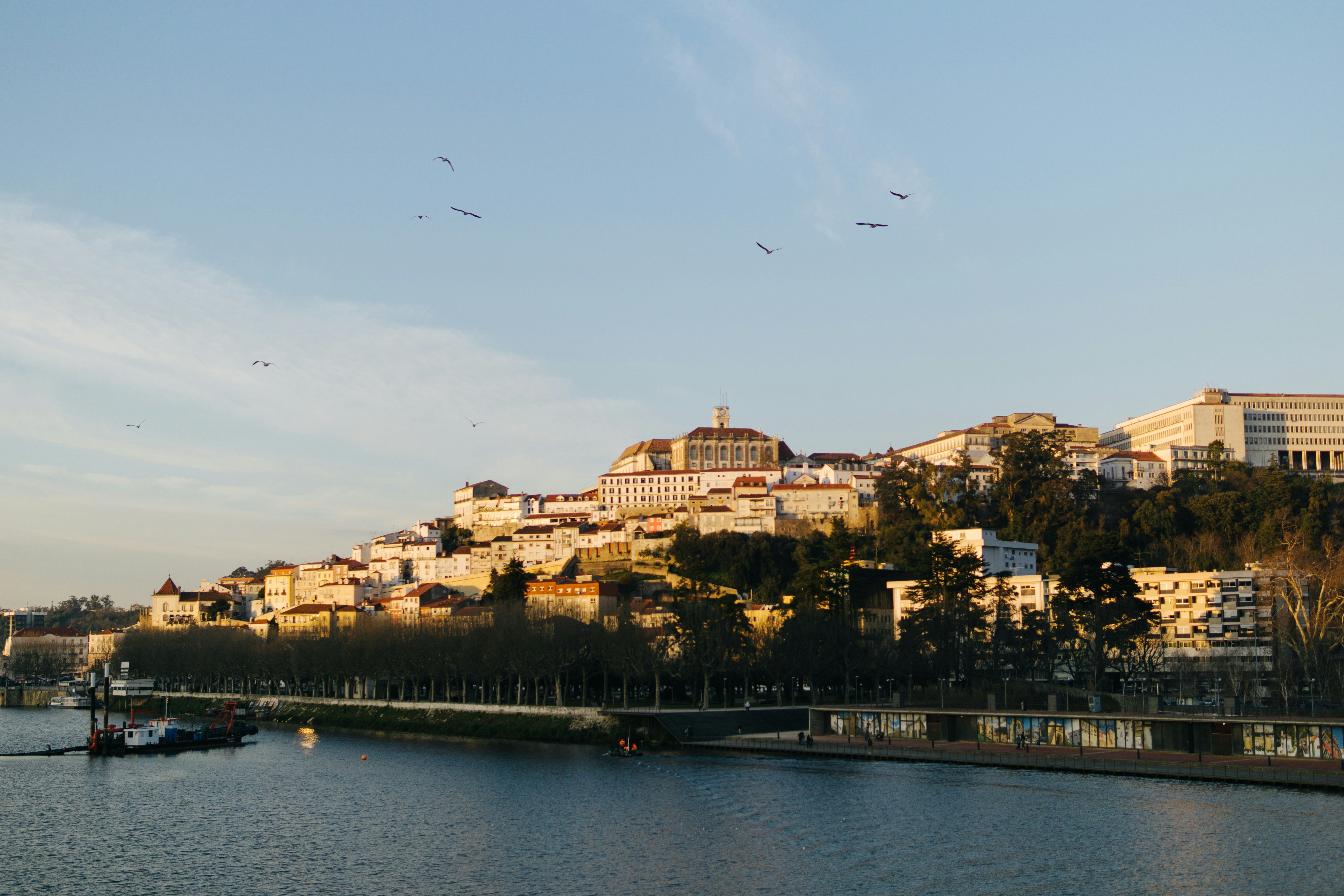
Coimbra
The Coimbra dialect is a regional variant of European Portuguese, geographically situated between the dialects of the north (such as Porto) and the south (such as Lisbon). It therefore has transitional features between these two large groups, but also has its own phonetic, lexical and cultural characteristics.
Although nowadays the influence of the standard norm and migration has reduced some regional features, we can still recognise distinctive traits in the Coimbra dialect, especially in more traditional or rural contexts.
Transition between north and south
The accent of Coimbra is less closed and nasalised than that of the north (e.g. Porto), but less open and reduced than that of Lisbon.
Less vowel reduction compared to Lisbon
Final unstressed vowels are slightly more open:
‘cidade’ → [siˈdadɨ] or [siˈdade], instead of [siˈdadɨ] as in Lisbon.
‘s’ and “z” at the end of syllables pronounced as [ʃ] and [ʒ], as in Lisbon:
‘os carros’ → [uʃ ˈkaʁuʃ]
‘mesmo’ → [ˈmeʒmu]
Softer rhotics (pronunciation of ‘r’)
Less guttural than in the north, but not as weakened as in Lisbon:
‘carro’ → [ˈkaʁu], with a softer alveolar “r”.
Use of the gerund is rare
As in the rest of Portugal, the structure ‘estar a + infinitive’ is used:
‘Estou a comer.’, not ’Estou comendo.’
Culture and Linguistic Identity
Coimbra is the birthplace of Portugal's first university and has a linguistic identity strongly marked by academic tradition.
Coimbra speech, especially in academic and bohemian circles (Coimbra fado, for example), reflects a mixture of formality, tradition and student culture.
It would be impossible to write a characterisation of all the dialects, so I've focused on the best-known ones. The grammar usually remains the same, but the way words are pronounced and the vocabulary can change from region to region.