多彩な 英語 講師陣から検索…
投稿
🌺 Want to experience Hawaii like a true local?
Each episode of our "Speak Hawaii" podcast is only about 2 minutes — but it's packed with real Hawaiian Pidgin, local culture, and fun travel tips! 🎙️
After you listen, challenge yourself with a quick quiz to see how much you caught! 🧠✨
And for a limited time, I'm offering instant lessons to go over the quiz with you, explain the Pidgin phrases, and show you how locals really talk! 🚀
(No need to schedule far in advance — just book and start learning!)
🎧 Step 1: Listen to the latest episode
🧩 Step 2: Take the quiz
🌈 Step 3: Jump into a live instant lesson with me and learn even more!
Spots are filling fast — book while you can! 🤙
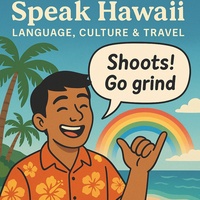
"What Hawaiian Pidgin Really Sounds Like (Listen for Yourself!)"
0
0
If you’re planning a trip to Hawaiʻi — or if you’ve recently moved here — speaking English is a great start. But did you know that locals in Hawaiʻi don’t always speak “standard” English?
Here in the islands, many people speak Hawaiian Pidgin (also known as Hawaiʻi Creole English), a unique and colorful way of speaking that blends English with influences from Hawaiian, Japanese, Filipino, Portuguese, and more. It’s not just “slang” — it’s a real language that locals use every day to express themselves and connect with each other.
✨ Imagine this:
Instead of just saying, “Hello,”
You say, “Howzit?”
Instead of “That food looks delicious,”
You say, “Brah, dat one broke da mout!”
It’s fun, friendly, and opens doors to real local experiences.
🌴 Why learn Pidgin?
Because when you “talk story” like a local, people open up. You’ll enjoy your trip more, avoid tourist traps, and maybe even make new friends along the way. Whether you're asking for directions, ordering food, or just hanging out at the beach, understanding how locals speak makes everything feel more welcoming and authentic.
🎉 SPECIAL OFFER: Limited-Time Discount on Pidgin Lessons!
To celebrate the season and support more travelers (and locals!) who want to learn, I’m offering a limited-time discount on my Hawaiian Pidgin & Culture lessons on Italki. Come learn how to speak like someone who grew up here, with real examples, fun quizzes, and insider travel tips.
💬 If you're ready to learn da real kine local style, now’s da time!
Book now and let’s talk story together!
🌺 Mahalo nui loa, and hope to see you in class soon! 🤙
2025年3月31日
0
1
🎧 Ever wonder how locals really talk in Hawaiʻi?
Listen to my latest podcast episode to hear what Hawaiian Pidgin actually sounds like — real phrases, real rhythm, and the real vibe of the islands.
Why listen?
Because Hawaiian Pidgin isn’t just “slang” — it’s a living language with deep cultural roots, spoken every day by locals. If you want to connect with Hawaiʻi in a real way, this is where you start.
I’m the only Hawaiian Pidgin teacher on Italki, and I also offer custom travel tips based on what you want to learn — whether it’s food, culture, language, or off-the-beaten-path experiences.
🎙️ Click the episode, hear the difference, and visit my profile if you’re ready to speak (and travel) Hawaiʻi-style. 🤙
"What Hawaiian Pidgin Really Sounds Like (Listen for Yourself!)"
2025年3月30日
0
2
Did you know people in Hawaiʻi speak their own unique kind of English?
It’s called Hawaiian Pidgin, and it’s a blend of English, Hawaiian, and other languages spoken by locals in everyday life. It’s casual, colorful, and full of cultural meaning. I can teach you how we really talk in Hawaiʻi—from phrases you’ll hear at the beach to what people say in local shops and with family.
We can also talk about trip planning based on what we learn! Whether you're traveling soon or just love learning about Hawaiʻi, I’ll help you understand the culture behind the words.
---
🌺 Aloha Insider Newsletter – March 2025 Edition
Discover Hawaiian culture, events, travel tips, and local flavors in this month's Aloha Insider!
🌿 Hawaiian Word of the Day: Kapu
Kapu (adj./n.) – Forbidden, sacred, or restricted.
The word kapu originates from ancient Hawaiian customs, referring to spiritual, social, and environmental restrictions. Today, it’s still used on signs around Hawaiʻi to mean “No Trespassing” or to mark sacred areas.
📖 Example Sentence:
English: "This area is kapu, so visitors are not allowed."
日本語: 「このエリアはカプ(禁止)されているため、訪問者は立ち入り禁止です。」
🎬 Pop Culture Reference: Lilo & Stitch
Lilo has a "kapu" sign on her bedroom door—her way of saying “Keep Out!”, just like the traditional use of the word in Hawaiian society.
---
🏆 Upcoming Hawaiian Event: King Kamehameha Day
📅 Date: June 11, 2025
📍 Location: Statewide (Oʻahu, Big Island, Maui, Kauaʻi)
🔗 King Kamehameha Day Events
Honoring King Kamehameha I, this statewide holiday features floral parades, ceremonies, and traditional Hawaiian performances.
✨ What to Expect:
Lei Draping Ceremony at Kamehameha statues
Parades with paʻu riders (women in flowing dresses on horseback)
Hawaiian music and cultural demos
Tip: Catch the biggest celebration in Honolulu, or visit North Kohala (Big Island), where Kamehameha was born.
---
🏝 Hawaiʻi Travel Advice: How to Experience a Real Luau
Not all luaus are the same! Look for these to g
0
1
🌺 Aloha - Want to learn Hawaiian pidgin and culture? Click on my profile for more!
🌿 Hawaiian Word of the Day: E Komo Mai
E Komo Mai (phrase) – "Welcome" or "Come in"
This Hawaiian phrase is a warm invitation, often seen on signs at homes and businesses, meaning "Come in" or "Welcome." It embodies the spirit of hospitality and aloha that is deeply ingrained in Hawaiian culture.
📖 Example Sentence:
English: "E komo mai to our home!"
日本語: 「私たちの家へようこそ!(エ・コモ・マイ)」
🎬 Pop Culture Reference: Lilo & Stitch
The phrase "E Komo Mai" is featured in the Lilo & Stitch: The Series theme song, performed by Jump5. The lyrics reflect the welcoming spirit of Hawaiʻi, inviting all to embrace the sense of belonging.
🎥 Watch the Clip: E Komo Mai – Lilo & Stitch Theme Song
🏝 Local Usage: You’ll often see "E Komo Mai" on welcome mats, hotel entrances, restaurants, and signs at traditional Hawaiian gatherings, emphasizing the importance of hospitality in the islands.
🏆 Upcoming Hawaiian Event: Lei Day Celebration
📅 Date: May 1, 2025
📍 Location: Kapiʻolani Park, Oʻahu
🔗 Lei Day Festival Info
Hawaiʻi’s Lei Day celebrates the beauty and cultural significance of leis, symbolizing aloha, love, and connection.
0
1
What does Aloha mean in Hawaiian and in Hawaii? Click my profile to learn more about me and Hawaiian pidgin!
Goodbye
Love, peace, and compassion
Hello
All of the above
7 人が回答
0
1
🌺 Aloha Insider Newsletter – March 2025 Edition
Discover Hawaiian culture, events, travel tips, and local flavors in this month's Aloha Insider!
🌿 Hawaiian Word of the Day: E Komo Mai
E Komo Mai (phrase) – "Welcome" or "Come in"
This Hawaiian phrase is a warm invitation, often seen on signs at homes and businesses, meaning "Come in" or "Welcome." It embodies the spirit of hospitality and aloha that is deeply ingrained in Hawaiian culture.
📖 Example Sentence:
English: "E komo mai to our home!"
日本語: 「私たちの家へようこそ!(エ・コモ・マイ)」
🎬 Pop Culture Reference: Lilo & Stitch
The phrase "E Komo Mai" is featured in the Lilo & Stitch: The Series theme song, performed by Jump5. The lyrics reflect the welcoming spirit of Hawaiʻi, inviting all to embrace the sense of belonging.
🎥 Watch the Clip: E Komo Mai – Lilo & Stitch Theme Song
🏝 Local Usage: You’ll often see "E Komo Mai" on welcome mats, hotel entrances, restaurants, and signs at traditional Hawaiian gatherings, emphasizing the importance of hospitality in the islands.
🏆 Upcoming Hawaiian Event: Lei Day Celebration
📅 Date: May 1, 2025
📍 Location: Kapiʻolani Park, Oʻahu
🔗 Lei Day Festival Info
Hawaiʻi’s Lei Day celebrates the beauty and cultural significance of leis, symbolizing aloha, love, and connection.
✨ What to Expect:
- Lei-making demonstrations showcasing traditional Hawaiian craftsmanship.
- Hula performances and live Hawaiian music.
- Lei contests featuring intricate and creative lei designs.
💡 Tip: If you receive a lei, never remove it in front of the giver—this is considered disrespectful. Instead, cherish it as a symbol of aloha!
🏝 Hawaiʻi Travel Advice: Ocean Safety & Respecting the Ocean
The ocean is beautiful but powerful, and Hawaiian waters can be unpredictable. Stay safe with these essential tips:
✔️ Check Conditions First – Always look up surf and weather reports before swimming.
✔️ Watch for Rip Currents – If caught, don’t panic—swim parallel to shore to escape.
✔️ Respect Marine Life – Avoid touching
0
1
Aloha!
Learn Hawaiian Creole English (pidgin) that is spoken in Hawaii!
Quiz: Howzit? What does this mean in Hawaiian Creole English (pidgin)? Click on my profile to learn more!
How is it?
How are you?
3 人が回答
0
1

