多彩な 英語 講師陣から検索…
投稿
The football World Cup!
Do you listen to “commentary” in English?
Can you pick out the ‘idiomatic’ language?
0:11
2026年7月9日 午前8:58
0
1
Understanding the often hyperbolic, emotional and idiomatic language of the World Cup of Football commentary

The language of the World Cup
1
3
Why figurative language is so important for Business English
Enhances Clarity & Engagement – Figurative language makes complex ideas more relatable and easier to understand, keeping listeners or readers engaged.
Strengthens Persuasion – Metaphors and analogies help frame arguments compellingly (e.g., "This deal is a win-win" or "We need to break down silos").
Builds Rapport & Cultural Fluency – Using idioms (e.g., "think outside the box") or business metaphors ("low-hanging fruit") signals familiarity with professional norms and helps connect with native speakers.
Simplifies Technical Jargon – Analogies bridge gaps between experts and non-experts (e.g., "Our AI works like a personal assistant").
Encourages Memorability – Vivid language sticks in people’s minds (e.g., "We’re not just selling a product; we’re selling a lifestyle").
Demonstrates Confidence & Creativity – Well-placed figurative language shows strong communication skills and original thinking, which can boost credibility.
Facilitates Storytelling – Businesses use narratives (e.g., "Our journey to market leadership") to inspire teams, pitch ideas, or brand their mission—figurative language makes these stories more powerful.
Adapts to Different Audiences – Tailoring metaphors to a client’s industry (e.g., sports analogies for athletes, tech metaphors for engineers) builds relevance and trust.
Caution: Overuse or misapplying figurative language (e.g., unclear metaphors or culturally inappropriate idioms) can confuse or alienate listeners. Always consider your audience!
2025年11月28日
0
3
This podcast discusses the critical role of figurative language—such as idioms, metaphors, and similes—within the context of Business English. It outlines numerous benefits, explaining how this type of language enhances clarity, strengthens persuasive arguments, and builds rapport by signaling cultural fluency. It provides a detailed list of eight main reasons why figurative language is important, including its ability to simplify complex technical jargon and facilitate compelling storytelling.

Why figurative language is so important for Business English
0
2
Learn to speak like a native!. Using idioms correctly and in context is the pathway to sounding more natural and fluent. Avoid stiff sounding communication by adding idioms and figurative language to your English language skill set

Speak Native English Master Idioms Stop Sounding Stiff
0
1
A podcast covering the different types of figurative language - idioms, metaphor, similes etc. Highlights distinctions and when and how to use appropriately
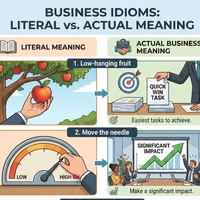
idioms, metaphors and similes - what and when to use
0
1
Figurative language can make complex or abstract business concepts more relatable and easier to understand, capturing the audience's attention more effectively than plain language.
In global business contexts, figurative language can help bridge cultural differences by conveying universal emotions and ideas, though care must be taken to avoid misinterpretation.

Mastering figurative language
0
1
Understanding the nuance of figurative language - idioms, metaphors, cliches, similes etc
Mastering figurative language
0
1
A sound knowledge of idiomatic language is often the bridge to a more natural fluency that can provide that extra edge in a competitive business environment

The Cultural Code of Business English
How important is a knowledge of idiomatic language for Business?
Critical in today's competitive landscape
100%
Can get by without
0%
Important but not essential
0%
Not needed
0%
2 人が投票 • 投票は締め切られました
0
1

