尋找適合你的 英語 教師……
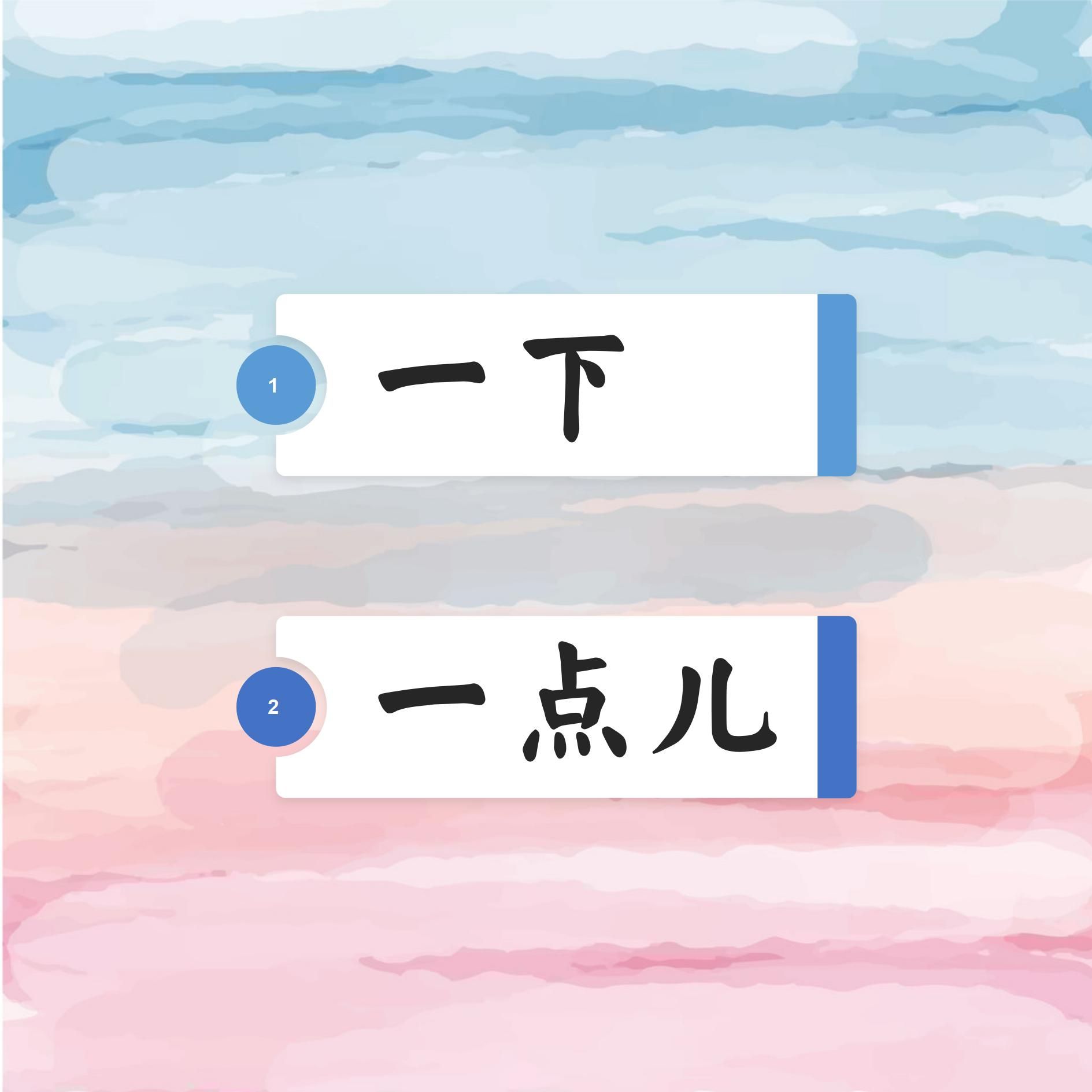
一下&(一)点儿
 00:55
00:55 00:55
00:55說明
Following a verb, both 一下 ((yí xià, lit. “once”) and(一)点儿 ({yì} diǎnr “a bit”) can soften the tone in a question or an imperative sentence, therefore making it more polite. When used in this way, 一下(yí xià) modifies the verb, while(一)点儿 ({yì} diǎnr) modifies the object.
For example:
nǐ kàn yí xià , zhè shì shuí de zhào piàn ?
你看一下,这是谁的照片? Take a look. Whose photo is this?
nǐ xiǎnɡ chī diǎnr shén me ?
你想吃点儿什么? What would you like to eat?
nǐ jìn lái yí xià 。
你进来一下。Come in for a minute.
wǒ men hē yì diǎnr chá bɑ 。
我们喝一点儿茶吧。 Have a little tea.
qǐnɡ nǐ kāi yí xià mén 。
请你开一下门。 Please open the door.
Podcast 頻道
JOJO CHINESE
創作者
Podcast全集

Episode 1 - A day in Thessaloniki
04:57
Enrollarse Vs Ir al grano
01:07
More Than English Podcast TRAILER
03:30
il FRIULI VENEZIA GIULIA
07:29
日本人(にほんじん)、どうやって出会(であ)うの?How did you two meet?
09:25
Films, Songs and TV (Part 1) – 50 Everyday Hindi Words | Learn Hindi #040
22:17
Describing Sounds (with transcript)
10:09Finding Peace (Kind of): A Funny Chat About Calm with Cris and I
29:02熱門集數
My Lovely Greece
Episode 1 - A day in Thessaloniki
04:57Español coloquial
Enrollarse Vs Ir al grano
01:07More Than English Podcast
More Than English Podcast TRAILER
03:30la Rubrica di Simona
il FRIULI VENEZIA GIULIA
07:29NANAのにほんごpodcast
日本人(にほんじん)、どうやって出会(であ)うの?How did you two meet?
09:25Learn Hindi Through English | Everyday Spoken Hindi Words
Films, Songs and TV (Part 1) – 50 Everyday Hindi Words | Learn Hindi #040
22:17Teacher Joseph's Podcast
Describing Sounds (with transcript)
10:09Teacher Joseph's Podcast
Finding Peace (Kind of): A Funny Chat About Calm with Cris and I
29:02