尋找適合你的 英語 教師……
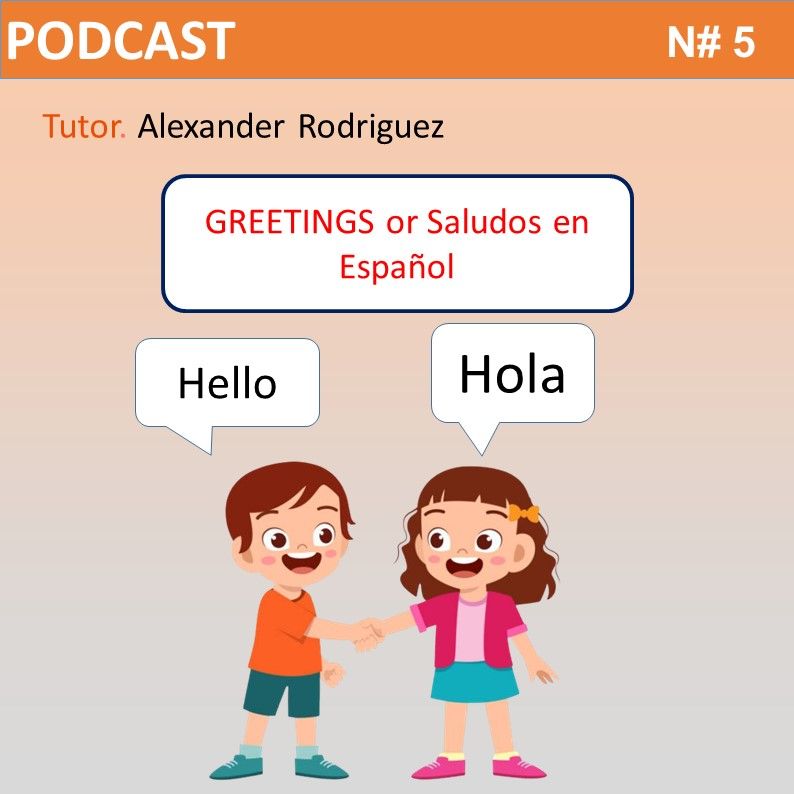
GREETINGS or Saludos en Español
 03:26
03:26 03:26
03:26說明
The Greetings are the first conversation between two people.
Los saludos son la primera conversación entre dos personas:
We have two ways of making salutations: Formal and Informal.
Tenemos dos formas de hacer saludos: Formal e Informal.
The formal way is used when you meet new people, talk with the oldest person, or converse politely.
Here, we have an example of Greeting:
Good morning Mr. Rodriguez. (in Spanish you say)
Buenos días, señor. Rodriguez.
You start the conversation with: Buenos días (at the morning), Buenas tardes (in the Afternoon) and Buenas noches (at the evening or night)
After that, you need to put the profession or etiquette to show respect to men and women
(Mister = señor, Mistress = Señora, and Miss = señorita)
(don’t forget to add the surname or First name) like this example:
Señor. Rodriguez or Profesor. Rodriguez
The second part of the conversation is making information about the person, situation or what do you want to know?
For example:
¿Cómo te sientes hoy?: How do you feel today?
¿Qué tal? = How are you?
¿Cómo estás? =How are you?
¿Qué estás haciendo? = What are you doing?
¿Como esta el trabajo? How is work?
¿Cómo va todo? = How is everything?
You can include more dialog to keep going the conversation.
And, the third part is the farewell or despedida.
For example:
Adiós = bye
Hasta luego = See you later
Nos vemos pronto = See you soon
Hasta la vista = See you around
Chao = bye
Te veo luego = See you later
Que te vaya bien = Good luck
The informal way is used when you know well the people for example a friend, partner, brother or coworker.
Epale! = Hey
¿Que mas? = What´s up?
¿Qué tal? = How are you?
¿Qué hay de Nuevo? = What´s new?
Hola, ¿Cómo va todo? = Hi, How is everything?
This part of the dialog can be more flexible according to the country, age, and social group.
Podcast 頻道
Podcast Learn Spanish
創作者
Podcast全集

¡Para visa del país! ==> Examen oral en la Embajada de Países Bajos "Tu vida en cincuenta palabras de neerlandés"
22:14
東北弁クイズ!「わもほしい」「お弁当開き」の意味は?Learning Tohoku dialect
02:39
29. Good Habit 好习惯
40:31
What to Ask During a Job Interview
04:51
Everyday life in China, listen to diary of teacher Amber
03:52
【9】 Text 课文
00:22
Capitolo 3: la telefonata
01:29
Beginner Chinese Listening:一块钱 One Yuan
00:42熱門集數
Inburgeringsexamens in het Buitenland - A1 - Exámenes de integración cívica en el extranjero - A1 - Civic integration exams abroad - A1
¡Para visa del país! ==> Examen oral en la Embajada de Países Bajos "Tu vida en cincuenta palabras de neerlandés"
22:14Nihongo tokidoki Inaka hougen with Megumi Na
東北弁クイズ!「わもほしい」「お弁当開き」の意味は?Learning Tohoku dialect
02:39Blabla Chinese
29. Good Habit 好习惯
40:31Job Interview English & Workplace Communication
What to Ask During a Job Interview
04:51中文小天地 Little Chinese world
Everyday life in China, listen to diary of teacher Amber
03:52Chinese for Beginners Channel
【9】 Text 课文
00:22Un viaggio pieno di sorprese!
Capitolo 3: la telefonata
01:29Beginner Chinese Listening
Beginner Chinese Listening:一块钱 One Yuan
00:42