尋找適合你的 英語 教師……
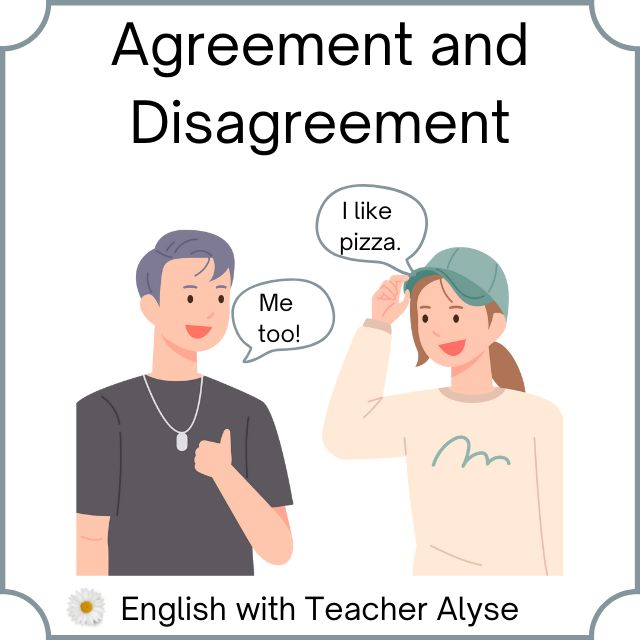
Expressing agreement and disagreement
 01:47
01:47 01:47
01:47說明
Useful language when expressing agreement and disagreement.
Agreeing with a positive statement
Me too.
So do / am / can I.
Agreeing with a negative statement
Me neither.
Neither do / am / can I.
Disagreeing with a positive statement
Really? Not me.
I don’t /can’t
I’m not
Disagreeing with a negative statement
Really? I do / am / can.
For example:
I live in apartment in the city. So, do I.
I’m so sleepy. So am I.
I love cheese. Me too!
I really don’t like mushrooms. Neither do I.
Follow me for more Everyday English.
Podcast 頻道
Everyday English with Teacher Alyse
創作者
Podcast全集

Korean Teacher's Vlog
23:14
滴滴打车—Take a Didi
00:39
TV 홈쇼핑에서 40% 할인하길래 구매했거든 在电视购物上打六折, 我买了
00:58
Meetings
02:22
Обо мне | About me
00:27
¿Que es El buñuelo y como se prepara?
05:46
Professions in Arabic
02:14
Fad Diets (with transcript)
14:09熱門集數
Healing Korean while you sleep
Korean Teacher's Vlog
23:14Daily Spoken Chinese
滴滴打车—Take a Didi
00:39[YOON] 1분 한국어
TV 홈쇼핑에서 40% 할인하길래 구매했거든 在电视购物上打六折, 我买了
00:58Live Tongue Twister Drills from Students
Meetings
02:22Русский с Натти | Russian with Nattie (from A1)
Обо мне | About me
00:27Colombia
¿Que es El buñuelo y como se prepara?
05:46Aprende árabe con Radia
Professions in Arabic
02:14Teacher Joseph's Podcast
Fad Diets (with transcript)
14:09
