尋找適合你的 英語 教師……
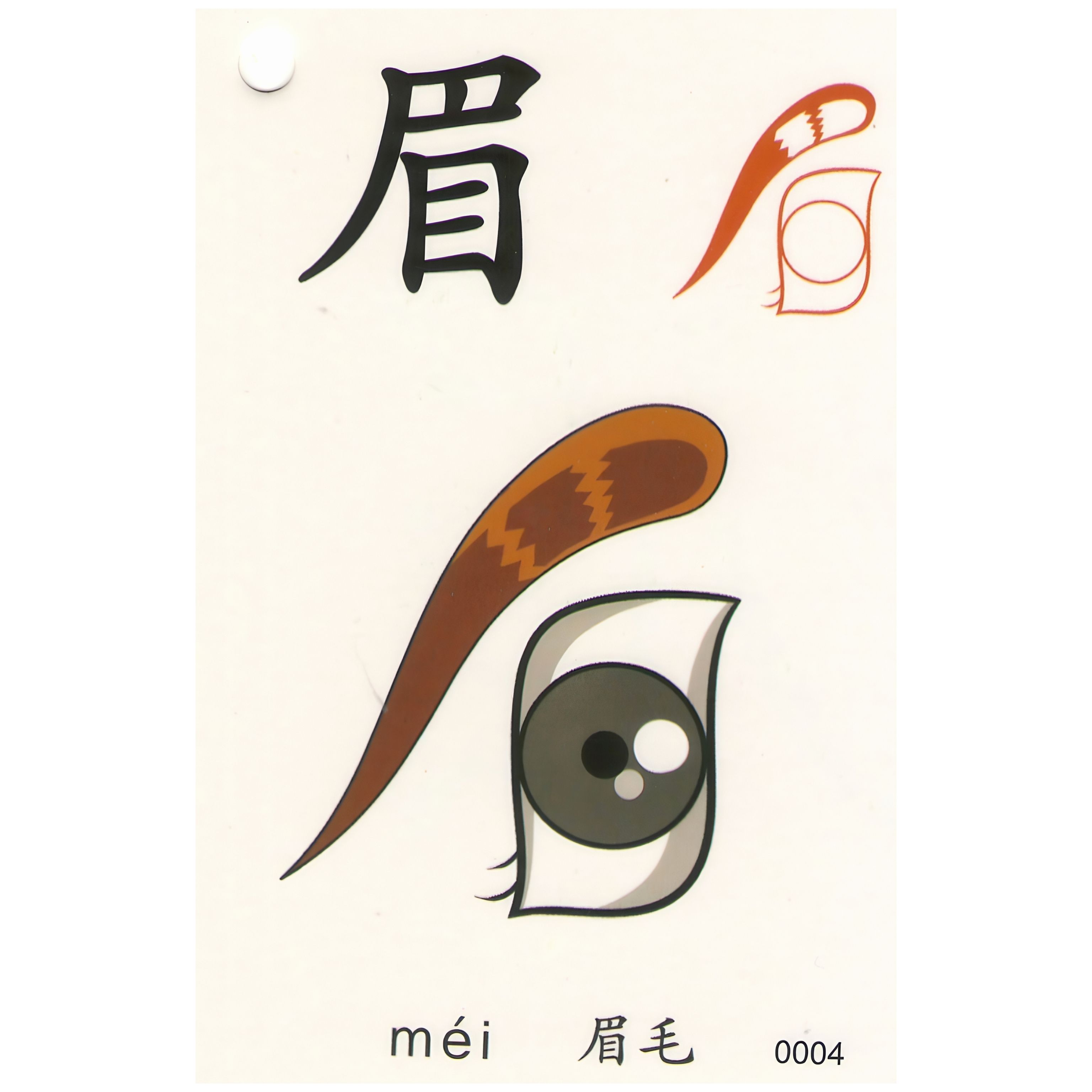
眉
 03:35
03:35 03:35
03:35說明
眉- Méi
"目" - mù - eye, the upper part of 眉- Méi could refer to "毛" - máo", meaning "hair" or "fur."
The combination represents the hairs above the eyes, hence "eyebrows."
This formation suggests the character's meaning directly and visually connects it to the facial feature it represents.
用法 (Usage)
As a noun, "眉" directly refers to the eyebrows.
眉毛 - méi mao - eyebrows
例如 (For example):
他的眉毛很浓。- Tā de méi mao hěn nóng
(His eyebrows are very thick.)
However, it is often used metaphorically in Chinese to denote expressions or emotions conveyed by the movement of the eyebrows, such as surprise, concern, or anger.
For instance, 眉头- méi tóu - the inner brow, refers to the area where the eyebrows begin, typically located above the inner corners of the eyes.
For example, "皱眉头" - zhòu méi tóu, means "to furrow one's brow," indicating worry or deep thought..
Idiomatic Expressions: "眉- Méi" appears in various idioms that use eyebrows metaphorically to talk about emotions or aesthetic qualities.
例如 (For example):
眉开眼笑 - méi kāi yǎn xiào - lit. "eyebrows rise and eyes smile," meaning to smile joyfully or beam with happiness
眉飞色舞 - méi fēi sè wǔ - lit. "eyebrows fly and colors dance," used to describe vivid, expressive facial gestures of excitement or happiness
Metaphorical Usage: In poetic or artistic contexts, "眉" can metaphorically relate to things that resemble the shape or curve of eyebrows.
例如:(For example):
山的轮廓好像一道眉形。-Shān de lún kuò hǎo xiàng yí dào méi xíng 。
(The outline of the mountain resembles the shape of an eyebrow.)
Podcast 頻道
每日一字
創作者
Podcast全集
HSK 4 Lesson 1 Passage 5
01:07
Mixing Responsibilities
02:51
Episode 7, Trump China tariff truce ignites stock markets
05:34
Why It's Crucial to Improve Your Repertoire of Words
11:04
Il bar e gli italiani
08:41
Sentence Builders (Part 2) – 50 Everyday Hindi Words | Learn Hindi #077
24:50
Boxing Day (with transcript for study)
08:49To be Fed Up (with transcript)
18:13熱門集數
HSK 3-6 Text Audios
HSK 4 Lesson 1 Passage 5
01:07English Conversation/Dialogue
Mixing Responsibilities
02:51The Short And Sweet English Learning Podcast
Episode 7, Trump China tariff truce ignites stock markets
05:34All About English and How You Learn It!
Why It's Crucial to Improve Your Repertoire of Words
11:04Cocai italiano - Podcast for Italian learners
Il bar e gli italiani
08:41Learn Hindi Through English | Everyday Spoken Hindi Words
Sentence Builders (Part 2) – 50 Everyday Hindi Words | Learn Hindi #077
24:50Teacher Joseph's Podcast
Boxing Day (with transcript for study)
08:49Teacher Joseph's Podcast
To be Fed Up (with transcript)
18:13
