尋找適合你的 英語 教師……
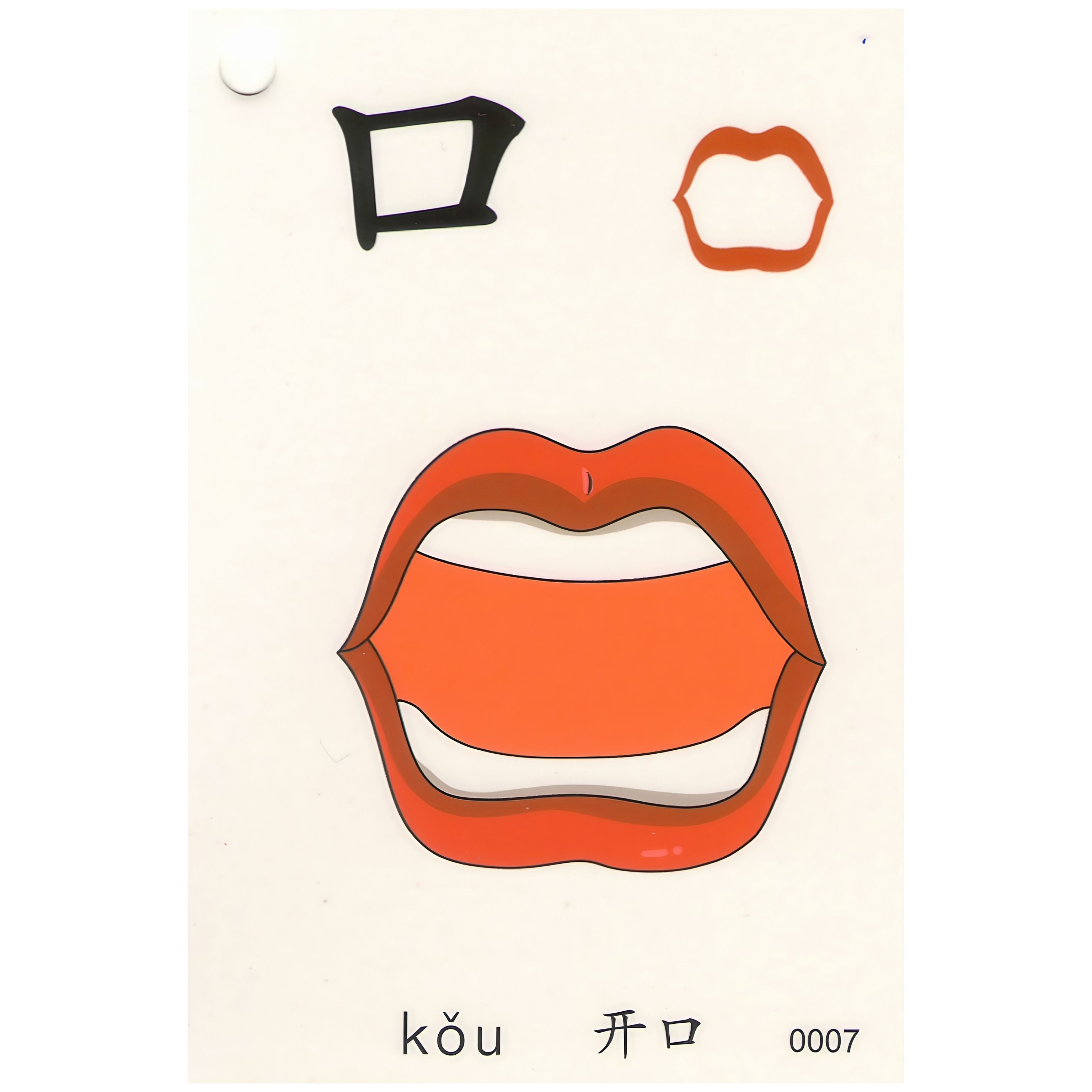
口
 05:25
05:25 05:25
05:25說明
"口" - kǒu
Meaning (字义)
Primary Meaning: The primary meaning of "口" is "mouth."
For example:
她张开口唱了一首美妙的歌。 (Tā zhāng kāi kǒu chàng le yī shǒu měi miào de gē.)
She opened her mouth and sang a beautiful song.
Extended Meanings: It can also refer to anything that resembles a mouth, such as an opening, entrance, or a measure word for people in a household.
Usage (用法)
The character "口" is used in various contexts in the Chinese language, including as a radical in other characters, in compound words, and in idiomatic expressions.
As a Radical:
"口" is a common radical in Chinese characters, often related to speech or the mouth, such as "吃" (chī, to eat) and "唱" (chàng, to sing).
Measure Word:
"口" is used as a measure word for counting family members or things with openings.
例如:
一家四口。 (Yì jiā sì kǒu 。) -A family of four.
两口井。 (Liǎng kǒu jǐng .) -Two wells
In Compound Words:
口语 (kǒu yǔ): Spoken language
For example:
他学习汉语口语非常努力。 (Tā xuéxí Hànyǔ kǒuyǔ fēicháng nǔlì.)
He studies spoken Chinese very diligently.
人口 (rén kǒu): Population
For example:
这个城市的人口超过了一百万。 (Zhège chéngshì de rénkǒu chāoguò le yī bǎi wàn.)
The population of this city exceeds one million.
出口 (chū kǒu): Exit or export
For example:
请从出口离开。 (Qǐng cóng chūkǒu líkāi.)
Please exit through the exit.
Idiomatic Expressions:
心口如一 (xīn kǒu rú yī): (literal: heart and mouth as one)
Epitomizes honesty and integrity. It describes a person who expresses their true thoughts and feelings without deception, earning the trust and respect of others.
For example:
他是个心口如一的人。 (Tā shì gè xīn kǒu rú yī de rén.)
He is a person who says what he thinks .
口是心非 (kǒu shì xīn fēi): (literal: mouth is, heart isn't)
it is an idiom used to describe people who are insincere or deceitful, saying one thing while meaning another.
For example:
她总是口是心非,让人难以信任。(Tā zǒng shì kǒu shì xīn fēi, ràng rén nán yǐ xìnrèn.)
She always says one thing but means another, making it hard to trust her.
Podcast 頻道
每日一字
創作者
Podcast全集

Mi historia con los idiomas - PARTE 2
28:09
Солнечный день 🌤 sunny day
10:05
¿Tu o usted?
03:45
N5レベル まちがいさがし spot the wrong sentence.
01:44
ママ友のランチ会 "Mama tomo's lunch party"
03:28
15 espressioni idiomatiche con la parola "denti"
08:23
KETCHUP
00:10
App Could Help People to Have Lucid Dreams
02:07熱門集數
Español con Valeria
Mi historia con los idiomas - PARTE 2
28:09My diary in Russian
Солнечный день 🌤 sunny day
10:05Speaker Maria.E !!!
¿Tu o usted?
03:45ようへい先生 N4,N5チャンネル
N5レベル まちがいさがし spot the wrong sentence.
01:44やさしい日本語(にほんご)
ママ友のランチ会 "Mama tomo's lunch party"
03:28Italiano espresso
15 espressioni idiomatiche con la parola "denti"
08:23CHISTES MEXICANOS
KETCHUP
00:10Practice Listening, Reading & Comprehension
App Could Help People to Have Lucid Dreams
02:07
