尋找適合你的 英語 教師……
帖子
☀️ In the #ConheçaOBrasil project of the week, we will be learning about the state of ~RORAIMA!
- Roraima has a fascinating history, with its territory once disputed by the English and Dutch before Portugal asserted sovereignty. The region is named after Indigenous words meaning “Green Mountain,” “Mother of Winds,” or “Caju Hill.”
- Its capital is Boa Vista, located on the right bank of the Rio Branco River. The city is home to over 430,000 people, nearly two-thirds of the state’s population.
- Boa Vista features the Parque do Rio Branco, a major attraction with a beautiful view, a beach area, and the Selvinha Amazônica playground. The city also offers local highlights like the Orla Taumanam, the Igreja Matriz, and the Monumento aos Pioneiros.
- The region is known for its rich cuisine, including caldeirada, pirarucu desfiado, paçoca com banana, and desserts made from local fruits like cupuaçu and buriti.
- For adventurers, Monte Roraima is the state’s biggest treasure. One of Earth’s oldest formations, it offers epic views and hiking experiences and can be accessed from Boa Vista, about 257 km away.
So, have you ever been to Boa Vista?
2025年6月26日
0
1
🟢🟡 Olá pessoal~!
Would you like to try practicing your listening skills in Portuguese?
The episode below has audio description in the episode details. Feel free to practice~!
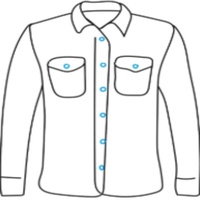
Comprando uma camiseta — SMALL TALK B2-C2 LEVEL
2025年6月18日
0
3
☀️ In the #ConheçaOBrasil project of the week, we will be learning about the state of RONDÔNIA~!
Before being called Rondônia, the state was considered a "territory" named Guaporé—due to the Guaporé River. It kept this name until 1956.
The name Rondônia was a tribute to Marshal Cândido Rondon, of indigenous descent. The military officer was a sertanista (an explorer of the Brazilian backlands) responsible for opening paths in the Central-West region, always trying to establish cordial relations with the native indigenous population.
Porto Velho is the only Brazilian capital that borders another country. It also borders two other Brazilian states: Amazonas and Acre.
In Rondônia, there is a river called the Roosevelt River, named after a North American figure: former President Theodore Roosevelt, who explored the region at the invitation of Marshal Cândido Rondon.
One of the typical dishes of the region is "caldeirada de tambaqui," a very famous broth that can also be made with tucunaré fish. Other typical dishes of the state are caruru, maniçoba, and cupuaçu sweets, made with a fruit that is typical of the Northern region.
In 1914, Marshal Rondon was also responsible for the rediscovery of the Real Forte Príncipe da Beira, which is located on the banks of the Guaporé River. Its construction began in 1775, and it is considered the largest Portuguese military construction outside of Europe.
So, have you ever been to Porto Velho?
2025年6月17日
0
1
☀️ In the #ConheçaOBrasil project of the week, we will be learning about the state of PARÁ~!
Another very popular state in the northern region is Pará, a place rich in natural and cultural wonders. Here are some curiosities about this wonderful state:
— One of the most famous dishes in the region, tacacá is also a dish widely consumed among neighboring states. Its recipe consists of a broth made from cassava gum and pepper, which includes shrimp and jambu as accompaniments.
— In the past, The Guardian newspaper considered Alter do Chão beach to be the most beautiful in Brazil. Located on the banks of the Tapajós River, the region is home to a fishing village, near the municipality of Santarém. Tourism agencies say that the best month to travel there is August, when the water volume decreases and sandbanks form on the site.
— In 2010, the state of Pará almost split into two parts. At that time, Pará residents went to the polls to vote for the creation of a new federative unit of Brazil, which would be called the State of Tapajós. The proposal was rejected by voters.
— Pará is known for being the land of açaí and is also where the purest possible version of the fruit is consumed. However, Pará residents prefer to eat it without much sugar and with savory foods, such as fried fish and flour.
✨ So, have you ever visited Belém?
2025年3月10日
0
2
☀️ In the #ConheçaOBrasil project of the week, we will be learning about the state of AMAZONAS~!
The state of Amazonas, located in northern Brazil, is rich in water resources and protected areas. Here are some interesting facts about Amazonas:
— The Amazon River, which gives the state its name, is the largest river in the world by volume of water and the second longest, behind only the Nile River.
— The Amazon Rainforest, the largest tropical rainforest in the world, covers most of the state. It is home to an incredible biodiversity, with over 10% of all known species on the planet.
— In Manaus, the capital of Amazonas, you can witness the famous Meeting of the Waters, where the dark-colored Rio Negro meets the muddy-colored Rio Solimões, creating a unique natural spectacle.
— Manaus is also known for its grand opera house, the Amazon Theatre (*Teatro Amazonas*), built in the late 19th century with materials imported from Europe.
— Amazonas is home to many Indigenous peoples, each with their own cultures, languages, and traditions.
— Cupuaçu, a fruit native to the Amazon region, is highly valued for its flavor and nutritional properties.
— Jaú National Park, covering over 23,000 km², is the fourth largest national park in Brazil and the third largest in the world in terms of untouched tropical rainforest.
✨ So, have you ever been to Manaus?
2025年2月17日
0
3
🟢🟡 Olá pessoal~!
Would you like to try practicing your listening skills in Portuguese?
The episode below has audio description in the episode details. Feel free to practice~!

Ana e Camila falam sobre cinema — SMALL TALK A2-B2 LEVEL
2025年2月11日
1
2
☀️ In the #ConheçaOBrasil project of the week, we will be learning about the state of AMAPÁ~!
— The Fortress of São João de Macapá, on the left bank of the Amazon River, was built between 1764 and 1782 by Indigenous people and enslaved workers. Its purpose was to prevent the French, already settled in French Guiana, from reaching the mouth of the Amazon.
—The midfield line at Zerão Stadium in Macapá is located exactly on the Equator. This means one side of the field is in the Northern Hemisphere and the other in the Southern Hemisphere.
—The first census of Macapá was conducted in 1790, counting 2,532 people. In 17 years, only 18 more inhabitants were added to that number.
—Amapá only became a state in 1988, electing its first governor in 1990. Before that, it was administratively linked to the state of Pará.
—Nearly 40% of Amapá’s hydrographic network belongs to the Amazon River basin. The rivers play a crucial economic role in the region, supporting fishing activities. Additionally, in some areas, access is only possible by boat, making water transportation especially important.
—Macapá is the only Brazilian capital city crossed by the Equator. Because of this, at least twice a year, the city's inhabitants have the privilege of witnessing the equinox, a phenomenon where the sun's rays fall directly on the Equator. The equinox occurs twice a year: in March (autumn equinox) and in September (spring equinox).
—Amapá is the only state in Brazil where all Indigenous reserves are efficiently demarcated. There are no invasions by miners, loggers, or farmers. These lands represent 8.6% of the state's total area.
✨ So, have you ever been to Macapá?
2025年2月10日
0
2
☀️ In the #ConheçaOBrasil project of the week, we will be learning about the state of ALAGOAS~!
The state of Alagoas is one of the most beautiful in northeastern Brazil. Here are some interesting facts about Alagoas:
— One of the oldest capitals
Maceió, the capital of Alagoas, is one of the oldest cities in Brazil, founded in 1839.
— Coral Coast
The northern coast of Alagoas is home to the Coral Coast (Costa dos Corais), one of the largest coral reef areas in the South Atlantic, a true paradise for divers and nature lovers.
— Birthplace of the Quilombo dos Palmares
Alagoas was the stage for one of the largest slave revolts in Brazil, the Quilombo dos Palmares, led by Zumbi dos Palmares.
— The largest sugarcane producer in the Northeast
Alagoas is the largest producer of sugarcane in the Northeast, with vast production of sugar and alcohol.
— The land of marshals
Alagoas is known as the "Land of Marshals" (Terra dos Marechais) because two Brazilian presidents, Marshal Deodoro da Fonseca and Marshal Floriano Peixoto, were from Alagoas.
— Trails and waterfalls
Alagoas is rich in natural beauty, extending beyond its beaches to include stunning waterfalls.
— Religious traditions
Religiosity is a strong aspect of Alagoan culture, with various religious expressions, including Catholicism, Protestantism, and Afro-Brazilian religions.
— Diverse cuisine
Alagoan cuisine blends Indigenous, African, and European influences, featuring dishes like tapioca, sururu (a type of mussel), and grilled fish.
— Popular festivals
The state is famous for its lively festivals, including Maceió’s Carnival, São João, and Reisado.
— Rich handicrafts
Alagoas has a diverse handicraft tradition, with highlights such as renda bilro (bobbin lace), ceramics, and woodwork.
✨ So, have you ever been to Maceió?
2025年2月3日
0
2
☀️ And, to start the #ConheçaOBrasil project today we will be learning about the state of ACRE~!
🌟 Acre is one of the least populated states in the northern region of Brazil. Here are some interesting facts about the state:
- Acre is two hours behind Brasília time.
- The name "Acre" comes from "Aquiri," which means "river of alligators" in the native language of the Apurinã people, the original inhabitants of the region.
- Until the early 20th century, Acre belonged to Bolivia, which disputed the ownership of its territory with Peru. In 1903, the conflict ended: Brazil bought the region for 2 million pounds sterling.
- It is the 3rd least populated state in the country, with 906,876 inhabitants in 2021 (IBGE). It ranks ahead of only Roraima, with a population of 652,713, and Amapá, with 877,613 inhabitants.
- The expression "à beça" (meaning "a lot" or "in abundance") is attributed to the number of arguments used by the jurist Gumercindo Bessa from Sergipe when debating Rui Barbosa about Acre's territorial independence.
President Rodrigues Alves was the first to use it, impressed by the eloquence of a citizen: "You have arguments à Bessa." Over time, the word lost its capital letter, and the "ss" was replaced by "ç."
🌟 So, have you ever been to Rio Branco?
2025年1月27日
0
1
☀️ Excited to announce the #ConheçaOBrasil mini-project starting in 2025!
- Each week, I'll be sharing a post about a different state, highlighting its unique features and must-see attractions. Join me on this journey to discover the incredible diversity of Brazil!
🌟What state are you most excited to learn about? Let me know in the comments!
2025年1月20日
0
1
顯示更多內容