Wählen Sie aus verschiedenen Englisch Lehrkräften für ...
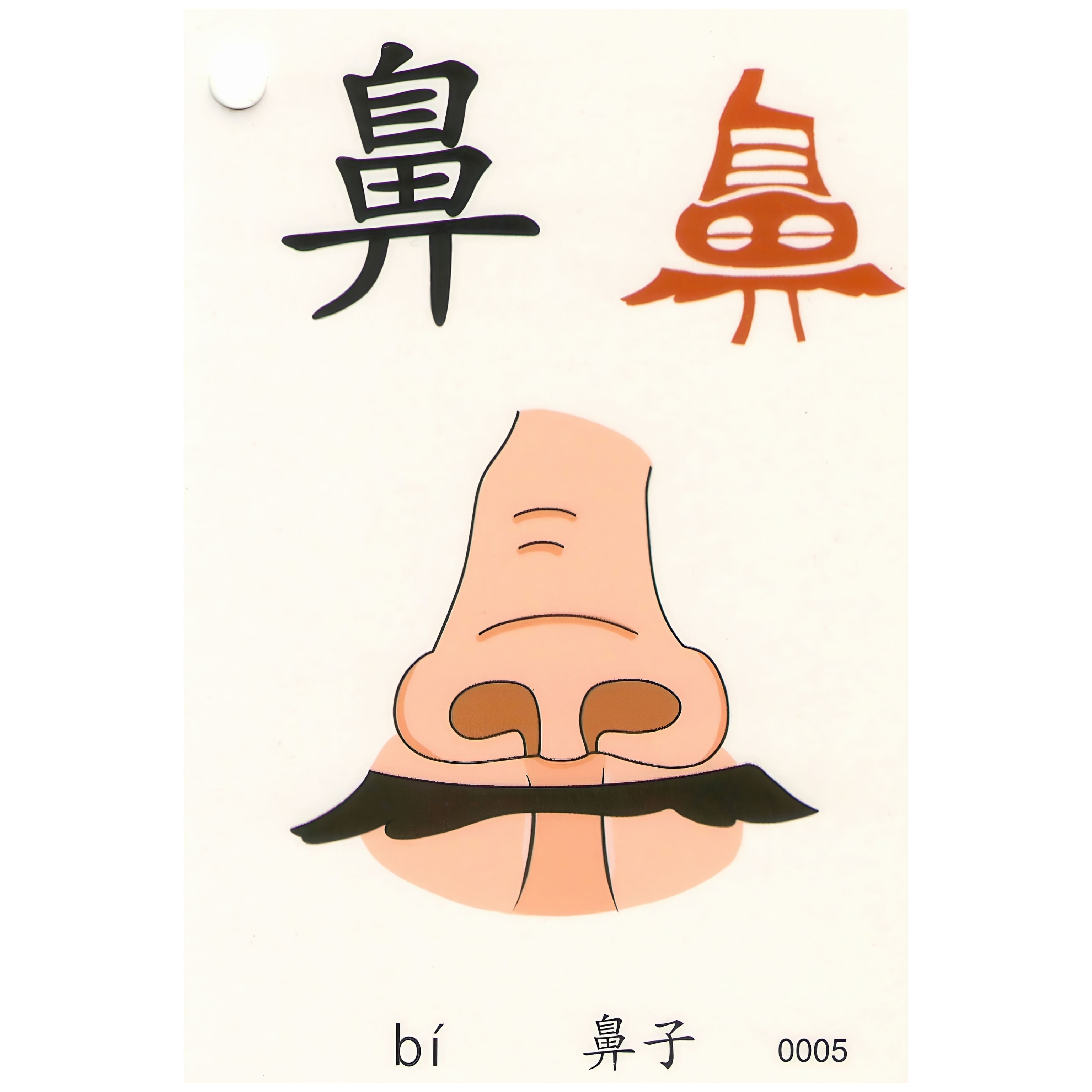
鼻
 03:42
03:42 03:42
03:42Beschreibung
The character "鼻" is a compound ideogram consisting of the radical "自" (self) on top and "畀-bì" (to give) at the bottom. It resembles the shape of a nose.
it is consisting of the radical "自" (self) on top and "畀-bì" (to give) at the bottom. It resembles the shape of a nose.
Meaning (字义)
The character "鼻" primarily means "nose." It can also relate to smelling and breathing.
Usage (用法)
"鼻" is commonly used in words and phrases related to the nose and its functions.
Example Words (例词)
1.鼻子 (bí zi) - nose
他的鼻子很大。 (Tā de bí zi hěn dà.)
His nose is very big.
2.鼻涕 (bí tì) - nasal mucus
孩子流了鼻涕。 (Háizi liú le bí tì.)
The child has a runny nose.
3.鼻孔 (bí kǒng) - nostril
我的鼻孔痒痒的。 (Wǒ de bí kǒng yǎng yǎng de.)
My nostrils are itchy.
Example Sentences (例句)
1.他用鼻子闻花香。 (Tā yòng bí zi wén huā xiāng.)
He smells the flowers with his nose.
2.她的鼻子很好看。 (Tā de bí zi hěn hǎo kàn.)
Her nose is very pretty.
3.不要用手指挖鼻孔。 (Bù yào yòng shǒuzhǐ wā bí kǒng.)
Don't pick your nose with your fingers.
Idiom (四字成语)
成语: 鼻青脸肿 (bí qīng liǎn zhǒng)
Meaning (意义)
"鼻青脸肿" literally means "nose bruised and face swollen." It describes someone who has been beaten up, with a bruised nose and swollen face.
Example Sentence (例句)
他刚打完了一架,鼻青脸肿。 (Tā gāng dǎ wán le yí jià , bí qīng liǎn zhǒng.)
He came back from a fight, looking bruised and swollen.
Summary
The character "鼻" is related to the nose and its functions. Its usage is common in everyday language. The idiom "鼻青脸肿" describes someone who looks bruised and swollen, often after a fight or accident.
Podcast-Kanal
每日一字
Autor
Alle Episoden
EP.3 - RESTARE IN FORMA (Parte 1)
04:50
Common mistakes made by English Language Learners: Part 2 - "The" a definite way to remeber how to use this definite article.
11:39
No Country for Vocative case in Russian
03:23
Ep.64 「Wonka🍫✨」にハマりました🥺
11:30
Episode 2 : Les Frères Lumière
03:41
Ep.5 スタバが好きですか?☕️
05:14
CHAO‘s HSK Listening Capsule(Intermediate)HSK3-3快乐的星期天Happy Sunday
01:39
46. かばんを盗(ぬす)まれた/Japanese だんだんpodcast
01:48Beliebte Episoden
Cavoli Amari
EP.3 - RESTARE IN FORMA (Parte 1)
04:50The Grammarian Podcast
Common mistakes made by English Language Learners: Part 2 - "The" a definite way to remeber how to use this definite article.
11:39All about Russian language 🌟
No Country for Vocative case in Russian
03:23SeikaのPodcast🎧
Ep.64 「Wonka🍫✨」にハマりました🥺
11:30French flicks and chill
Episode 2 : Les Frères Lumière
03:41SeikaのPodcast🎧
Ep.5 スタバが好きですか?☕️
05:14CHAO's HSK Listening Capsule(Intermediate)|A Daily Dose to Sharpen Your Ears|CHAO的HSK听力胶囊(中级)
CHAO‘s HSK Listening Capsule(Intermediate)HSK3-3快乐的星期天Happy Sunday
01:39Japaneseだんだんpodcast
46. かばんを盗(ぬす)まれた/Japanese だんだんpodcast
01:48