Cerca tra vari insegnanti di Inglese...
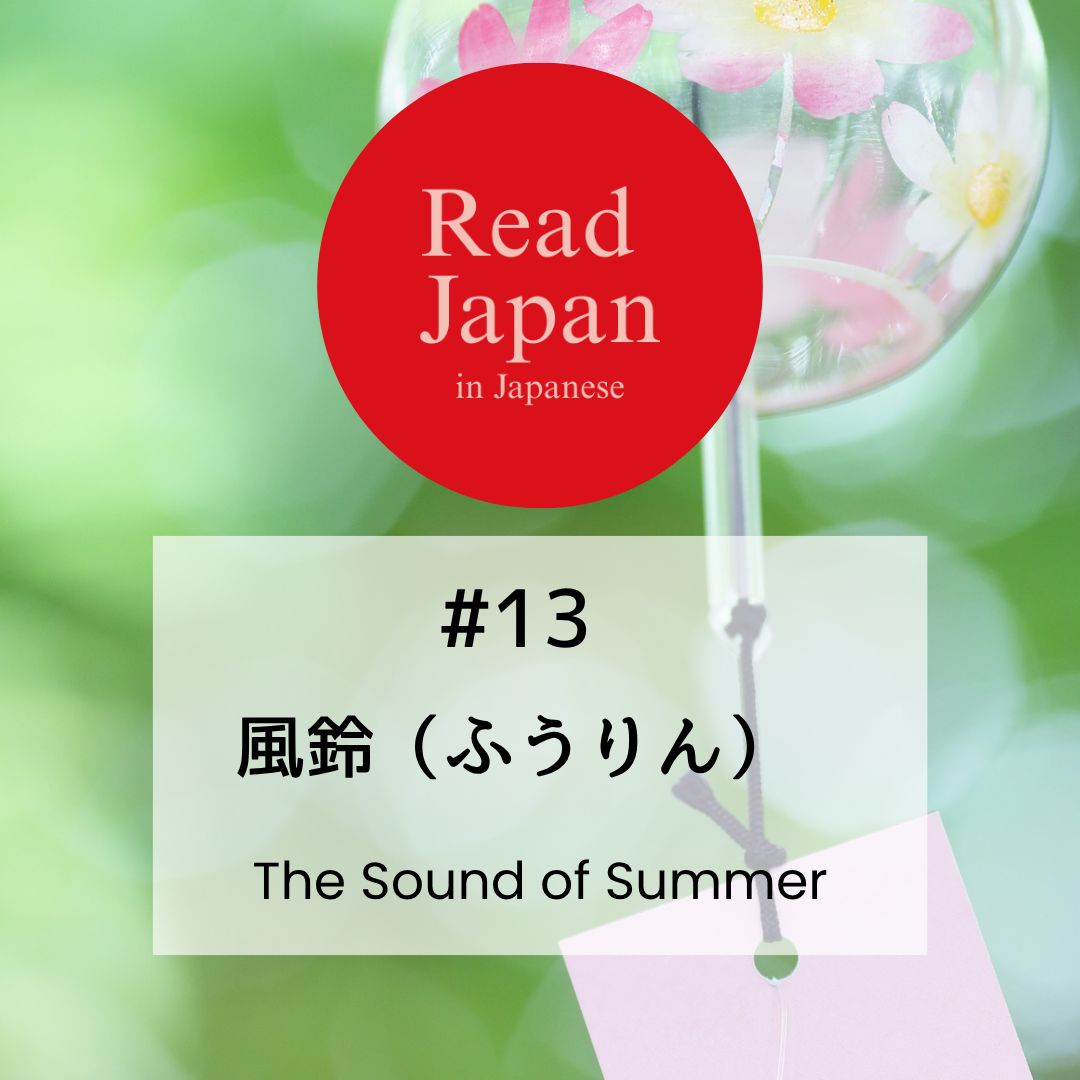
#13 風鈴(ふうりん) The Sound of Summer
 00:27
00:27 00:27
00:27Descrizione
【Script】
みなさんは、風鈴の音を聞いたことがありますか?風鈴は、ガラスや金属でできていて、風が吹くと綺麗な音が鳴ります。この音を聞くと、涼しく感じるんです。今年は、エアコンや扇風機といっしょに、風鈴も使ってみませんか?
【with ひらがな】
みなさんは、風鈴(ふうりん)の音(おと)を聞(き)いたことがありますか? 風鈴(ふうりん)は、ガラスや金属(きんぞく)でできていて、風(かぜ)が吹(ふ)くと綺麗(きれい)な音(おと)が鳴(な)ります。 この音(おと)を聞(き)くと、涼(すず)しく感(かん)じるんです。 今年(ことし)は、エアコンや扇風機(せんぷうき)といっしょに、風鈴(ふうりん)も使(つか)ってみませんか?
【English】
Have you ever heard the sound of "Furin" (wind chimes)? Furin are made of glass or metal, and when the wind blows, they make a beautiful sound. When you hear this sound, you feel cooler. This year, why don't you try using wind chimes along with your air conditioner and fan?
【Vocabulary】
風鈴(ふうりん):wind chime
金属(きんぞく):metal
吹く(ふく):to blow
鳴る(なる):to ring / to sound
感じる(かんじる):to feel
扇風機(せんぷうき):electric fan
使ってみる(つかってみる):to try using
【Grammar Notes】
🔶 V-ta form + ことが あります (Have done~)
Used to talk about past experiences.
Example:
風鈴(ふうりん)の音(おと)を聞(き)いたことがありますか? Have you ever heard the sound of wind chimes?
日本(にほん)に行(い)ったことがあります。 I have been to Japan.
🔶 Short Form + と〜 (Whenever / When)
This structure indicates a natural consequence or a cause-and-effect relationship.
Example :
この音(おと)を聞(き)くと、涼(すず)しく感(かん)じます。 When you hear this sound, you feel cool.
冬(ふゆ)になると、雪(ゆき)が降(ふ)ります。 When winter comes, it snows.
🔶 V-te form + みませんか (Why don't we/you try...?)
A polite way to invite or suggest trying something new.
Example :
風鈴(ふうりん)を使(つか)ってみませんか? Why don't you try using wind chimes?
麦茶(むぎちゃ)を飲(の)んでみませんか? Why don't you try drinking barley tea?
Canale dei podcast
Read Japan in Japanese
Autore
Tutti gli episodi
🌖 CAPITOLO 9
03:12
Temporada 1 Episodio 5 Mejoramiento continuo
04:52
N3 語彙 第4週5日
02:27
SABIDURIA POPULAR
00:12N3 語彙 第2週6日目
02:21
《小王子》(little Prince)by Antoine de Saint-Exupéry
04:46
Ten Interesting Geography Facts!
29:37
Happy Christmas, Kwanzaa and Solstice (with transcript)
11:59Episodi popolari
📖 IL PICCOLO PRINCIPE di Antoine de Saint-Exupéry
🌖 CAPITOLO 9
03:12De todo un poco
Temporada 1 Episodio 5 Mejoramiento continuo
04:52N3合格
N3 語彙 第4週5日
02:27CHISTES MEXICANOS
SABIDURIA POPULAR
00:12N3合格
N3 語彙 第2週6日目
02:21Audiobook reading
《小王子》(little Prince)by Antoine de Saint-Exupéry
04:46English on the Road
Ten Interesting Geography Facts!
29:37Teacher Joseph's Podcast
Happy Christmas, Kwanzaa and Solstice (with transcript)
11:59