다양한 영어 선생님을 검색해 보세요...
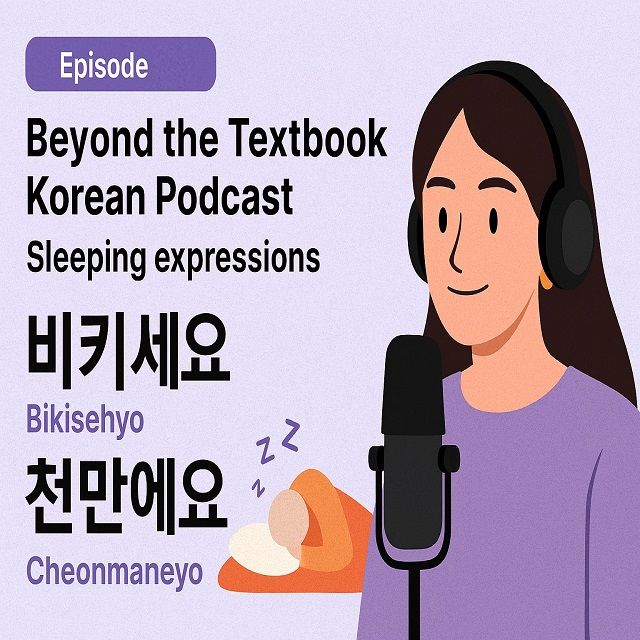
Textbook Korean vs Real Life: Why “Bikisehyo:비키세요” Sounds Awkward
 07:43
07:43 07:43
07:43설명
Hello, and welcome to the Beyond the Textbook Korean podcast! 🌟
In today’s episode, we explore so-called “sleeping expressions” that appear in textbooks but sound awkward in real-life conversations.
For example, phrases like “Bikisehyo (비키세요)” and “Cheonmaneyo (천만에요)” are grammatically correct but often avoided in daily speech. Why?
Because of Korea’s cultural preference for indirect speech and humility.
📌 Bikisehyo → Jamkkanmanyo / Excuse me
📌 Cheonmaneyo → Aniehyo / It’s okay / No problem
Still, there are exceptions. In emergencies or professional contexts, direct expressions like “Bikisehyo” may be necessary for clarity and safety.
👉 Remember: Language is not just grammar—it’s culture.
By practicing expressions that reflect the Korean mindset, you’ll sound more natural and take your Korean to the next level.
See you in the next episode! Hwaiting! You got this! 💪
팟캐스트 채널
Reading Korea.
작성자
모든 에피소드
Эпизод 36. Фразы про нос в русском языке.
06:19
Dialogue for Beginners 🎉📚 (Day # 19)
00:55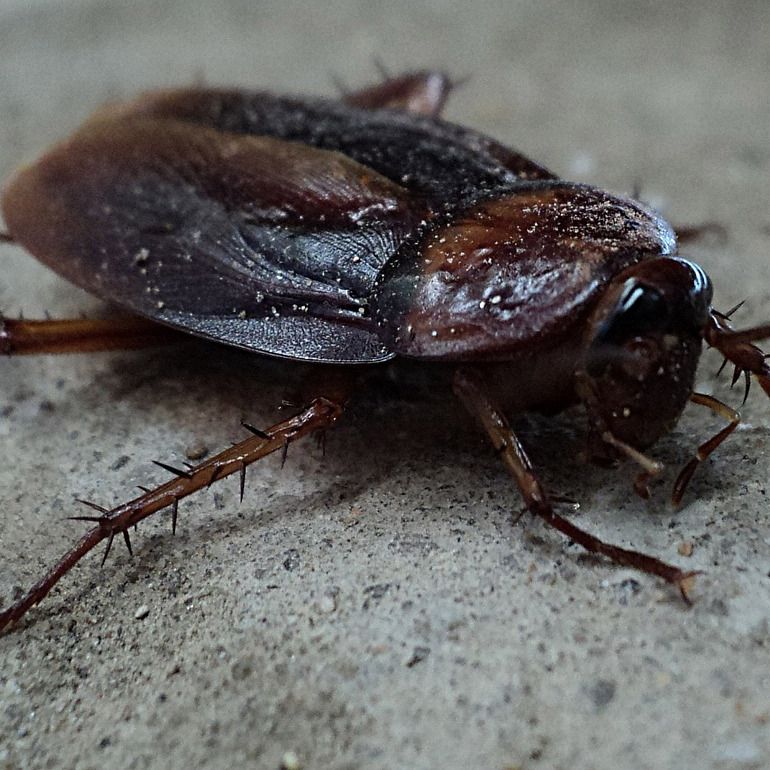
Há um Zoo que permite que batize uma barata com o nome de um 'ex'
01:16
这是你几岁拍的? How old were you when you took this photo?
00:29
Ottava tappa Viaggio sulla West Coast USA, San Diego
10:03
016 - Best Tips for a Happy Life Abroad (Part Three)
26:34
Episode 3: Das vietnamesische Essen
04:02
EP3: KEYS TO EFFECTIVE COMMUNICATION
10:52인기 팟캐스트
Привет, это Наташа!
Эпизод 36. Фразы про нос в русском языке.
06:19DIALOGS FOR EVERYDAY USE 🎧📚
Dialogue for Beginners 🎉📚 (Day # 19)
00:55Aprenda Português Com Notícias Insólitas e Malucas -Learn Portuguese With Crazy Isoteric News
Há um Zoo que permite que batize uma barata com o nome de um 'ex'
01:16Story Chinese
这是你几岁拍的? How old were you when you took this photo?
00:29Vivendo tra due lingue
Ottava tappa Viaggio sulla West Coast USA, San Diego
10:03Brentoni's English Podcast
016 - Best Tips for a Happy Life Abroad (Part Three)
26:34Vietnam: Fakten und persönliche Erfahrungen
Episode 3: Das vietnamesische Essen
04:02UK TALKS WITH LIZ
EP3: KEYS TO EFFECTIVE COMMUNICATION
10:52