Выбрать из множества учителей по предмету английский...
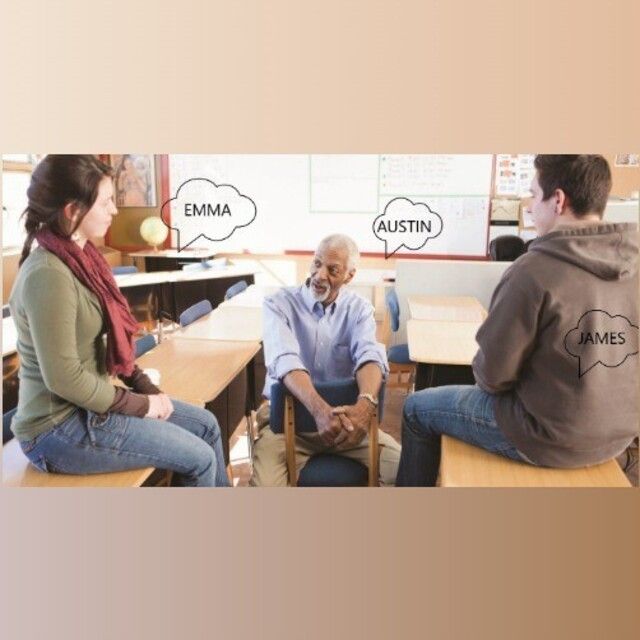
Day1: Formal Greeting in English
 00:53
00:53 00:53
00:53Описание
JAMES: Good morning, Professor Austin, how are you doing?
PROFESSOR AUSTIN: Good morning, James. I am doing well. And you?
JAMES: I’m great, thank you. This is my friend Emma. She
is thinking about applying to this college. She has a
few questions. Would you mind telling us about the
process, please?
PROFESSOR AUSTIN: Hello, Emma! It’s a pleasure to meet you. I’m more
than happy to speak with you. Please stop by my office
next week.
EMMA: It’s a pleasure to meet you, professor. Thank you so
much for helping us.
PROFESSOR AUSTIN: Don’t mention it. Hopefully, I will be able to answer
your questions!
LANGUAGE NOTES
• The greetings good morning/good afternoon/good evening are used at different times
of the day to greet people. “Good evening” is often used after 6 p.m. or generally when
the sun has set.
• “Good night” is not a greeting: It is used when leaving a place or group of people.
Thank you and good night!/Good night, and see you tomorrow.
• When people meet in the United States, it is customary for them to shake hands. A
handshake should be firm and usually lasts for about two to three seconds — which
allows enough time to say “Nice to meet you.”
• “Don’t mention it” is another way of saying “You’re welcome.” The phrase “You are
welcome” is more formal. However, responses such as Don’t mention it./No problem./
Happy to help. are informal ways of responding to a thank you.
Канал подкастов
English Conversation practice (30-day challenge)
Автор
Все выпуски

Episode 4 : At The Market - Markette Alışveriş Yapıyorum...
00:53
Talking about Guilty Pleasures!
04:21
The hardest thing about moving to the UK had nothing to do with English.
05:58
Hur länge tar det att lära sig svenska?
06:48
Master IELTS With Teacher Mansuma
02:41
EP1-2 Same Age in Korea | From 존댓말 to 반말
01:18
N3 語彙 第6週1日目
03:49
Clarice Lispector
04:45Популярные выпуски
Turkish Conversations From ZERO to HERO
Episode 4 : At The Market - Markette Alışveriş Yapıyorum...
00:53The English Umbrella
Talking about Guilty Pleasures!
04:21🎙 One-Minute Speaking Challenge by Anatoly Glazkov – Voice Unlock Method™
The hardest thing about moving to the UK had nothing to do with English.
05:58Prata Flytande Svenska/Speak Swedish Fluently
Hur länge tar det att lära sig svenska?
06:48ENGLISH FLOW WITH TEACHER MANSUMA
Master IELTS With Teacher Mansuma
02:41[Audiobook] Yuka’s Korean Life Diary
EP1-2 Same Age in Korea | From 존댓말 to 반말
01:18N3合格
N3 語彙 第6週1日目
03:49Português Pindorama
Clarice Lispector
04:45
