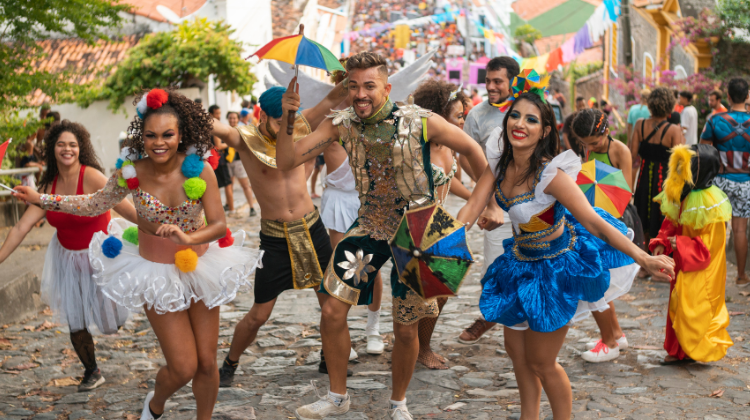
Carnival is one of the most dynamic and expressive cultural celebrations in the world. It is a time of music, costumes, parades, and collective joy, when people come together to celebrate creativity and freedom. Although Carnival is now strongly associated with countries like Brazil, its origins are deeply rooted in Europe — particularly in Portugal.
Understanding Carnival in Portugal means exploring its historical beginnings, its regional diversity, and its influence beyond national borders. From medieval street games to modern parades, Portuguese Carnival tells a story of cultural continuity, adaptation, and exchange.
The Historical Origins of Carnival in Portugal
The word Carnival is commonly believed to come from the Latin expression “carne vale,” meaning “farewell to meat.” This reflects the traditional Christian calendar, where Carnival marked the final days of celebration before Lent, a 40-day period of fasting and spiritual reflection leading up to Easter.
In Portugal, Carnival dates back to the Middle Ages and was initially known as Entrudo. Entrudo was a popular, chaotic celebration that involved water fights, flour throwing, jokes, and playful pranks. People from all social classes participated, and the streets became a space where normal rules were temporarily suspended.
These early Carnival celebrations allowed people to express themselves freely, criticize authority through humor, and escape daily routines. Over time, as society changed, Carnival evolved from spontaneous street games into more organized festivities, often supported by local communities and municipalities.
Carnival as a Reflection of Portuguese Society
One of the most important aspects of Carnival in Portugal is its role as a mirror of society. Satire, irony, and social commentary have always been central elements. Masks and costumes allow people to hide their identities and say things that would normally be unacceptable.
This tradition of humor and criticism remains alive today, especially in Carnivals that focus on political satire and exaggerated caricatures. Carnival is not just entertainment — it is also a cultural space for reflection, creativity, and collective expression.
Torres Vedras: The Most Portuguese Carnival
The Carnival of Torres Vedras is often described as “the most Portuguese Carnival in Portugal.” It is famous for preserving the original spirit of Entrudo: irreverent, humorous, and deeply connected to popular culture.
One of its most iconic features is the presence of “Cabeçudos” and “Matrafonas.” Cabeçudos are large-headed figures that represent politicians, celebrities, and public figures, usually in a satirical way. Matrafonas are traditionally men dressed as women, wearing exaggerated makeup and costumes.
This playful inversion of roles and mockery of power reflects the historical purpose of Carnival — challenging social norms through laughter. The streets of Torres Vedras become a stage for creativity, music, and collective participation, attracting thousands of visitors every year.
Madeira: Elegance, Rhythm, and International Influence
In contrast to Torres Vedras, the Carnival of Madeira, especially in the capital city of Funchal, presents a more elegant and internationally inspired celebration. Madeira’s Carnival is often compared to the Carnival of Rio de Janeiro due to its samba rhythms, glamorous costumes, and choreographed parades.
The main event is the Grand Allegorical Parade, where dancers and performers wear detailed costumes decorated with feathers, sequins, and bright colors. Music plays a central role, and the atmosphere is festive and energetic.
Another important event is the Trapalhão Parade, which is more informal and humorous, encouraging spontaneous participation from locals and visitors alike. Madeira’s mild climate, combined with its visual beauty, makes it one of the most popular Carnival destinations in Europe.
Coretos: Music, Community, and Festive Traditions
Coretos, or bandstands, are a distinctive feature of Portuguese towns and cities. They are small, often decorative structures located in public squares or gardens and are traditionally used for concerts by local bands and filarmónicas.
While coretos are not exclusive to Carnival, they play an important role in Portugal’s festive culture throughout the year, especially during summer festivals, religious celebrations, and municipal events. However, during Carnival, particularly in smaller towns, coretos may also be used for live music, dances, and community gatherings.
During Carnival weekends, it is common to see brass bands, traditional music groups, or even modern performers using coretos as a central point for entertainment. They create a space where people of all ages can come together, reinforcing the social and communal nature of Portuguese celebrations.
In this way, coretos represent continuity: they connect Carnival to other popular traditions and highlight the importance of music and public spaces in Portuguese cultural life.
Carnival’s Journey from Portugal to Brazil
Carnival arrived in Brazil through Portuguese colonization in the 16th century. The earliest form of Carnival in Brazil was also known as Entrudo, brought directly from Portugal. Like its European version, it involved street games, water throwing, and playful disorder.
As time passed, Brazilian Carnival began to change. The influence of African rhythms and dances, introduced by enslaved populations, combined with Indigenous traditions and European customs. This cultural fusion transformed Carnival into something entirely new.
Samba, percussion, and large-scale parades became central elements, especially in cities like Rio de Janeiro and Salvador. Samba schools emerged as organized community groups, preparing all year for Carnival performances.
Although Brazilian Carnival developed its own powerful identity, its roots remain closely linked to Portuguese traditions. The concept of Carnival as a time of freedom, social expression, and collective joy originated in Portugal and crossed the Atlantic with its people.
Carnival Today: Tradition and Transformation
Today, Carnival in Portugal continues to evolve. Some cities invest in large parades and international-style shows, while others focus on preserving traditional elements such as satire, masks, and community participation.
Schools, associations, and local groups play an important role in keeping Carnival alive, ensuring that each generation understands its cultural significance. Whether through humor, music, dance, or costume-making, Carnival remains a living tradition.
Conclusion
Carnival in Portugal is much more than a festive event. It is a cultural expression shaped by history, creativity, and social interaction. From the satirical streets of Torres Vedras to the elegant parades of Madeira, Portuguese Carnival reflects the country’s diversity and cultural depth.
Coretos remind us of the importance of music and community spaces, while Brazil’s Carnival stands as a global symbol of how traditions can travel, transform, and grow.
Although Carnival has taken many forms over the centuries, its essence remains the same: a celebration of life, freedom, and shared human experience — a tradition that began in Portugal and continues to inspire the world.