寻找适合你的 英语 教师…
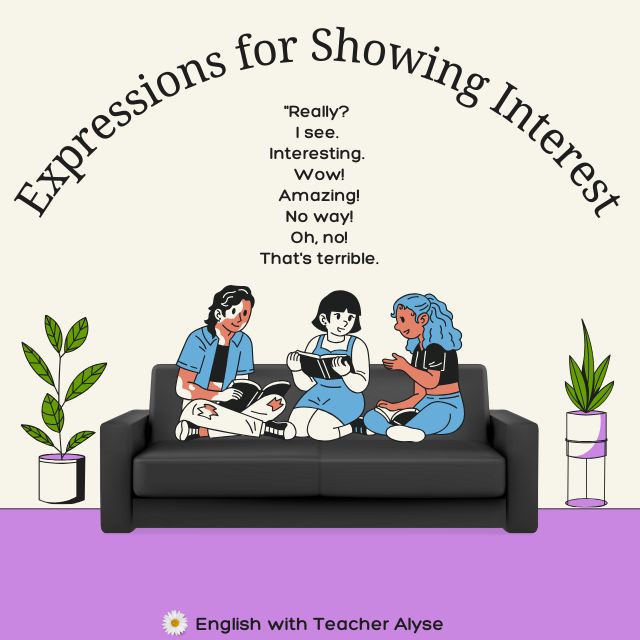
Useful expressions for showing interest
 02:02
02:02 02:02
02:02描述
Hi, and welcome back to Everyday English with Teacher Alyse! Today we are learning useful expressions for showing interest. These expressions help you respond when someone tells you good news, bad news, or just information. Let’s practice together.
Part 1: Good News
When you hear good news, you can say:
• Wow!
• Amazing!
• Really?
Example 1:
“My team won the game!”
→ “Wow! That’s amazing!”
Example 2:
“I passed my English test!”
→ “Really? Amazing!”
Part 2: Bad News
When you hear bad news, you can say:
• Oh, no!
• That’s terrible.
• No way!
Example 1:
“My phone broke yesterday.”
→ “Oh, no! That’s terrible.”
Example 2:
“I lost my wallet.”
→ “No way! That’s terrible.”
Part 3: Neutral Information
When the news is not good or bad, just information, you can say:
• I see.
• Interesting.
• Really?
Example 1:
“I have math class every Monday.”
→ “I see.” / “Interesting.”
Example 2:
“I usually wake up at 6 a.m.”
→ “Really? Interesting.”
Great job today! Now you know how to show interest when you hear good news, bad news, or just information. Try using these expressions in your conversations this week. Have a good day. See you next time.
播客频道
Everyday English with Teacher Alyse
播客创作者
所有播客集

9/100 SER 🧑🦰 Los 100 verbos más importantes en español
07:35
El lunfardo
03:06
An Overview of Malta - Episode 1
05:14
Don't Play a Joke on Me (I)
00:53
Episode #45 - The beginning of a new year
06:03
那些”奇怪“的中国习惯 Those "strange" habits Chinese people have
23:51
Business Story Episode 5
04:28
Intermediate Chinese Listening:年龄和称呼 Age and address
00:58热门播客集
Natural Spanish Fluency
9/100 SER 🧑🦰 Los 100 verbos más importantes en español
07:35Spanish from the South
El lunfardo
03:06The Malta Podcast
An Overview of Malta - Episode 1
05:14Chinese Learning with Lily
Don't Play a Joke on Me (I)
00:53Slow Japanese
Episode #45 - The beginning of a new year
06:03Chillchat (Learn Chinese and Chill)
那些”奇怪“的中国习惯 Those "strange" habits Chinese people have
23:51The Global Professional Podcast
Business Story Episode 5
04:28Intermediate Chinese Listening
Intermediate Chinese Listening:年龄和称呼 Age and address
00:58