尋找適合你的 英語 教師……
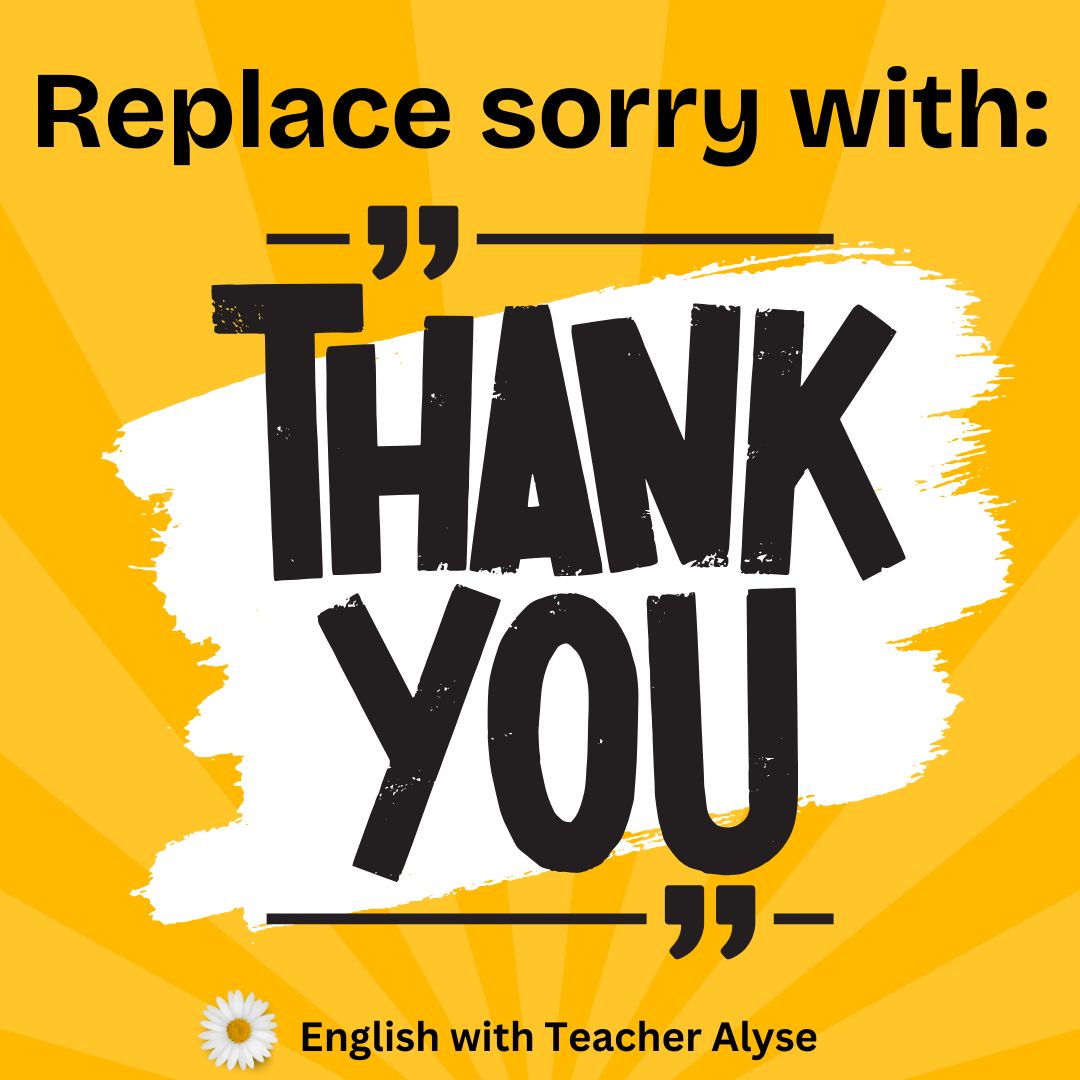
Replace "Sorry" with "Thank You"
 03:48
03:48 03:48
03:48說明
Hi, and welcome back to Everyday English with Teacher Alyse! I’m so happy you’re here. Today, we’re going to talk about a small but powerful change you can make in your daily conversations—replacing the word sorry with thank you.
Many English learners, and even native speakers, use "sorry" too often. While saying sorry is important when you truly make a mistake, overusing it can make you seem less confident and even unnecessary in some situations. Instead, shifting to thank you can make your communication more positive and empowering.
Let’s go through some common situations where you might be tempted to say "sorry" and how to rephrase them in a more confident and appreciative way.
Instead of saying: “I’m sorry I’m late.”
➝ Say: “Thank you for waiting for me.”
→ Why? This shift acknowledges the other person’s patience rather than focusing on your mistake. It creates a more positive tone.
.............................................................................................................................................................................
Why Is It Important to Limit "Sorry"?
Using "sorry" too often can make you seem less confident and even weaken your message. It can also make an issue seem bigger than it actually is. Of course, when you truly make a mistake, a sincere apology is important. But by replacing unnecessary "sorrys" with "thank yous," you turn negative situations into positive interactions.
Full transcript available upon request.
Follow me for more Everyday English.
Podcast 頻道
Everyday English with Teacher Alyse
創作者
Podcast全集

Viaja a Marruecos
01:20
Is Learning Chinese That Hard? We Share Your Struggles!
27:14
"Besok" dan "kemarin" ala orang Indonesia
02:07
"The Star and the Traveler"
05:22
Hi there
03:03
The hardest thing about moving to the UK had nothing to do with English.
05:58
UN HOMBRE VIEJO Y SORDO.
00:27
我的家人 - My family
00:50熱門集數
Moroccan Dialect with Radia
Viaja a Marruecos
01:20Chillchat (Learn Chinese and Chill)
Is Learning Chinese That Hard? We Share Your Struggles!
27:14Akhir minggu
"Besok" dan "kemarin" ala orang Indonesia
02:07«Stories & Mind»
"The Star and the Traveler"
05:22Spanish with Andres T.
Hi there
03:03🎙 One-Minute Speaking Challenge by Anatoly Glazkov – Voice Unlock Method™
The hardest thing about moving to the UK had nothing to do with English.
05:58CHISTES MEXICANOS
UN HOMBRE VIEJO Y SORDO.
00:27Yasmine's Chinese Reading - beginner
我的家人 - My family
00:50