Busca entre varios profesores de Inglés...
Podcasts
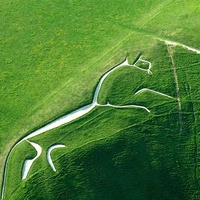
Daily Reading & Comprehension for IELTS. Cambridge 16 Reading Test 2 The White Horse of Uffington The cutting of huge figures or ‘geoglyphs’ into the earth of English hillsides has taken place for more than 3,000 years. There are 56 hill figures scattered around England, with the vast majority on the chalk down lands of the country’s southern counties. The figures include giants, horses, crosses and regimental badges. Although the majority of these geoglyphs date within the last 300 years or so, there are one or two that are much older. The most famous of these figures is perhaps also the most mysterious — the Uffington White Horse in Oxfordshire. The White Horse has recently been re-dated and shown to be even older than its previously assigned ancient pre-Roman Iron Age* date. More controversial is the date of the enigmatic Long Man of Wilmington in Sussex. While many historians are convinced the figure is prehistoric, others believe that it was the work of an artistic monk from a nearby priory and was created between the 11th and 15th centuries. The method of cutting these huge figures was simply to remove the overlying grass to reveal the gleaming white chalk below. However, the grass would soon grow over the geoglyph again unless it was regularly cleaned or scoured by a fairly large team of people. One reason that the vast majority of hill figures have disappeared is that when the traditions associated with the figures faded, people no longer bothered or remembered to clear away the grass to expose the chalk outline. Furthermore, over hundreds of years the outlines would sometimes change due to people not always cutting in exactly the same place, thus creating a different shape to the original geoglyph. The fact that any ancient hill figures survive at all in England today is testament to the strength and continuity of local customs and beliefs which, in one case at least, must stretch back over millennia.
Cambridge 16 Reading Test 2. The White Horse of Uffington
21 de mayo de 2022
3
3
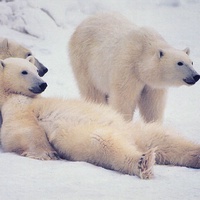
IELTS Reading & Comprehension. Why we need to protect polar bears Part 2. Physiologists Alanda Lennox and Allen Goodship found an explanation for this paradox in 2008. They discovered that pregnant bears were able to increase the density of their bones before they started to build their dens. In addition, six months later, when they finally emerged from the den with their cubs, there was no evidence of significant loss of bone density. Hibernating brown bears do not have this capacity and must therefore resort to major bone reformation in the following spring. If the mechanism of bone remodelling in polar bears can be understood, many bedridden humans, and even astronauts, could potentially benefit. The medical benefits of the polar bear for humanity certainly have their importance in our conservation efforts, but these should not be the only factors taken into consideration. We tend to want to protect animals we think are intelligent and possess emotions, such as elephants and primates. Bears, on the other hand, seem to be perceived as stupid and in many cases violent. And yet anecdotal evidence from the field challenges those assumptions, suggesting for example that polar bears have good problem-solving abilities. A male bear called GoGo in Tennoji Zoo, Osaka, has even been observed making use of a tool to manipulate his environment. The bear used a tree branch on multiple occasions to dislodge a piece of meat hung out of his reach. Problem-solving ability has also been witnessed in wild polar bears, although not as obviously as with GoGo. A calculated move by a male bear involved running and jumping onto barrels in an attempt to get to a photographer standing on a platform four metres high. Continued in the box below.
IELTS Reading & Comprehension. Why we need to protect polar bears Pt.2
19 de mayo de 2022
1
2
Mostrar más

No pierdas la oportunidad de aprender un idioma desde la comodidad de tu casa. ¡Explora nuestra selección de profesores de idiomas con experiencia e inscríbete ya en tu primera clase!