搜尋自 英語 {1} 教師……
播客
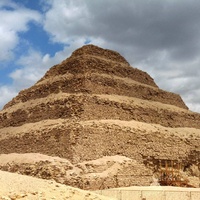
Continuing with the podcast on IELTS Reading & Comprehension & Listening. The Step Pyramid of Djoser Part 2. D When finally completed, the Step Pyramid rose 62 meters high and was the tallest structure of its time. The complex in which it was built was the size of a city in ancient Egypt and included a temple, courtyards, shrines, and living quarters for the priests. It covered a region of 16 hectares and was surrounded by a wall 10.5 meters high. The wall had 13 false doors cut into it with only one true entrance cut into the south-east corner; the entire wall was then ringed by a trench 750 meters long and 40 meters wide. The false doors and the trench were incorporated into the complex to discourage unwanted visitors. If someone wished to enter, he or she would have needed to know in advance how to find the location of the true opening in the wall. Djoser was so proud of his accomplishment that he broke the tradition of having only his own name on the monument and had Imhotep’s name carved on it as well. E The burial chamber of the tomb, where the king’s body was laid to rest, was dug beneath the base of the pyramid, surrounded by a vast maze of long tunnels that had rooms off them to discourage robbers. One of the most mysterious discoveries found inside the pyramid was a large number of stone vessels. Over 40,000 of these vessels, of various forms and shapes, were discovered in storerooms off the pyramid’s underground passages. They are inscribed with the names of rulers from the First and Second Dynasties of Egypt and made from different kinds of stone. Continuing below.
Cambridge IELTS Reading & Comprehension. The Step Pyramid of Djoser Part 2
2022年5月23日
3
0
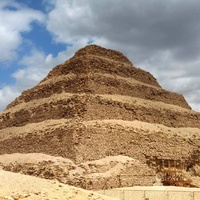
Cambridge Reading & Comprehension & Listening . The Step Pyramid of Djoser - Part 1. A The pyramids are the most famous monuments of ancient Egypt and still hold enormous interest for people in the present day. These grand, impressive tributes to the memory of the Egyptian kings have become linked with the country even though other cultures, such as the Chinese and Mayan, also built pyramids. The evolution of the pyramid form has been written and argued about for centuries. However, there is no question that, as far as Egypt is concerned, it began with one monument to one king designed by one brilliant architect: the Step Pyramid of Djoser at Saqqara. B Djoser was the first king of the Third Dynasty of Egypt and the first to build in stone. Prior to Djoser’s reign, tombs were rectangular monuments made of dried clay brick, which covered underground passages where the deceased person was buried. For reasons which remain unclear, Djoser’s main official, whose name was Imhotep, conceived of building a taller, more impressive tomb for his king by stacking stone slabs on top of one another, progressively making them smaller, to form the shape now known as the Step Pyramid. Djoser is thought to have reigned for 19 years, but some historians and scholars attribute a much longer time for his rule, owing to the number and size of the monuments he built. C The Step Pyramid has been thoroughly examined and investigated over the last century, and it is now known that the building process went through many different stages. Historian Marc Van de Mieroop comments on this, writing ‘Much experimentation was involved, which is especially clear in the construction of the pyramid in the center of the complex. It had several plans … before it became the first Step Pyramid in history, piling six levels on top of one another … The weight of the enormous mass was a challenge for the builders, who placed the stones at an inward incline in order to prevent the monument breaking up.’
Cambridge IELTS Reading & Comprehension
2022年5月23日
0
3
Don't forget to book your lesson with me. :) I'll leave the transcription as a comment down below. Few languages are so associated with their written form as is Chinese. The mere mention of the language calls to mind an elaborate, beautiful and—to outsiders—mysterious script. The Chinese themselves are extraordinarily proud of it. Without doubt, though, it is hard. Opinions vary on how many characters a user must know, but around 1,000 are needed for minimal function; 6,000-8,000 is a common estimate for an educated person. Characters are usually assembled from smaller pieces, one of which might give a clue to the meaning and the other to its pronunciation. But that is not always so, and in any case, which piece goes where is not fixed. Learning to write Chinese has always been tough. As if that were not enough, for centuries the few people who could relied on its literary, classical form, equivalent to the use of Latin in medieval Europe. In the guise of poetry and proverbs, it is still in use today. Bringing Chinese into the modern, international and digital world is the subject of “Kingdom of Characters”, a fascinating book by Jing Tsu of Yale University. First, the modernisers had to replace classical Chinese. This involved choosing one of the many mutually unintelligible spoken varieties at a heated conference in 1913. Wang Zhao, one of the key figures there, chased another delegate from the room for having called him a “son of a bitch”—or so Wang thought. The poor man had actually said “rickshaw” in his southern dialect. Wang and his allies overcame the southerners, and the Mandarin of Beijing became putonghua, the “common tongue”. The written standard was based on it.
How Technology Makes It More Convenient to Learn Chinese
2022年5月22日
2
2
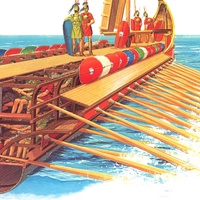
IELTS. CAMBRIDGE READING. Daily reading & comprehension. Roman shipbuilding and navigation Shipbuilding today is based on science and ships are built using computers and sophisticated tools. Shipbuilding in ancient Rome, however, was more of an art relying on estimation, inherited techniques and personal experience. The Romans were not traditionally sailors but mostly land- based people, who learned to build ships from the people that they conquered namely the Greeks and the Egyptians. There are a few surviving written documents that give descriptions and representations of ancient Roman ships, including the sails and rigging. Excavated vessels also provide some clues about ancient shipbuilding techniques. Studies of these have taught us that ancient Roman shipbuilders built the outer hull first, then proceeded with the frame and the rest of the ship. Planks used to bulld the outer hull were initially sewn together. Starting from the 6th century BCE, they were fixed using a method called mortise and tenon, whereby one plank locked into another without the need for stitching. Then in the first centuries of the current era, Mediterranean shipbuilders shifted to another shipbuilding method, still in use today, which consisted of building the frame first and then proceedlng with the hull and the other components of the ship. This method was more systematic and dramatically shortened ship construction t›mes. The ancient Romans built large merchant ships and warships whose size and technology were unequalled until the 16th century CE. Warships were built to be lightweight and very speedy. They had to be able to sail near the coast, which is why they had no ballast or excess load and were built with a long, narrow hull. They did not sink when damaged and often would lie crippled on the sea’s surface following naval battles. They had a bronze battering ram, which was used to piercc the timber hulls or break the oars of enemy vessels. Continue below.
IELTS. Cambridge 16 Reading Test 3. Roman shipbuilding and navigation
2022年5月22日
3
3
顯示更多內容