Search from various English teachers...
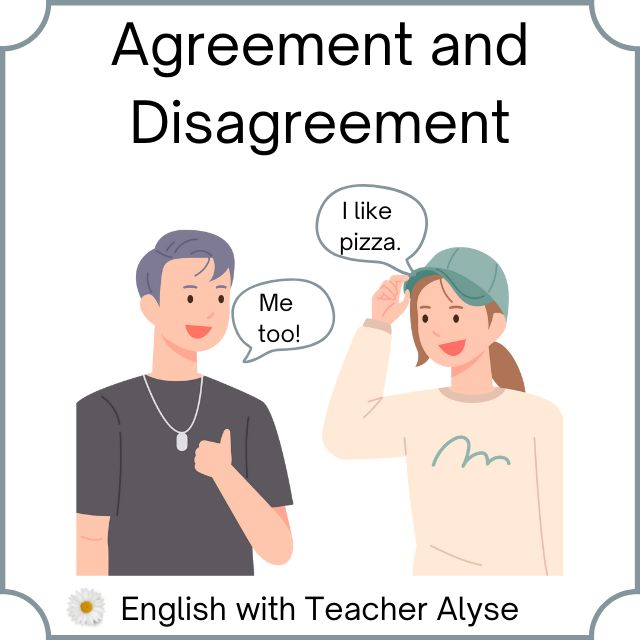
Expressing agreement and disagreement
 01:47
01:47 01:47
01:47Description
Useful language when expressing agreement and disagreement.
Agreeing with a positive statement
Me too.
So do / am / can I.
Agreeing with a negative statement
Me neither.
Neither do / am / can I.
Disagreeing with a positive statement
Really? Not me.
I don’t /can’t
I’m not
Disagreeing with a negative statement
Really? I do / am / can.
For example:
I live in apartment in the city. So, do I.
I’m so sleepy. So am I.
I love cheese. Me too!
I really don’t like mushrooms. Neither do I.
Follow me for more Everyday English.
Podcast Channel
Everyday English with Teacher Alyse
Author
All episodes
Futurismo
10:49
2024,生肖“龙”年
00:54
Los Acentos Más Raros del Español y Dónde Encontrarlos
08:50
Episode 43. おいとけ!
03:47
Breathe In, Breathe Out: Recovering and Reconnecting
01:54
Música de los 60s y 70s Ft. Juliana (Brasil)
11:45
(全中文) 美国移民体检经历!
06:33
Greeting in Two Languages Upsets Train Passenger
02:03Popular episodes
Dale Play al Español
Futurismo
10:49“龙”年中国话(“ lóng ” nián zhōng guó huà)
2024,生肖“龙”年
00:54Español con todo
Los Acentos Más Raros del Español y Dónde Encontrarlos
08:50Tina Japa Go!
Episode 43. おいとけ!
03:47Context Clues
Breathe In, Breathe Out: Recovering and Reconnecting
01:54Mucho que decir
Música de los 60s y 70s Ft. Juliana (Brasil)
11:45Chillchat (Learn Chinese and Chill)
(全中文) 美国移民体检经历!
06:33Practice Listening, Reading & Comprehension
Greeting in Two Languages Upsets Train Passenger
02:03
