Search from various English teachers...
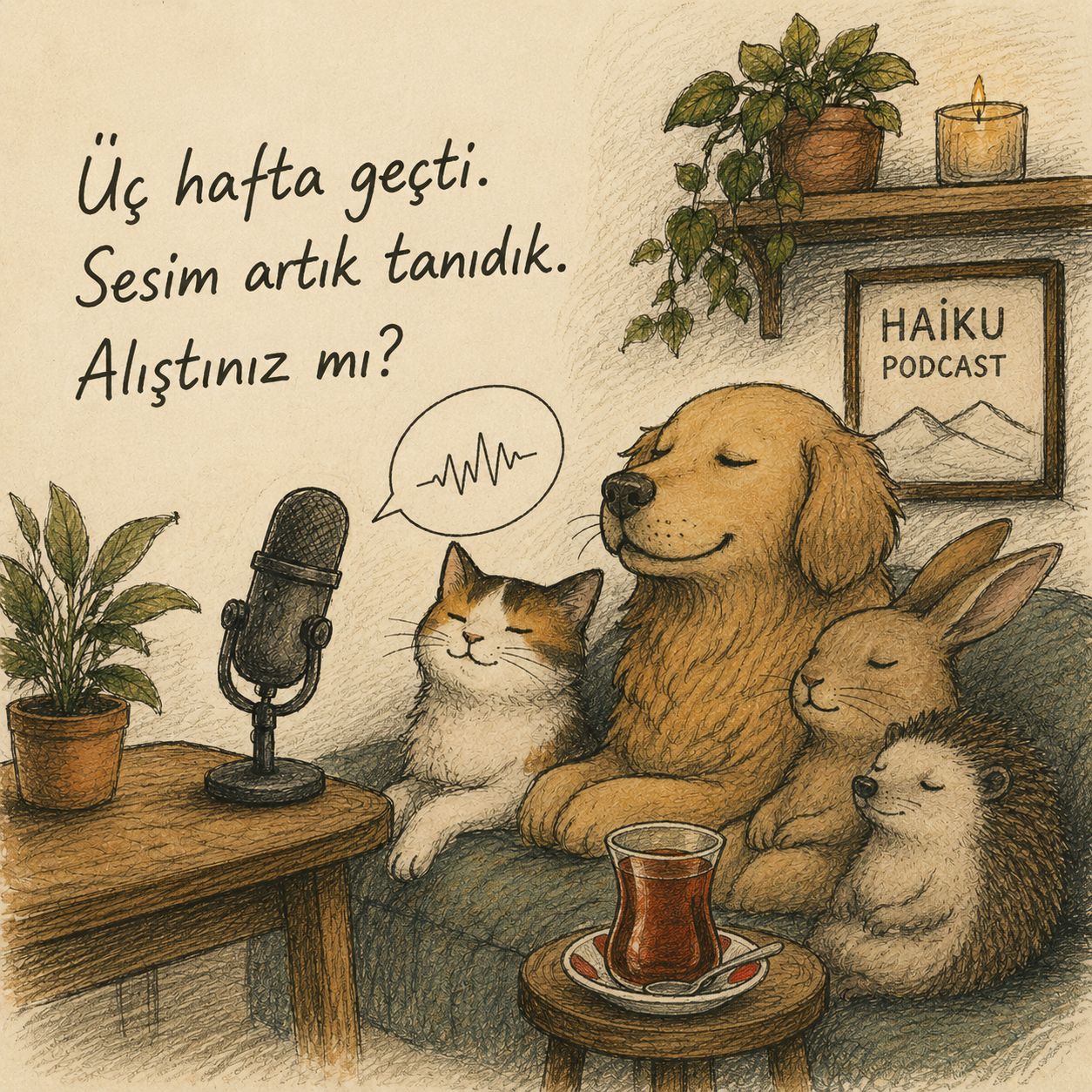
Episode 3: Alıştınız mı?
 03:10
 03:10
Description
"
Üç hafta geçti.
Sesim artık tanıdık.
Alıştınız mı?
"
[00:00] Welcome. Hoşgeldiniz. To another episode of Turkish haikus.
[00:08] Happy Friday. Hayırlı Cumalar.
[00:12] So, today's haiku goes like this.
"
Üç hafta geçti.
Sesim artık tanıdık.
Alıştınız mı?
"
[00:23] It ends in a question, right? Let's hear it one more time:
"
Üç hafta geçti.
Sesim artık tanıdık.
Alıştınız mı?
"
[00:36] And let's try to translate it to English, before we start dissecting it.
"
It's been three weeks.
My voice is now familiar.
Are you used to it?
"
[00:51] And, let's dissect it.
[00:53] Üç hafta geçti. The first line. "Üç hafta" means "three weeks"; "geçti" means, in this case, "it's been", "it has passed". It's been three weeks. Üç hafta geçti.
[01:09] Now, the second line. Sesim artık tanıdık. The first word, "sesim" means "my voice". "Ses" literally means "sound", it could also be somebody's "voice". "Sesim" is "my voice". "Artık" means like "now", "from now on" like there's been a change. "Tanıdık" is "familiar". It's from the verb "tanımak": "to know someone", "to know something" even. "To recognize". "Seni tanıyorum" means "I know you", "I recognize you". "Tanışmak" is "to meet someone for the first time". It's in the same phrase when we say "tanıştığıma memnun oldum": "nice to meet you".
[02:08] Now the final line: "Alıştınız mı?" is a question. You might recognize the "mı" at the end. And "alıştınız mı?", I am speaking to you in the second person plural. I am a little bit formal or you might just be more than one person. This is from "alışmak", "to get used to something". It's in the past. "Alış-tı-nız" makes it second person plural. "Did you get used to it?" "Alıştınız mı?".
[02:47] You could say, if you are used to it, "Alıştım". "I got used to it". "I am used to it".
[02:54] Well, that's it for the day. I'm just going to read the haiku in Turkish one more time and I'll say goodbye until the next week.
"
Üç hafta geçti.
Sesim artık tanıdık.
Alıştınız mı?
"
Podcast Channel
Bitesize Turkish Haikus
Author
All episodes

Autogenic training for your mind.
08:21
18. La casaca (la ropa en Perú)
04:33
DOS CHISTES DE PEPITO. MUY FAMOSOS.
00:36
Hablar (hasta) por los codos
02:15
みんなのにほんご1 とし years old
01:05
🎧 Выпуск 46. Международный день музеев / International Museum Day 🏛️
05:02
Ep4. ともだちの いえから かえるとき どう あいさつする?おつかれさまです、の ほんとうの いみは?
07:21
La famiglia Italiana
03:53Popular episodes
The Habits of Professionals Growing Into Strong, Confident English Communicators
Autogenic training for your mind.
08:21Learn Peruvian Spanish
18. La casaca (la ropa en Perú)
04:33CHISTES MEXICANOS
DOS CHISTES DE PEPITO. MUY FAMOSOS.
00:36Expresiones en español
Hablar (hasta) por los codos
02:15ようへい先生 N4,N5チャンネル
みんなのにほんご1 とし years old
01:05🎧 Speak fluent Russian A1-A2
🎧 Выпуск 46. Международный день музеев / International Museum Day 🏛️
05:02🇯🇵BEAUTIFUL Sound of Japanese🌸🌊🍁⛄️ with MISAO
Ep4. ともだちの いえから かえるとき どう あいさつする?おつかれさまです、の ほんとうの いみは?
07:21Italiano Chiaro - Cultura e Tradizioni
La famiglia Italiana
03:53
