Key takeaways
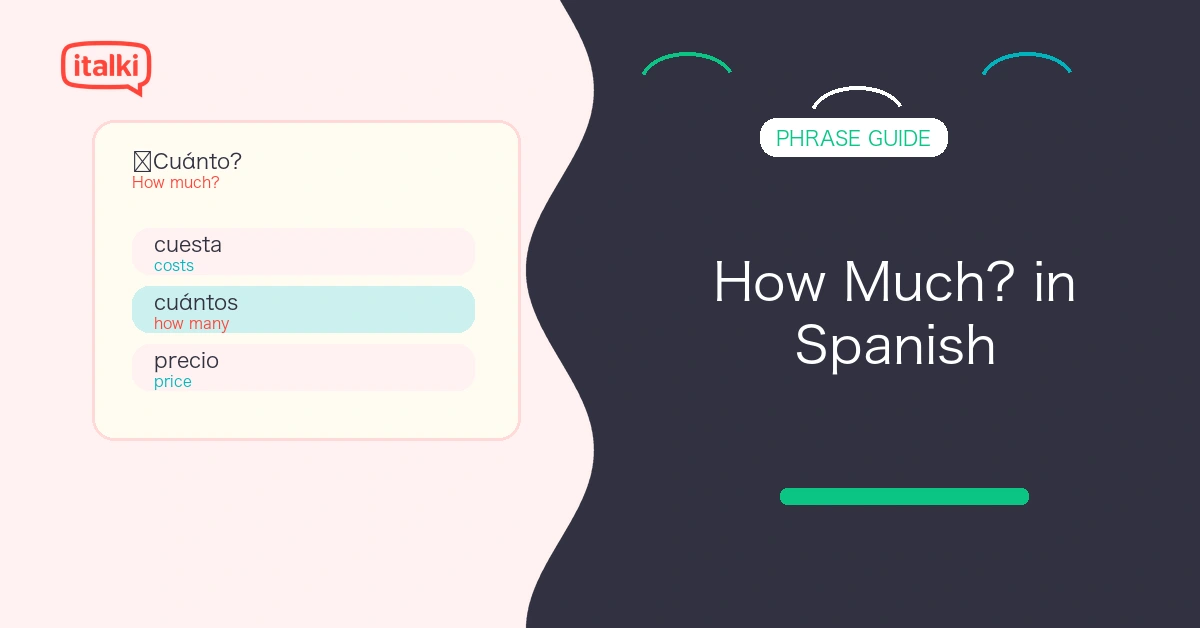
- The most common way to ask “how much?” is ¿Cuánto cuesta? (how much does it cost?) for a single item.
- ¿Cuánto? agrees with the noun in gender: cuánto (masculine), cuánta (feminine), cuántos (masculine plural), cuántas (feminine plural).
- ¿Cuánto es? is used at the end of a purchase; ¿Cuánto vale? is an alternative meaning “how much is it worth?”
- Knowing how to ask the price is essential for shopping, markets, and travel, where the price is not always displayed.
- The same cuánto forms are used to ask “how many?” when preceded by a noun.
Many Spanish learners reach intermediate level and can order food, ask for directions, and introduce themselves, but freeze when the price is not on a label and they need to ask. This guide covers every version of “how much” you need for real shopping and travel situations.
With 30,000+ tutors across 150+ languages, italki connects you with Spanish teachers who can run shopping roleplay scenarios with you, practicing exactly the phrases and responses this guide covers until they feel natural under real-time pressure. The core question: ¿Cuánto cuesta?
| Spanish | English | When to use |
|---|---|---|
| ¿Cuánto cuesta? | How much does it cost? | Single item, most common form |
| ¿Cuánto cuestan? | How much do they cost? | Multiple items |
| ¿Cuánto vale? | How much is it worth? | Alternative, slightly more informal |
| ¿Cuánto es? | How much is it? | At a till or checkout |
| ¿Cuánto cuesta esto? | How much does this cost? | Pointing at a specific item |
Book online Spanish lessons to work through price questions through simulated market and shop scenarios with a native speaker.

Find Your Perfect Teacher
Build real speaking confidence with personalized lessons from a teacher who matches your goals, schedule, and learning style.
Book a trial lesson
Cuánto: the four forms
| Form | Gender / Number | Example |
|---|---|---|
| Cuánto | Masculine singular | ¿Cuánto cuesta el libro? (How much does the book cost?) |
| Cuánta | Feminine singular | ¿Cuánta leche necesitas? (How much milk do you need?) |
| Cuántos | Masculine plural | ¿Cuántos días tienes? (How many days do you have?) |
| Cuántas | Feminine plural | ¿Cuántas personas vendrán? (How many people are coming?) |
Asking about price in different contexts
In a market or street stall:¿Cuánto cuesta esto? / ¿A cuánto está el kilo? / ¿Cuánto vale la bolsa? In a shop:¿Puede decirme el precio de esto? / ¿Cuánto es en total? / ¿Tienen algo más barato? At a restaurant:¿Cuánto cuesta el menú del día? / ¿Está incluido el servicio? / ¿Me trae la cuenta, por favor? For rentals or services:¿Cuánto cuesta por noche? / ¿Cuánto cobran por hora? Explore context-specific pricing language with a Spanish online tutor for the situations you’ll encounter.
Find Your Perfect Teacher
Build real speaking confidence with personalized lessons from a teacher who matches your goals, schedule, and learning style.
Book a trial lesson
Prices in Spanish: what to listen for
| Spanish | English |
|---|---|
| veinticinco | twenty-five |
| treinta | thirty |
| cuarenta y nueve | forty-nine |
| cincuenta | fifty |
| cien | one hundred (exactly) |
| ciento diez | one hundred and ten |
| doscientos | two hundred |
| mil | one thousand |
Find Spanish teachers on italki to practice price comprehension through targeted listening exercises.
Useful phrases around price
| Spanish | English |
|---|---|
| ¿Tiene descuento? | Is there a discount? |
| ¿Puede hacer un mejor precio? | Can you give a better price? |
| Es demasiado caro | It is too expensive |
| ¿Acepta tarjeta? | Do you accept card? |
| Solo tengo efectivo | I only have cash |
| Me lo llevo | I will take it |
| Lo pienso | I will think about it |
Build real shopping fluency through market roleplay. With 30,000+ expert tutors across 150+ languages on italki, find a Spanish tutor and practice market and restaurant conversations.Book a trial lesson today.
Find Your Perfect Teacher
Build real speaking confidence with personalized lessons from a teacher who matches your goals, schedule, and learning style.
Book a trial lesson
FAQ
What is the difference between ¿cuánto cuesta? and ¿cuánto vale?
Both mean “how much is it?” Cuesta is from costar (to cost) and vale is from valer (to be worth). In practice, both are used interchangeably. Vale is slightly more colloquial and very common in Spain, where “vale” is also used as “OK.” How do I ask “how much is this in total” at a checkout? The most natural phrase is ¿Cuánto es en total? or simply ¿Cuánto es? The cashier will typically say “son [amount]” (it is [amount]) or “son [amount] en total.” Can ¿cuánto? be used without a following verb? Yes, in informal speech. Saying just ¿Cuánto? while pointing at an item is understood as “how much is this?” and is commonly used in markets and quick transactions.
Want to learn a language at italki?
Here are the best resources for you!