Easter is one of the most important celebrations in Portugal. For centuries, it was primarily a deeply religious event rooted in the country’s Catholic identity. Today, it is still widely celebrated, but the way Portuguese people experience this season has changed considerably.
Between solemn processions and supermarket chocolate eggs, between the traditional Compasso Pascal and commercial advertising campaigns, Portuguese Easter reveals a fascinating contrast between ancient tradition and modern life.
In this article, we will explore the religious origins of Easter, what Lent used to represent, the differences between Good Friday and Easter Sunday meals, and how traditions have evolved over time.
The Religious Origins of Easter
The word “Easter” in Portuguese (Páscoa) comes from the Hebrew term Pessach, meaning “passage.” In Christianity, Easter celebrates the Resurrection of Jesus Christ, which occurs on the Sunday following the crucifixion.
As a historically Catholic country, Portugal has long regarded Easter as one of the most spiritually significant moments of the year. For generations, especially in small villages and rural communities, Easter was the high point of the religious calendar.
The week leading up to Easter Sunday is known as Holy Week (Semana Santa). In cities such as Braga and Óbidos, solemn processions still take place today, reenacting scenes from Christ’s Passion. Participants often wear traditional robes, candles illuminate the streets, and the atmosphere is deeply reflective.
In the past, religious observance during this period was much stronger than it is today. People dressed formally for church, attended Mass more frequently, observed stricter fasting rules, and maintained a quiet and respectful atmosphere.
While many families still observe Easter religiously, modern practice tends to be more symbolic and less rigid.
Lent: What It Used to Be
To understand Easter in Portugal, we must begin forty days earlier with Lent (Quaresma).
Lent begins on Ash Wednesday and lasts for forty days, symbolizing the forty days Jesus spent fasting in the desert. Traditionally, Lent was a time of discipline, sacrifice, and spiritual reflection.
Historically, Lent involved several practices. People avoided meat on Fridays, fasted on specific days, reduced luxury and excess, and attended church more regularly. Celebrations and parties were often discouraged.
In many Portuguese households decades ago, Lent significantly affected daily life. Meals were simpler, desserts were limited, and even music or entertainment could be reduced in more traditional families.
Children were often taught that Lent was a serious period. Older generations remember being discouraged from loud games or excessive laughter during Holy Week.
Today, Lent is still observed by practicing Catholics, but usually in a more flexible way. Many people still avoid eating meat on Fridays, especially on Good Friday, but strict fasting is far less common. For some, Lent has become more of a cultural reference than a strict religious obligation.
Food During Lent: Simplicity and Restraint
Food traditions reveal much about the meaning of Lent.
Meals during this period were traditionally simple and modest. Common foods included fish, especially codfish (bacalhau), vegetable soups, chickpeas, bread with olive oil, and seasonal vegetables.
Meat consumption was reduced, particularly on Fridays. This restriction was intended as a symbolic sacrifice, giving up something pleasurable in preparation for Easter.
Compared with modern eating habits, Lent meals were generally lighter and less abundant.
Good Friday: A Day of Silence and Abstinence
Good Friday (Sexta-feira Santa) is the most solemn day of the Easter period. It marks the crucifixion of Christ and is traditionally observed as a day of mourning and reflection.
In the past, church attendance was very high, and silence and respect were strongly encouraged. Meat was strictly forbidden, and meals were particularly simple.
Fish became the traditional Good Friday meal. In Portugal, codfish holds a special place in national cuisine and becomes especially important on this day. Typical dishes include boiled codfish with potatoes and cabbage, baked codfish with olive oil and onions, chickpea salads with tuna or cod, and simple vegetable soups.
There is a noticeable contrast between Good Friday and Easter Sunday. Good Friday meals are intentionally restrained, modest in quantity and flavor, reflecting the sorrowful nature of the day.
Today, while many families still avoid meat on Good Friday, the overall atmosphere tends to be less strict than it was fifty years ago. For some people, it is simply a public holiday.
Easter Sunday: Abundance and Celebration
If Good Friday represents sacrifice, Easter Sunday (Domingo de Páscoa) represents joy and renewal. This is the day that celebrates the Resurrection, and the mood changes dramatically.
The Compasso Pascal
One of the most distinctive Portuguese traditions is the Compasso Pascal, also known as the Easter house blessing.
On Easter Sunday, a priest visits homes in the parish carrying a decorated cross. Families welcome him, kiss the cross, and make a donation to the church.
In the past, this visit was almost universal in villages. Homes were carefully cleaned and decorated, and families prepared sweets and drinks for visitors.
In large cities such as Lisbon and Porto, this tradition has become less common, though it remains alive in rural areas.
Easter Sunday Food: From Restraint to Abundance
The difference between Good Friday and Easter Sunday is especially visible at the table.
Good Friday meals focus on simplicity and sacrifice. They usually include fish-based dishes prepared in modest ways.
Easter Sunday, in contrast, is a celebration of abundance. Traditional meals often include roast lamb (borrego) or goat (cabrito), richly seasoned with garlic, olive oil, wine, and bay leaves. Roasted potatoes and abundant desserts complete the meal.
Lamb carries strong religious symbolism, representing sacrifice and rebirth.
Another essential element is folar, the traditional Easter bread. There are several regional variations. Some versions are sweet and decorated with boiled eggs baked into the dough. Others are savory and filled with cured meats. Some are flavored with cinnamon and anise.
In regions such as Chaves, savory meat-filled folar is particularly popular. The egg symbolizes new life and renewal.
Modern Influences: Chocolate and Commercialization
While traditional foods remain important, modern Easter in Portugal also includes strong commercial influences.
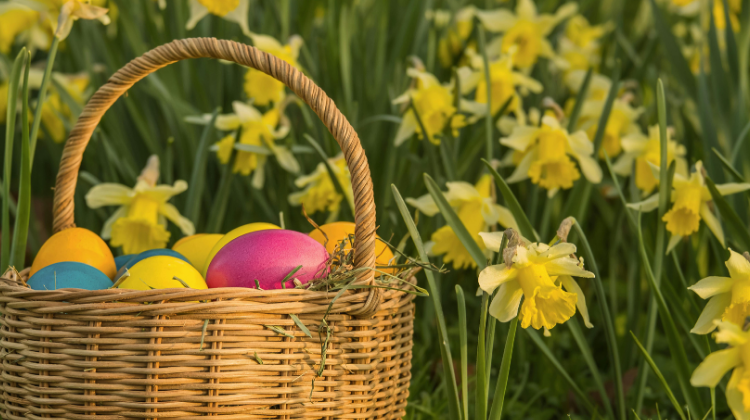
Supermarkets prominently display chocolate eggs, chocolate rabbits, sugar-coated almonds, and decorative gift baskets.
The Easter Bunny is not originally part of Portuguese religious tradition. It is an imported symbol associated with spring and fertility.
Today, many children associate Easter more with chocolate than with religious observance. This reflects broader cultural changes and globalization.
Then and Now: A Cultural Transformation
If we compare Easter in Portugal fifty years ago with today, several differences emerge.
In the past, religious observance was stronger, fasting during Lent was stricter, and food restrictions were clearly defined. Celebrations were more community-centered, and most meals were homemade.
Today, religious practice tends to be more flexible. Lent is often symbolic, commercial products are widely consumed, and international influences are stronger. Many people also travel during the Easter holiday period.
However, one element remains constant: family gatherings.
Even those who are not religious often gather for Easter lunch. Many Portuguese emigrants return home during this period, reinforcing its importance as a time of reunion.
The Meaning of Easter in Contemporary Portugal
Easter in Portugal is neither purely religious nor purely commercial. It is a layered celebration.
It begins with restraint during Lent, deepens with reflection on Good Friday, and culminates in joy and abundance on Easter Sunday.
This progression from simplicity to celebration is reflected most clearly in food traditions.
Although society has become more secular and globalized, Easter continues to serve as a moment of cultural continuity. Traditions may evolve, but they rarely disappear completely. Instead, they adapt.
Useful Vocabulary
Páscoa – Easter
Semana Santa – Holy Week
Domingo de Páscoa – Easter Sunday
Ressurreição – Resurrection
Procissão – Procession
Compasso Pascal – Easter house blessing visit
Folar – Traditional Easter bread
Borrego – Lamb
Amêndoas – Almonds
Jejum – Fasting
Abstinência – Abstinence
Common expressions:
“Feliz Páscoa!”
“Boa Semana Santa.”
“Receber o compasso.”
“Ir à missa da Páscoa.”
Conclusion
Easter in Portugal is a powerful example of how culture transforms over time. What was once a strictly religious observance has become a blend of faith, family, food, and modern influence.
From the disciplined simplicity of Lent to the fish-based restraint of Good Friday and the rich abundance of Easter Sunday, Portuguese Easter tells a story of contrast and continuity.
Between ancient processions and supermarket chocolate displays, the heart of Easter in Portugal remains the same: renewal, gathering, and shared identity.
Perhaps the most interesting aspect is not choosing between old tradition and modern celebration, but recognizing that both coexist, shaping what Easter means in Portugal today.