What you can achieve in 3 months: In 3 months, you can work toward holding simple everyday conversations in French with about 90 minutes of focused daily practice. An independent study of learners on italki found that 71.6% improved by at least one oral proficiency level after two months, showing that meaningful speaking progress is possible within this timeframe.
Key takeaways
- Regular speaking practice with a French tutor turns the French you study into French you can use, with mistakes corrected as you make them.
- Three months of consistent study can take a complete beginner to a basic conversational level in French, between A1 and A2 on the CEFR scale, but not to full fluency.
- Plan for about 90 minutes of focused study a day, split between listening, speaking, vocabulary review and grammar, and build toward the 2,000 most common words.
- Set 12 weekly goals and track progress every week so you can adjust the plan and stay motivated.
You can learn French in 3 months well enough to hold simple everyday conversations, though not to full fluency. With about 90 minutes of focused study a day and regular speaking practice, most beginners reach a level between A1 and A2 on the Common European Framework of Reference (CEFR), the scale used to describe language ability.
The hardest part of a three-month plan is getting enough speaking practice and knowing which mistakes are holding you back. italki connects you with 1,300 French tutors who adapt lessons to your level and goals and correct your pronunciation and grammar as you speak. Trusted by more than 10 million learners since 2007, italki gives you the conversation practice and accountability that self-study cannot.
This guide gives complete beginners and learners a month-by-month roadmap, a daily routine you can keep, and a clear picture of how much French you can expect to speak after 90 days.
Want to start speaking in your first week? Book a trial lesson with a French tutor who builds each lesson around your goals.

Find Your Perfect Teacher
Your French doesn’t have to sound like a textbook. Get personalized lessons from native tutors who’ll help you speak naturally, not just correctly.
Book a trial lesson
Can you learn French in 3 months?
Yes, you can learn French in 3 months to a basic conversational level if you study every day and speak from the start. You will not be fluent, but you can introduce yourself, order food, talk about your day and handle simple exchanges with patient native speakers.
The US Foreign Service Institute places French in Category I, the languages closest to English, and lists 30 weeks, or about 750 class hours, to reach general professional proficiency. Three months is about 90 days, so 90 minutes of daily study adds up to roughly 135 hours, under a fifth of that total.
That gap is why becoming fluent in just three months is not a realistic promise. What a few months can do is give you enough vocabulary, grammar and listening to have your first conversation and keep it going. French is a Romance language, so many words look familiar to English speakers, which speeds up vocabulary building.
If you studied French at school, passive knowledge comes back quickly once you start using it, and you can expect to progress fast in the first few weeks.
Turn your first weeks into real conversations with a French teacher online who corrects you as you speak.
How much French can you learn in 3 months?
In three months, most learners who study 60 to 90 minutes a day can expect a strong A1 or A2, the first two French language levels on the CEFR scale, which means you can handle short everyday conversations on familiar topics. At A2 you can manage simple social exchanges and describe your background, routine and needs in simple sentences.
How far you get depends on where you start, how consistently you study French and how much of that time is active practice.
Active practice counts for more than hours logged. An hour of conversation with a tutor moves your speaking further than an hour of passive listening. Consistency beats intensity too, because your brain consolidates a new language through frequent, short exposure.
Not sure where you stand? An online French tutor can assess your level in a trial lesson and set targets for the 90 days.
Find Your Perfect Teacher
Your French doesn’t have to sound like a textbook. Get personalized lessons from native tutors who’ll help you speak naturally, not just correctly.
Book a trial lesson
How to learn French in 3 months
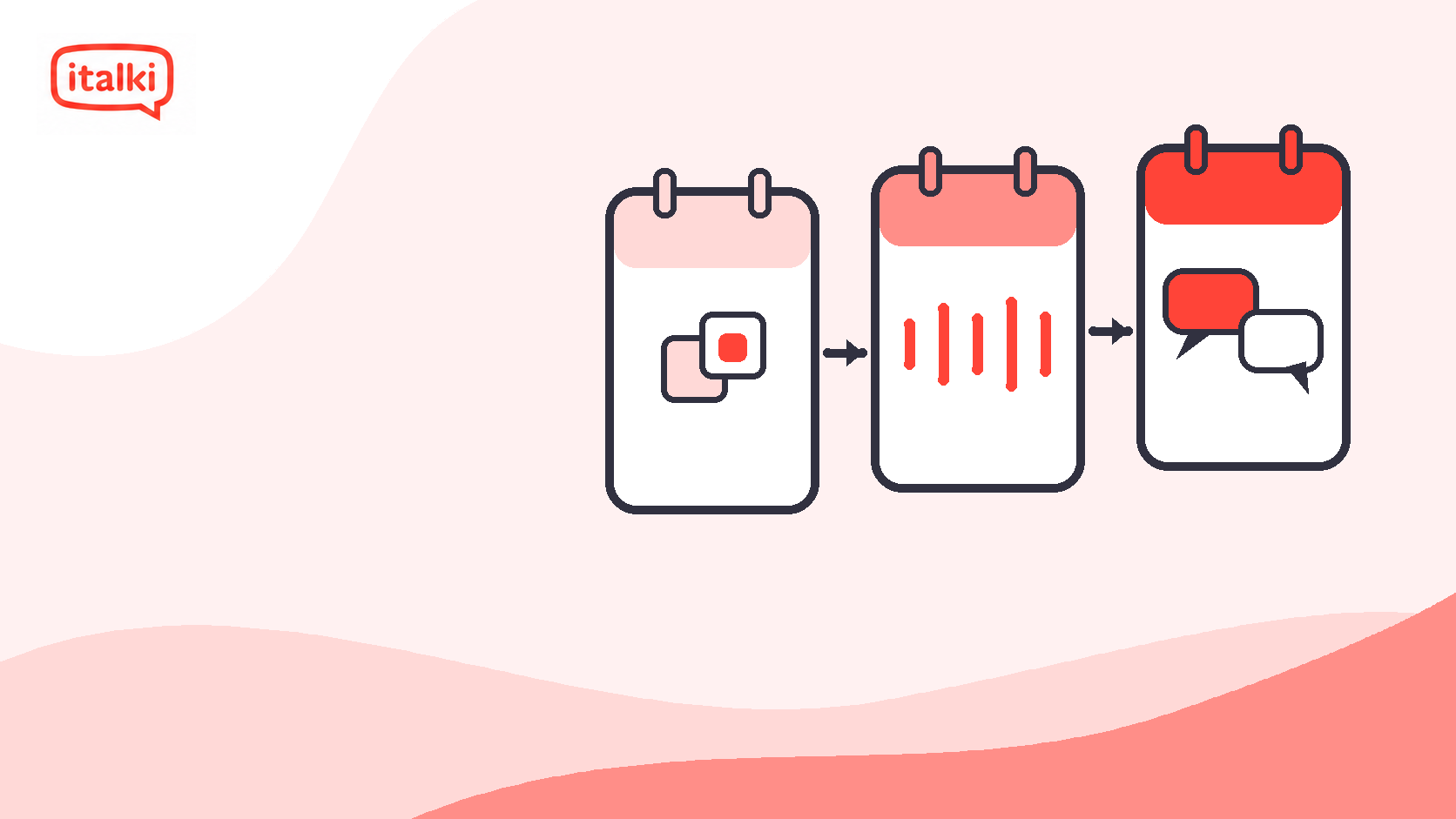
To learn French in 3 months, split the 12 weeks into three stages and set one small goal for each week so you always know what to work on next. The focus moves from sounds and basic words in month one, to conversations in month two, to using French in real life in month three.
Month 1: build a base and start to speak French
Your goal in the first month is to learn the sounds of French, your first 500 words and the present tense, and to have your first conversation before the month ends.
Weeks one to four decide whether the plan survives, so keep study blocks short and daily. Sounds come first, because spoken French drops and links sounds in ways written French never shows you.
What to focus on
- Pronunciation. Learn the nasal vowels, the French r and silent final letters in week one with a guide to French pronunciation, then shadow short clips by repeating each sentence a second behind the speaker.
- Vocabulary. Learn the 500 most common words in context, in short sentences about your own life, and review them daily with spaced repetition apps such as Anki. Label household items in French so you see the words every day.
- Grammar. Stick to the present tense of être, avoir, aller, faire and regular -er verbs, plus question forms and negation.
- Listening. Spend 15 to 20 minutes a day on slow, clear French made for beginners, such as podcasts for beginners and slow news programs.
- Speaking. Record yourself answering five simple questions about yourself in week one, then book your first lesson, even if you can only introduce yourself. A first conversation with a private tutor shows you what to fix first.
By the end of month one, aim to
- Introduce yourself and describe your daily routine in simple sentences
- Ask and answer simple questions about work, family and hobbies
- Understand slow, clear French on familiar topics
Month 2: hold simple conversations with a French tutor
Your goal in the second month is to pass 1,000 words, add the past and the near future, and hold a five-minute conversation without switching to English.
By weeks five to eight, the priority moves from knowing French to using it. Speaking regularly reveals vocabulary and grammar gaps you cannot see through daily study alone.
What to focus on
- Vocabulary. Learn new words in context from lessons, podcasts and short texts rather than from isolated word lists, and keep the daily vocabulary review going.
- Grammar. Add the passé composé for completed actions and aller plus an infinitive for plans. These two structures let you talk about yesterday and tomorrow, not only today.
- Speaking. Aim for three lessons or exchanges a week. Between lessons, write short messages to your teacher in French and use the corrections in your next session.
- Listening. Move from learner podcasts to slow news and French shows with French subtitles. Regular French listening practice trains your ear for the speed and rhythm of native speakers.
By the end of month two, aim to
- Talk about daily life, past events and plans in short sentences
- Follow familiar topics when native French speakers talk clearly
- Read short texts without looking up every word
Month 3: talk about real life and get immediate feedback
Your goal in the final month is to build toward 2,000 words, speak for longer without translating in your head, and handle everyday situations you would meet on a trip to France.
Weeks nine to twelve are about using French rather than adding study methods. You do not need total immersion to make real progress, but you do need daily contact with the language outside your study sessions.
What to focus on
- Immersion. Listen to French songs with the lyrics, watch one of the best French TV shows with French subtitles, and explore videos on topics you already enjoy so the vocabulary sticks.
- Speaking. Use longer lessons to tell stories, give personal opinions and role-play everyday situations, for example a doctor’s visit or buying a train ticket. Ask your tutor to correct only recurring mistakes so the conversation keeps flowing.
- Vocabulary. Push toward 2,000 words. Research by Nation and Waring found that about 2,000 word families give close to 80% coverage of written English and around 96% of informal speech.
- Writing and review. Write a short paragraph about your day and get feedback in your next lesson, then re-record your week-one answers and take a level test.
By the end of month three, aim to
- Handle everyday situations such as ordering, shopping, asking for help and making plans
- Hold a conversation of five to ten minutes on familiar topics with fewer pauses
- Understand the main points of clear, slow spoken French on familiar topics
Practice each stage with a French tutor online who adjusts lessons as your French develops.
Find Your Perfect Teacher
Your French doesn’t have to sound like a textbook. Get personalized lessons from native tutors who’ll help you speak naturally, not just correctly.
Book a trial lesson
What should your daily French routine look like?
A daily French routine for a three-month plan is about 90 minutes, split 30-30-15-15 between listening, speaking, vocabulary review and grammar. The split balances input and output, so you understand more and say more each week.
Ninety minutes a day adds up to about 135 hours over 90 days, and two hours a day reaches 180 hours. Either total is enough to build conversational language skills if the time is active, and consistent daily study beats occasional marathon sessions.
Three habits make the biggest difference
- Speak from week one. If you only study alone, your speaking improves at a snail’s pace, because nothing forces you to find words under pressure. A lesson does.
- Use French outside study time. French songs, French TV, YouTube videos and social media add exposure to your target language without feeling like work.
- Track progress weekly. Tick off one of your 12 weekly goals, note which skill lagged, and shift the next week’s 90 minutes toward it.
For more ways to fit speaking into your French learning routine, explore the guide to French conversation practice.
Make the 30 minutes of speaking count with French tutoring online that fits around your day.
What is the best way to learn French in 3 months?
The best way to learn French in 3 months is to combine daily self-study with regular one-on-one lessons. An app or a course builds vocabulary, grammar and listening, while a teacher supplies the two things it cannot, real conversations and correction of the mistakes you actually make.
italki is a language learning platform that connects you with more than 1,300 French tutors, including native French speakers from France, Belgium and other French-speaking countries. You choose a professional teacher or a community tutor, book lessons one at a time and pay per lesson with no subscription, so the plan flexes around your schedule.
For a three-month plan, that means
- Speaking from week one. A trial lesson in your first week gives you a first conversation before you feel ready, the fastest way to find your gaps.
- Immediate feedback. Your teacher corrects pronunciation, gender agreement and verb endings as you speak, so mistakes are fixed before they become habits.
- Lessons that change with each month. Month one checks pronunciation and basic sentences, month two becomes five-minute conversations about your routine and plans, and month three turns into role-plays of everyday situations.
- Accountability. A lesson booked for Tuesday evening makes you study on Monday, and booked time keeps the routine going on the days motivation dips.
- A teacher who speaks your language. You filter tutors by lesson time, price and the languages they speak, so a teacher who explains grammar in your native language is easy to find.
- Support between lessons. italki Plus, an optional paid subscription, turns each lesson into a summary, smart flashcards and practice exercises, with progress tracking between lessons.
An italki efficacy study by researchers from Queens College (CUNY) and the University of South Carolina found that 71.6% of participants improved their oral proficiency by at least one proficiency level after two months of lessons, and 78% improved their written proficiency.
Working with the same teacher for 12 weeks also means they learn your recurring mistakes, so each lesson picks up where the last one ended
To get started, create a free account, filter French tutors by price, availability and the languages they speak, and book a trial lesson to test the fit.
Ready to speak French in three months?
Learn to speak French faster with personal guidance from French tutors who correct you as you speak, on a platform trusted by more than 10 million learners around the world. Book a trial lesson today.
Find Your Perfect Teacher
Your French doesn’t have to sound like a textbook. Get personalized lessons from native tutors who’ll help you speak naturally, not just correctly.
Book a trial lesson
FAQ
How many hours a day do you need to learn French in 3 months?
About 90 minutes a day is a practical target if you want a conversational level in three months. Split that time between listening, speaking, vocabulary review and grammar rather than spending it all on one skill. Two hours a day gets you further if the extra time is active practice.
Can you become fluent in French in just 3 months?
No. General professional proficiency in French takes 600 to 750 class hours according to the Foreign Service Institute, and three months of daily study covers under a fifth of that. What you can reach in a few months is a conversational level where you handle everyday situations, ask simple questions and talk about familiar topics.
Can you learn French fast with apps and French TV alone?
You can build vocabulary, grammar and listening on your own with an app, a course, podcasts, French TV and other online resources. Speaking is the skill that stalls without another person, because nobody corrects you or makes you respond in real time. Two or three tutor lessons a week fix that.
Want to learn a language at italki?
Here are the best resources for you!