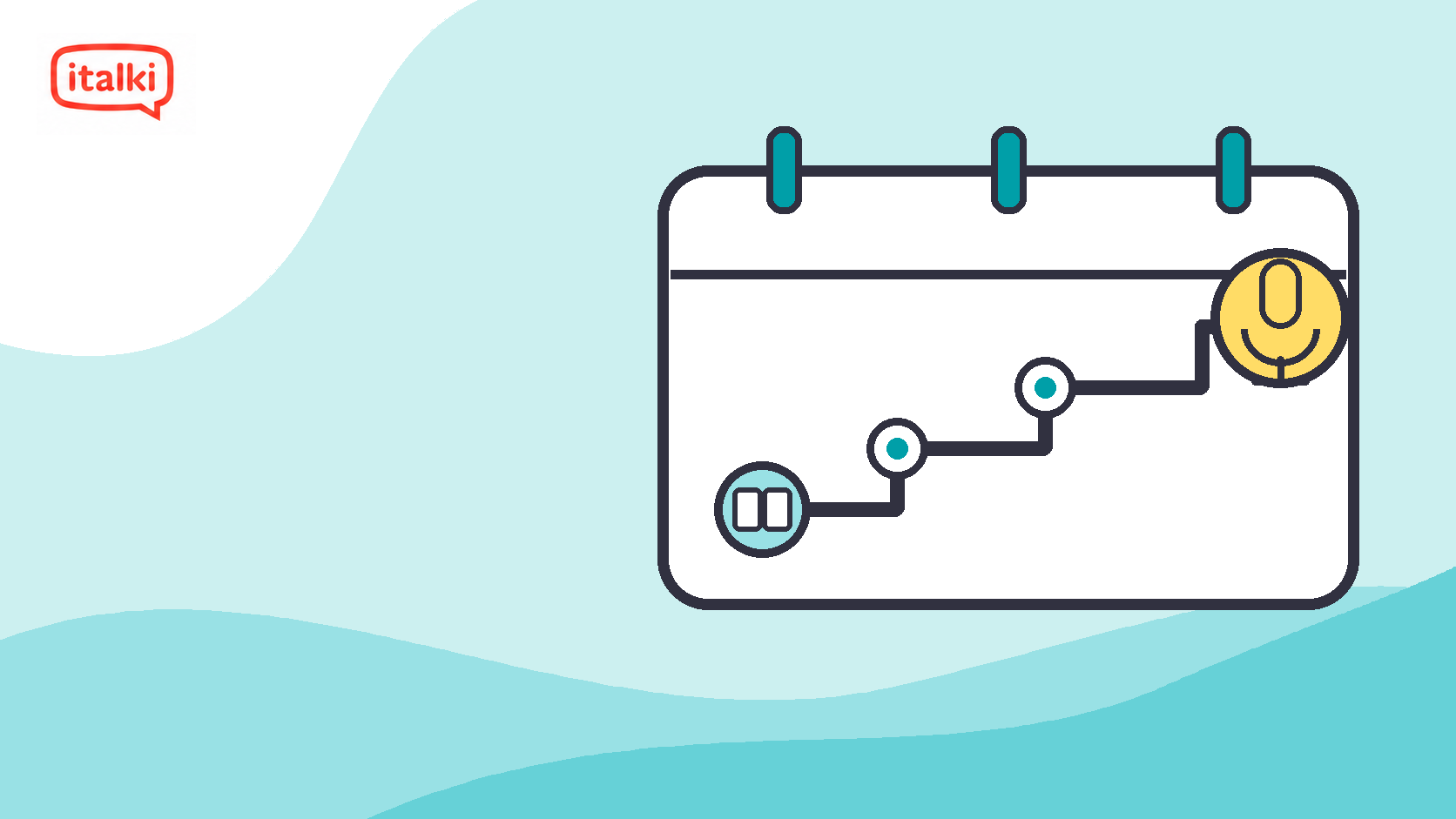
What you can achieve in 60 days: In 60 days, you can work toward holding simple everyday conversations with two focused hours of daily practice. An independent study of Spanish learners on italki found that 71.6% improved by at least one oral proficiency level after two months, showing that meaningful speaking progress is possible within this timeframe.
Key takeaways
- Sixty days is enough to hold simple everyday conversations in Spanish, not to reach fluency, and regular lessons with an italki teacher are what move you there fastest.
- Two hours of daily practice over 60 days gives you around 120 hours, against the 600 to 750 class hours the US Foreign Service Institute estimates for professional working proficiency in Spanish.
- Speak from day one. Speaking practice is what turns passive knowledge into Spanish you can produce on demand.
- Split the two months into four stages so vocabulary, grammar rules, listening and speaking develop together.
If you want to learn Spanish in 60 days, the realistic target is usable conversation. Two months of daily practice is enough to introduce yourself, ask and answer questions, order food, and keep a simple conversation going with a native speaker.
The trickier part is retrieving words quickly enough to speak while someone waits for your answer, and that takes speaking practice.
italki connects you with more than 2,300 Spanish tutors who correct your pronunciation and grammar as you speak. Trusted by over 10 million learners since 2007, italki gives you access to native Spanish-speaking tutors from Spain, Mexico, Colombia, and across Latin America.
This guide is for beginners and learners who want to speak Spanish by a deadline, before a dream vacation, a work trip or a move abroad. It gives you a stage-by-stage plan, a daily routine you can follow, and an honest picture of the level you can reach by day 60.
Want feedback from week one? Book a trial lesson with a Spanish teacher and start speaking before your mistakes settle into habits.

Find Your Perfect Teacher
Your Spanish doesn’t have to sound like a textbook. Get personalized lessons from native tutors who’ll help you speak naturally, not just correctly.
Book a trial lesson
Can you really learn Spanish in 60 days?
Yes, if your goal is conversation rather than fluency. Sixty days of consistent daily practice is realistically enough to reach around A2 on the CEFR scale, the Common European Framework of Reference for Languages, which grades ability from A1 through C2.
At A2 you can handle short social exchanges, describe your background and daily routine, and deal with simple transactions in a Spanish speaking country. That is the level most people mean when they say conversational.
The numbers explain why fluency is out of reach. The US Foreign Service Institute places Spanish in Category I, its easiest group for English speakers, and still estimates 600 to 750 class hours for professional working proficiency. Two hours a day across 60 days gives you roughly 120 hours, between a sixth and a fifth of that.
After 60 days of focused practice, these goals are realistic.
- Holding a basic conversation. Introductions, small talk, questions about work and family, and enough asking and answering skills to keep the exchange going.
- Getting around as a traveler. Ordering, asking directions, checking into a hotel and dealing with problems the local way.
- Reading simple Spanish. Menus, signs, messages and short texts without looking up every word.
- Understanding slow, clear speech. A native speaker talking directly to you, instead of two locals talking to each other at full speed.
- Knowing your own gaps. Sixty days of speaking shows you exactly which grammar, vocabulary or pronunciation problems to fix next.
You will still be unable to follow fast conversations between native speakers, watch Spanish television without subtitles, or discuss complex topics at work. Those take sustained practice well beyond two months, which is really a question of how long it takes to learn Spanish to a higher level.
See where you stand with online Spanish lessons built around the conversations you actually want to have.
Find Your Perfect Teacher
Your Spanish doesn’t have to sound like a textbook. Get personalized lessons from native tutors who’ll help you speak naturally, not just correctly.
Book a trial lesson
How to learn Spanish in 60 days
The best way to learn Spanish in 60 days is to split the two months into four two-week stages, each one adding a skill on top of the last. Pronunciation and survival phrases come first, then sentence building, then real conversation, and finally using the language with people.
Days 1 to 14: Learn the basics and start to speak Spanish
Your first two weeks should give you enough Spanish to say something true about yourself on day one. Spanish spelling is consistent, so learning the five vowel sounds early makes new words easy to pronounce on sight.
Focus on the four things below:
- Pronunciation. The five pure vowel sounds, the rolled and tapped r, and the spellings that behave differently from English, for example, j, ll and ñ.
- Survival vocabulary. Around 300 high-frequency words covering greetings, numbers, food, family, time and the verbs you use constantly. Link each new word to a sentence about your own life so it sticks.
- The present tense. Ser, estar, tener, ir and querer, plus the regular -ar, -er and -ir endings.
- Speaking out loud. Say every new word and phrase aloud and book one lesson in week one so a teacher hears your pronunciation early. Working through basic conversations in Spanish gives you sentences you can reuse the same day.
Record two minutes of yourself speaking on day one so you have a baseline. By day 14, aim to introduce yourself in five sentences, ask and answer three common questions, and order food without switching to English.
Days 15 to 30: Build sentences and understand important grammar rules
Weeks three and four move you from single phrases to sentences you build yourself, and expand what you can say without a script. Perfect accuracy can wait. The goal for these two weeks is being able to say something about the past, the present and your plans.
The main elements to focus on include the following:
- Past and future. The preterite for finished events, and ir + a + infinitive for plans, which covers most of what a beginner needs.
- Sentence glue. Question words, connectors such as porque, pero and entonces, and object pronouns.
- Grammar in context. Read one short explanation of the Spanish grammar rules you keep getting wrong, then write three sentences of your own using each one. Do not worry about getting every ending right yet.
- Regular lessons. Book two or three more sessions so a teacher hears your new sentences and catches the mistakes that are turning into habits.
By day 30, aim to talk about yesterday and next week, ask follow-up questions, and speak for two minutes on a familiar topic.
Get those two weeks checked by a private Spanish tutor who can tell you which mistakes are worth fixing first.
Days 31 to 45: Learn conversation starters and common slang words
By week five, you have enough Spanish to be understood. The work now is sounding like a person rather than a textbook, which means learning conversation starters, fillers and the everyday expressions that carry real conversations.
Pay close attention to these four factors:
- Openers. Learn entertaining conversation starters and follow-up questions that keep people talking, so you never stall after hello.
- Thinking time. Fillers such as bueno, o sea and a ver buy you a moment without dropping back into English.
- Slang and idioms. A handful of common Spanish slang words makes casual speech far easier to follow. Mexico, Colombia and Spain each use different ones, so learn the set for whichever Spanish speaking country you are heading to.
- Listening at speed. Podcasts and short videos made for native speakers rather than for learners.
By day 45, aim to start a conversation with a stranger, hold it for five minutes, understand local slang words in context, and recover when you lose the thread.
Days 46 to 60: Use your Spanish with real people
The last two weeks are about practical use. Speak more, add less. This is the stage where a foreign language starts to feel like a skill set.
Keep yourself accountable with the following:
- Daily speaking. Aim for some Spanish conversation every day, even ten minutes of it.
- Real topics. Talk about your work, your plans and the subjects you are interested in.
- Spanish by default. Switch your phone, apps and social accounts to Spanish so the language surrounds you outside study time.
- A progress check. Record two minutes of speech, compare it with your day one recording, and pick your next three priorities.
Even basic Spanish gives you a more authentic experience abroad, because people talk directly to you. By day 60, aim to hold a 15-minute conversation, make new friends in Spanish instead of English, and discover hidden gems by asking locals instead of reading reviews. Most learners end the two months able to say far more than they expected to on day one.
Put the final stage to the test with an online Spanish teacher who can hold a full lesson in Spanish at your pace.
Find Your Perfect Teacher
Your Spanish doesn’t have to sound like a textbook. Get personalized lessons from native tutors who’ll help you speak naturally, not just correctly.
Book a trial lesson
What should your daily Spanish routine look like?
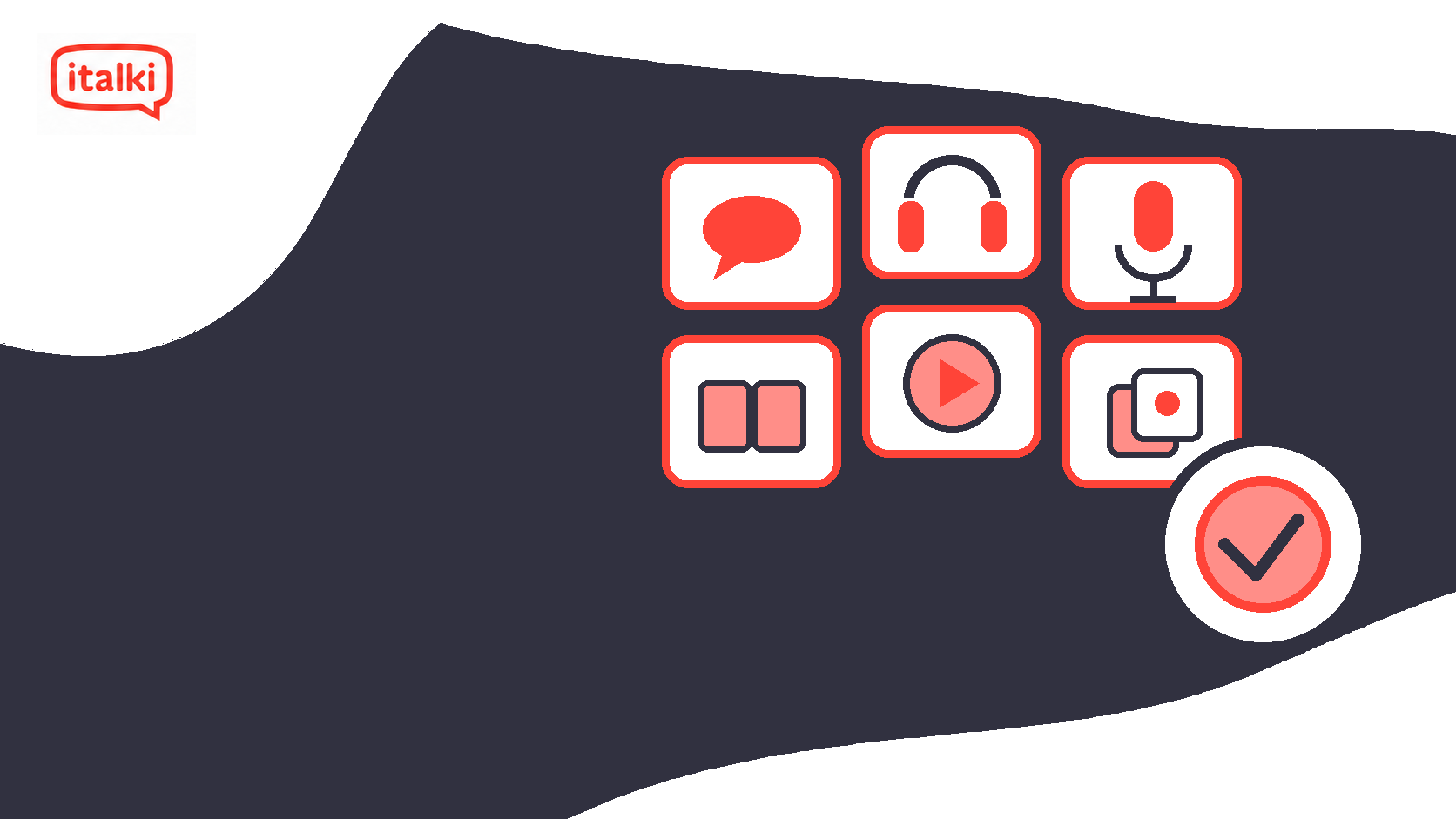
A realistic daily Spanish routine is about two hours split across vocabulary, listening, grammar, speaking and review, with speaking taking the largest single share.
Consistency beats volume. Two hours a day, most days, will take you further in 60 days than one long weekend session, because each short exposure gives you another chance to recall a word before it fades.
Build vocabulary around what you genuinely talk about. Learning the words for your job, your hobbies and your plans means almost every sentence you practice is one you will actually say, which is a more useful test than any word count.
Add live practice to that routine with a Spanish tutor online who can build each lesson around the gaps you noticed that week.
Find Your Perfect Teacher
Your Spanish doesn’t have to sound like a textbook. Get personalized lessons from native tutors who’ll help you speak naturally, not just correctly.
Book a trial lesson
How can italki help you learn Spanish faster in 60 days?
Self-study builds vocabulary, grammar and listening. What it cannot give you is someone who hears your Spanish, corrects it in the moment, and holds you to a schedule. On a 60-day deadline, the single most useful resource is a person who will talk to you.
italki connects you with professional teachers and community tutors for one-on-one video lessons, with no subscription and no fixed class times. For a 60-day plan, that has six specific advantages.
- Personalized correction. Your teacher catches a mistake the moment you make it, so it gets fixed in week one.
- Regular speaking practice. Booked lessons guarantee conversation time, which is the part of the plan learners drop first when studying alone.
- Pronunciation feedback. A native speaker hears the sounds you are getting wrong, including the ones you cannot hear yourself.
- Lessons aimed at recurring weaknesses. Bring your notes from the week, and the lesson targets those areas
- Accountability and structure. A booked lesson on Tuesday is harder to skip than a vague plan to practice, and a teacher can pace the 60 days for you.
- Practice built on your real goal. Travel, work, family or moving abroad. A tutor can teach you the version of Spanish you will use.
There is measurable evidence behind that approach. An independent italki efficacy study run by researchers from Queens College (CUNY) and the University of South Carolina found that 71.6% of participants improved by at least one proficiency level in speaking after two months, and 78% improved in writing. Two months is exactly the window this plan covers.
To start, create a free account, filter Spanish conversation teachers by price, availability and accent, then book a discounted trial lesson before committing to a regular slot. Many learners treat those first sessions as a diagnostic, which is a practical way to work out how to learn conversational Spanish at your own level.
Book your first session with one of the qualified Spanish tutors on italki and put the plan into practice this week.
Ready to start speaking Spanish?
Learn Spanish online with personal guidance from teachers who correct you while you speak, on a platform trusted by more than 10 million learners around the world. Book a trial lesson today.
Find Your Perfect Teacher
Your Spanish doesn’t have to sound like a textbook. Get personalized lessons from native tutors who’ll help you speak naturally, not just correctly.
Book a trial lesson
FAQ
How many hours a day do you need to learn Spanish in 60 days?
Around two hours a day is the practical target, and three to four hours will speed things up if your schedule allows. Split that time between vocabulary, listening, grammar and speaking.
Do you need a language learning workbook to learn Spanish in 60 days?
No. A language learning workbook, printed or as a PDF download, is useful for step by step instructions on grammar and for easy to understand examples you can review offline, but it cannot correct your pronunciation or answer back. Pair one with live conversation, and you get both structure and feedback.
What level of Spanish can you reach in 60 days?
Most learners who practice daily reach around A2, which means simple conversations on familiar topics, basic transactions and slow, clear speech. B1 is out of reach in 60 days from a standing start. It usually takes six months to a year of consistent daily study, so treat A2 as the realistic target.
Want to learn a language at italki?
Here are the best resources for you!