Key takeaways
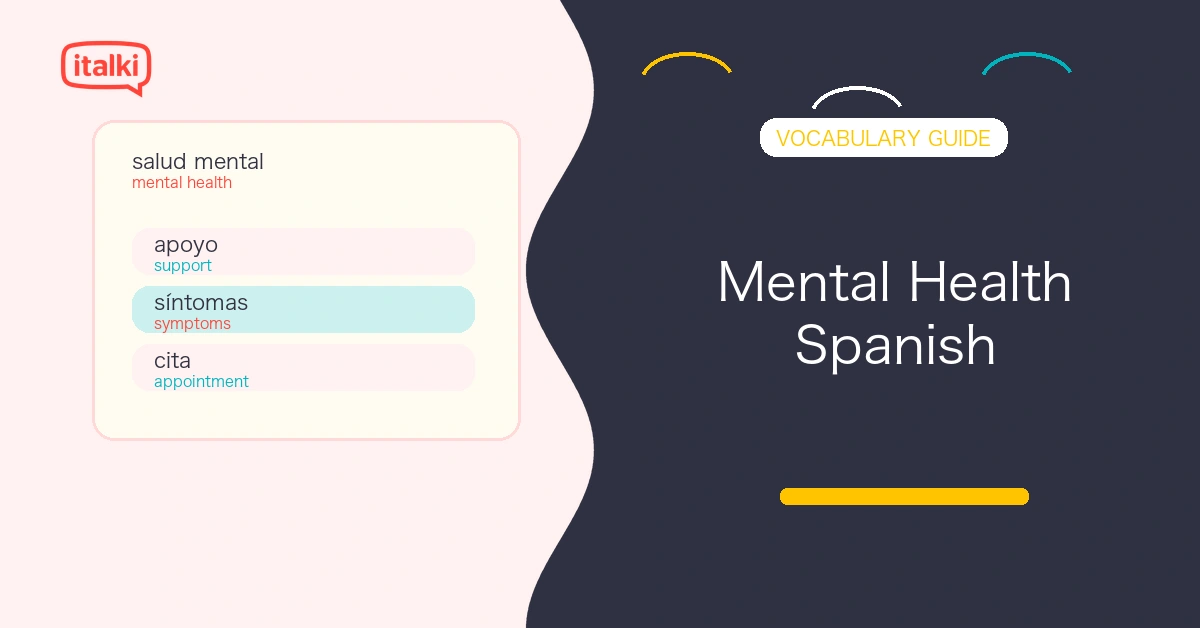
- Building a Spanish vocabulary for mental health settings requires learning clinical terms, everyday emotional vocabulary, and culturally specific expressions that clients may use to describe distress.
- Usted is the default pronoun in professional mental health interactions; switching to tú should only happen if a client explicitly invites it.
- Many Latino clients use somatic (physical) language to describe emotional distress: me duele el pecho (my chest hurts) may describe anxiety.
- Crisis intervention phrases, consent language, and safety planning vocabulary have specific Spanish forms that cannot be improvised from basic Spanish knowledge.
- Accurate interpretation of emotional vocabulary requires knowing regional and cultural variation: terms like nervios, susto, and coraje carry specific cultural meanings beyond their literal translations.
Many mental health professionals who work with Spanish-speaking clients encounter the same problem: their conversational Spanish is functional but their clinical Spanish is inadequate, and the gap puts both assessment accuracy and therapeutic alliance at risk.
This guide covers essential vocabulary for mental health intake and assessment, phrases for emotional and somatic symptom inquiry, crisis intervention language, cultural concepts that affect mental health presentation, and sample dialogues for common clinical situations.
italki has 30,000+ tutors across 150+ languages, making it simple to find Spanish teachers online who can help you build clinical Spanish fluency through focused conversation practice in mental health contexts.

Find your perfect teacher
Build real speaking confidence with personalized lessons from a teacher who matches your goals, schedule, and learning style.
Book a trial lesson
Intake and assessment vocabulary
| Spanish | English |
|---|---|
| el bienestar mental | mental well-being |
| la salud mental | mental health |
| la sesión / la consulta | the session / the appointment |
| el diagnóstico | the diagnosis |
| el tratamiento | the treatment |
| la terapia | therapy |
| el terapeuta / la terapeuta | the therapist |
| el psicólogo / la psicóloga | the psychologist |
| el psiquiatra / la psiquiatra | the psychiatrist |
| el medicamento | medication |
| la receta | prescription |
| el historial clínico | clinical history |
| la derivación | referral |
| la confidencialidad | confidentiality |
| el consentimiento informado | informed consent |
Intake phrases
| Spanish | English |
|---|---|
| ¿Cuál es el motivo de su consulta hoy? | What brings you in today? |
| ¿Ha recibido atención de salud mental antes? | Have you received mental health treatment before? |
| ¿Está tomando algún medicamento actualmente? | Are you currently taking any medication? |
| ¿Tiene algún médico de cabecera? | Do you have a primary care doctor? |
| Todo lo que hablamos aquí es confidencial, con algunas excepciones. | Everything we discuss here is confidential, with some exceptions. |
Build fluency by practising these questions and responses with an online Spanish teacher in role-play scenarios.
Find your perfect teacher
Build real speaking confidence with personalized lessons from a teacher who matches your goals, schedule, and learning style.
Book a trial lesson
Emotional and symptom vocabulary
| Spanish | English |
|---|---|
| la tristeza | sadness |
| la ansiedad | anxiety |
| el miedo | fear |
| la preocupación | worry |
| la desesperanza | hopelessness |
| la culpa | guilt |
| la vergüenza | shame |
| el enojo / la ira | anger |
| el agotamiento | exhaustion |
| el insomnio | insomnia |
| el estado de ánimo | mood |
Somatic and cultural expressions of distress
| Expression | Literal meaning | Clinical meaning |
|---|---|---|
| Me tiene mal la cabeza | It is hurting my head | Describes depression, rumination, or mental overload |
| Siento el pecho apretado | My chest feels tight | Describes anxiety or panic |
| Tengo los nervios | I have the nerves | General anxiety (nervios is a culturally specific idiom) |
| Estoy agotado/a del alma | I am exhausted in my soul | Deep emotional exhaustion or depression |
| No puedo más | I cannot take it anymore | Reached limit of coping; requires careful safety assessment |
Find your perfect teacher
Build real speaking confidence with personalized lessons from a teacher who matches your goals, schedule, and learning style.
Book a trial lesson
Cultural concepts
Nervios (nerves): a culturally recognised condition describing a range of anxiety and stress symptoms. Susto (fright): a folk illness concept describing sustained distress following a frightening experience. Coraje (rage): in some Mexican and Central American usage, describes intense emotional distress rather than simple anger. Familismo: the centrality of family in Latino culture means family conflict is a major stressor and family involvement in treatment decisions is often expected.
Crisis intervention language
| Spanish | English |
|---|---|
| ¿Está teniendo pensamientos de hacerse daño? | Are you having thoughts of harming yourself? |
| ¿Ha pensado en el suicidio? | Have you had thoughts of suicide? |
| ¿Tiene un plan para hacerse daño? | Do you have a plan to harm yourself? |
| Quiero asegurarme de que esté seguro/a esta noche. | I want to make sure you are safe tonight. |
| ¿Hay alguien de confianza con quien pueda estar? | Is there someone you trust who can be with you? |
| Voy a ponerle en contacto con un servicio de crisis. | I am going to connect you with a crisis service. |
Practise crisis assessment language with a Spanish tutor through structured role-play, ensuring you can deliver safety planning conversations accurately.
Find your perfect teacher
Build real speaking confidence with personalized lessons from a teacher who matches your goals, schedule, and learning style.
Book a trial lesson
Sample dialogue: opening a session
Therapist: Buenos días. Soy [name], terapeuta bilingüe. ¿Cómo está usted hoy?
Client: Más o menos, la verdad.
Therapist: Gracias por venir. ¿Puede contarme qué le trajo hoy a la consulta?
Client: Pues… llevo meses sintiéndome muy agotada. No duermo bien. Tengo los nervios todo el tiempo.
Therapist: Entiendo. Cuando dice que tiene los nervios, ¿puede describir cómo se siente eso en el cuerpo?
Clinical Spanish requires precision that conversational Spanish alone won’t give you: cultural concepts like nervios and susto, crisis assessment phrasing, and somatic symptom language need practice in realistic scenarios. A Spanish tutor on italki who specializes in mental health contexts can run intake and crisis dialogues with you until these phrases become muscle memory. Book a trial lesson on italki today.
Find your perfect teacher
Build real speaking confidence with personalized lessons from a teacher who matches your goals, schedule, and learning style.
Book a trial lesson
FAQ
How do I handle a session when a client’s Spanish is from a region I am not familiar with?
Ask directly and respectfully: Quiero asegurarme de que le entiendo bien. ¿Puede explicarme qué quiere decir con eso? (I want to make sure I understand you correctly. Can you explain what you mean by that?)
When should I use a professional interpreter instead of my own Spanish?
When the clinical stakes are high (crisis assessment, trauma work, informed consent for medications) and you are not confident your Spanish is accurate enough, using a professional interpreter is the ethical choice.
Are there specific Spanish medical terminology resources I should know about?
The italki blog guide to Spanish medical terminology covers clinical vocabulary across body systems and common medical contexts that overlap with mental health work.
Want to learn a language at italki?
Here are the best resources for you!