Key takeaways
- Start speaking early with regular one-on-one feedback. A tutor helps you practice actively and correct mistakes as they happen.
- Learn high-frequency vocabulary first. The first 2,000 word families cover about 89% of everyday spoken English, so common words and phrases should come before rare vocabulary.
- Study in short, regular sessions instead of cramming. Spaced practice improves long-term recall and makes daily study easier to sustain.
- Test yourself instead of only rereading. Active recall helps vocabulary stick much more effectively than repeated restudy.
- Set realistic expectations for speed. The time needed depends heavily on the language, your starting point and the level you want to reach.
If you are asking how can I learn a new language quickly, start speaking early, learn the most common words first, and practice in short daily sessions. Regular practice with a tutor gives you the chance to use what you learn and get corrections as you speak. Hours of passive study alone are much less effective.
For language learners who want faster progress, italki connects you with language teachers for live one-on-one lessons. You get personalized practice, regular speaking and immediate correction in every lesson. Trusted by more than 10 million learners since 2007, italki gives you access to 30,000+ teachers across 150+ languages.
This guide is for beginners starting a foreign language and for returning learners who feel stuck. You will get nine methods ordered by impact, a daily routine you can adapt to a busy schedule, and realistic timelines for popular languages.
Prefer to get started right away? Book a trial lesson with a language tutor and start speaking this week.

Find Your Perfect Teacher
Get personalized lessons from native tutors who’ll help you speak naturally, not just correctly.
Book a trial lesson
How can I learn a new language quickly?
You can learn a new language quickly by combining live speaking practice, high-frequency vocabulary, short daily sessions and spaced review. The nine methods below are ordered by impact. Combining them works better than relying on one, because each trains a different skill.
1. Work with a tutor for personalized practice and feedback
One-on-one lessons give you dedicated time to speak, practice what you are learning and get feedback on mistakes as they happen. Unlike studying alone, you also have someone who can explain why something sounds wrong and adapt the lesson when you are struggling with a particular area.
Research on second language acquisition supports the value of correction. A meta-analysis of 15 classroom studies with 827 learners found that oral corrective feedback had significant and durable effects on target language development. The effects were particularly clear when learners had to produce their own sentences.
That makes regular speaking practice with feedback especially useful when you want to turn what you study into language you can actually use. italki gives you that format through live one-on-one lessons with teachers who adapt the practice to your goals, level and pace.
What sets italki apart
- Personalized one-on-one lessons. Lessons follow your goals, level and pace, so your time goes to the words and situations you need instead of a fixed syllabus.
- Real-time feedback. Your teacher corrects pronunciation, grammar and word choice as you speak, then helps you practice the corrected version.
- Lessons matched to your native language. You can choose teachers who also speak your own language. For example, you can get grammar explanations in your mother tongue as a beginner, then switch back to the target language.
- Learn on your schedule. Book lessons from your own home at times that fit your week, with no fixed timetable. Lessons start from $4 and there is no subscription.
- Support between lessons. italki Plus, a paid add-on, provides lesson summaries, vocabulary, flashcards and practice exercises to help you review what came up in class.
Getting started takes a few minutes. Create a free account, filter teachers by language, price and availability, then book a discounted trial lesson to test the fit. If you are unsure who to pick, see the guide on how to choose an italki tutor.
Ready to start? Find a language tutor and book your first lesson today.
Find Your Perfect Teacher
Get personalized lessons from native tutors who’ll help you speak naturally, not just correctly.
Book a trial lesson
2. Start speaking from day one
Speaking early closes the gap between understanding a language and using it. Active output forces you to retrieve words, build sentences and notice what you cannot say yet. Mistakes in the early stages are useful, because each correction shows you exactly what to fix.
Good language learners do not wait until they feel ready. Learn a few common phrases and use them in basic conversations about familiar topics such as your work, family and weekend. Record voice notes, or find a language exchange partner through language exchange websites. An exchange partner gives you speaking time, and a tutor adds correction.
3. Learn the most common words and basic vocabulary first
A small core of common words does most of the work in any conversation. Research by Paul Nation found that the first 1,000 word families cover 81% to 84% of spoken English and the first 2,000 cover about 89%. Word frequency works the same way in most languages, which is why learners apply the 80/20 rule to vocabulary.
Start with the 1,000 to 2,000 words you will meet every day, including verbs, question words, numbers and connectors. Learn new words inside basic phrases, not as isolated items on a list, because a phrase carries grammar and context with it. Use new vocabulary the same day in a sentence of your own.
4. Study in short daily sessions
Spreading study across the week works better than packing it into one long session. A meta-analysis of memory research found that across 271 comparisons, spaced practice led to 47% recall on final tests, against 37% for massed practice, the research term for cramming.
Twenty focused minutes every day usually does more than one long Sunday session, and short sessions are easier to protect on a busy schedule. If you can reach an hour a day, split it into two or three blocks.
5. Review with spaced repetition and active recall
Spaced repetition means reviewing a word just before you would forget it, and active recall means producing the answer instead of rereading it. Together they are an efficient way to memorize new words.
In a study published in Science, students learned Swahili-English vocabulary through repeated study and testing. Repeated retrieval produced much stronger recall one week later than continued restudy, showing the value of actively testing yourself rather than simply reviewing the same material.
Flashcard and language learning apps make this easier by scheduling reviews and prompting you to retrieve words from memory.
6. Get daily comprehensible input
Comprehensible input means listening and reading that you mostly understand, with a little that is new. Linguist Stephen Krashen built his input hypothesis on the idea, which holds that slightly challenging content builds vocabulary and a feel for grammar. You do not need to catch every single word.
At a basic level, use graded readers, short stories and YouTube videos made for learners. Later, move to authentic materials such as podcasts, news and series on topics you find interesting. Native speakers typically talk faster than course audio, so replay short clips and revisit the same content until it feels easy.
Subtitles help when they are in the target language. In a PLOS ONE study, 60 intermediate learners of English, most of them native Spanish speakers, watched a TV drama. Those with English subtitles improved their listening scores by 17%, against 7% with no subtitles and 0% with Spanish subtitles.
Passive listening in the background adds exposure, but active listening is what builds language skills. Immersion works because it surrounds you with the language in daily contexts, and you do not need to move to a foreign country to get it. Changing your phone’s language settings is a great idea once you know basic vocabulary, because you see the same menu words every day.
7. Learn basic grammar through examples
Grammar sticks faster when you meet it inside real sentences. Learn the basic grammar that carries most conversations first, such as the present tense, one past tense, questions and negatives. Then collect example phrases for each pattern and change one word at a time.
Grammar rules still matter, so look one up when a pattern keeps confusing you. Short explanations from a teacher work well here, because they target the exact sentence you got wrong.
8. Practice pronunciation early
Work on pronunciation in the first weeks, before bad habits set in. Clear sounds make you easier to understand from the start, and pronunciation practice also trains your ear.
Start with native audio. Play a short sentence, then replay it and speak along with the speaker, copying the rhythm and stress. This is the shadowing technique. Record yourself and compare, or use an app that scores your speech against native speakers. To improve pronunciation faster, ask a tutor which two or three sounds make you hardest to understand, then drill those.
9. Set small goals and focus on one language
Set language learning goals that are short, simple and measurable, such as holding a ten-minute conversation about your job by the end of the month. The SMART method (specific, measurable, achievable, relevant and time-bound) works well here. Unrealistic targets, like fast fluency in two weeks, lead to frustration and burnout.
Track what you can do in conversation, because finished lessons and app streaks tell you less. Stick to one language at a time. Learners who start two languages at once split their hours between them, so reach basic conversations in the first before adding other languages. Multiple languages come more easily once the learning process is familiar.
Put these methods to work with live feedback. Browse online language tutors and book a trial lesson.
Find Your Perfect Teacher
Get personalized lessons from native tutors who’ll help you speak naturally, not just correctly.
Book a trial lesson
What should a fast language-learning routine look like?
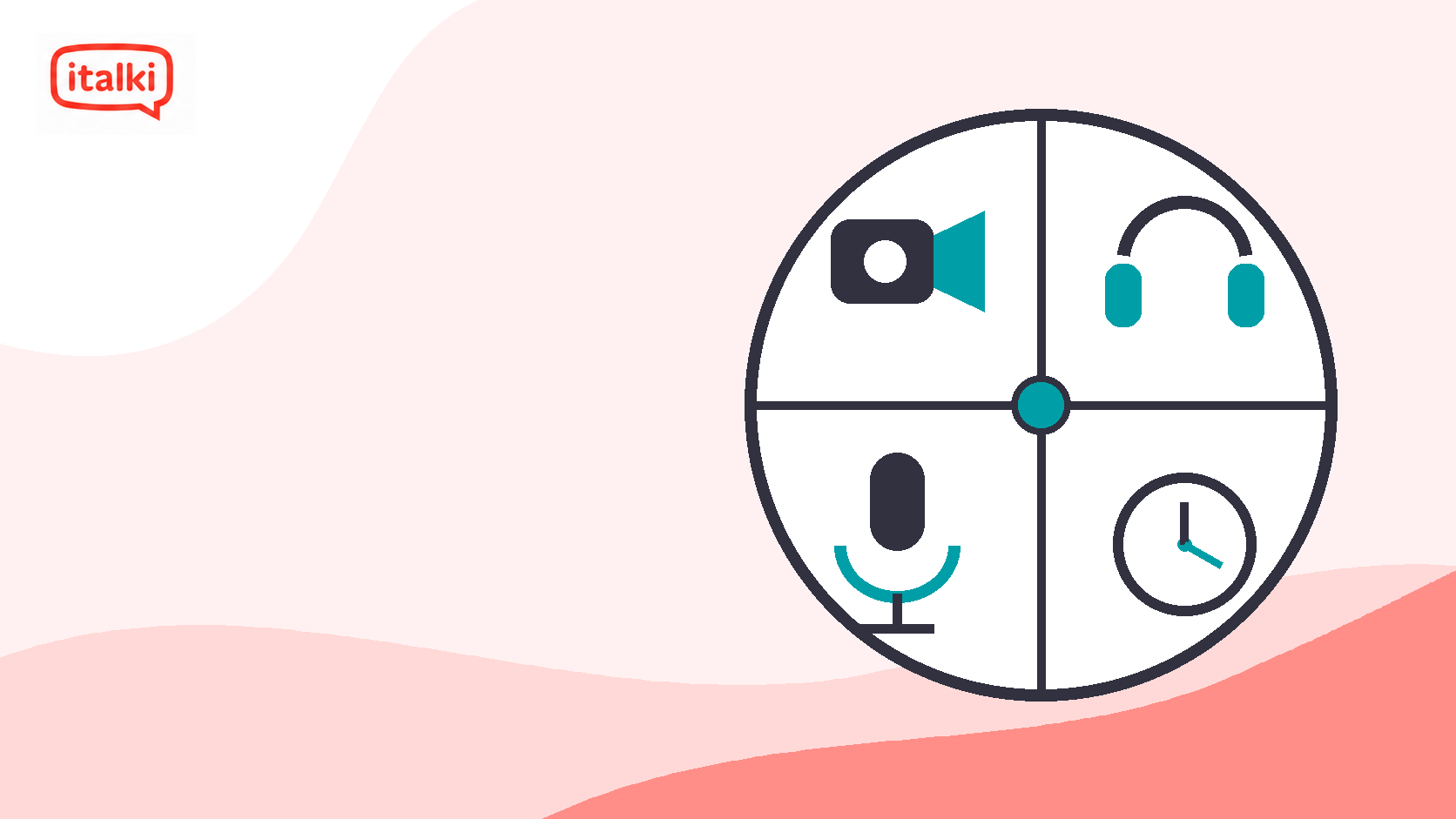
A fast language-learning routine combines speaking, listening, vocabulary, grammar and review every day, in short blocks you can repeat. The sample below adds up to about an hour. Treat the times as a guide and scale them to your week.
Two or three lessons a week on italki give the routine its backbone, and your teacher’s corrections become the next day’s review. If you only have 30 minutes, keep 10 minutes of speaking and 10 of vocabulary, then rotate one other block each day. Effective learning depends on repeating the routine, so choose times you can keep.
Adjust the mix as you improve. Once daily review feels easy, move minutes from flashcards to conversation practice, because speaking is where intermediate learners gain most.
Want a routine with built-in speaking practice? Find a tutor who fits your schedule and book two lessons a week.
Find Your Perfect Teacher
Get personalized lessons from native tutors who’ll help you speak naturally, not just correctly.
Book a trial lesson
How long does it take to learn a new language?
An English speaker needs between 600 and 2,200 class hours to learn a language to general professional proficiency, depending on the language. Those figures come from the US Foreign Service Institute (FSI), which bases them on decades of teaching languages to U.S. diplomats. Everyday conversational ability usually comes earlier than that.
Four things change your own timeline. The first is distance from your native language, which is why learning Spanish is quicker for English speakers than learning Russian. The second is prior knowledge, since a second foreign language usually comes faster than the first. The third is study intensity, and the fourth is the level you are aiming for.
FSI students study full time, so part-time learners should think in hours. As a rough guide, 600 hours takes about 20 months at one hour a day and about 10 months at two. If your goal is speaking Italian on a two-week trip, you need far fewer hours than a diplomat does. The easiest languages to learn for English speakers get you to that point soonest.
Shorten your timeline with regular speaking practice. Compare language teachers on italki by price, availability and specialty.
Ready to learn a new language faster?
Learn Spanish, French, Japanese or any of 150+ languages faster with personal guidance from expert tutors trusted by more than 10 million learners worldwide. Book a trial lesson today.
Find Your Perfect Teacher
Get personalized lessons from native tutors who’ll help you speak naturally, not just correctly.
Book a trial lesson
FAQ
How can I learn a new language quickly by myself?
You can learn a new language quickly by yourself if you study daily, focus on the 1,000 to 2,000 most common words, and get plenty of listening and reading practice. Speaking is the hard part to do alone, so add a weekly lesson or a language exchange partner for feedback on your mistakes.
How many hours a day should I study a foreign language?
About an hour a day is a solid target for most learners, split into two or three short sessions. Consistency matters more than the total in language learning, because spaced practice beats cramming in memory research. If you have less time, 20 to 30 focused minutes a day still produces steady progress.
Can I learn a language fast in three months?
You can work toward basic conversations in three months in a language close to English, such as Spanish or Italian, with daily practice and regular speaking lessons. Professional proficiency takes far longer, at 600 to 750 class hours by FSI estimates. Set a three-month goal you can measure, like a 15-minute conversation.
Want to learn a language at italki?
Here are the best resources for you!