Tìm kiếm từ nhiều giáo viên Tiếng Anh...
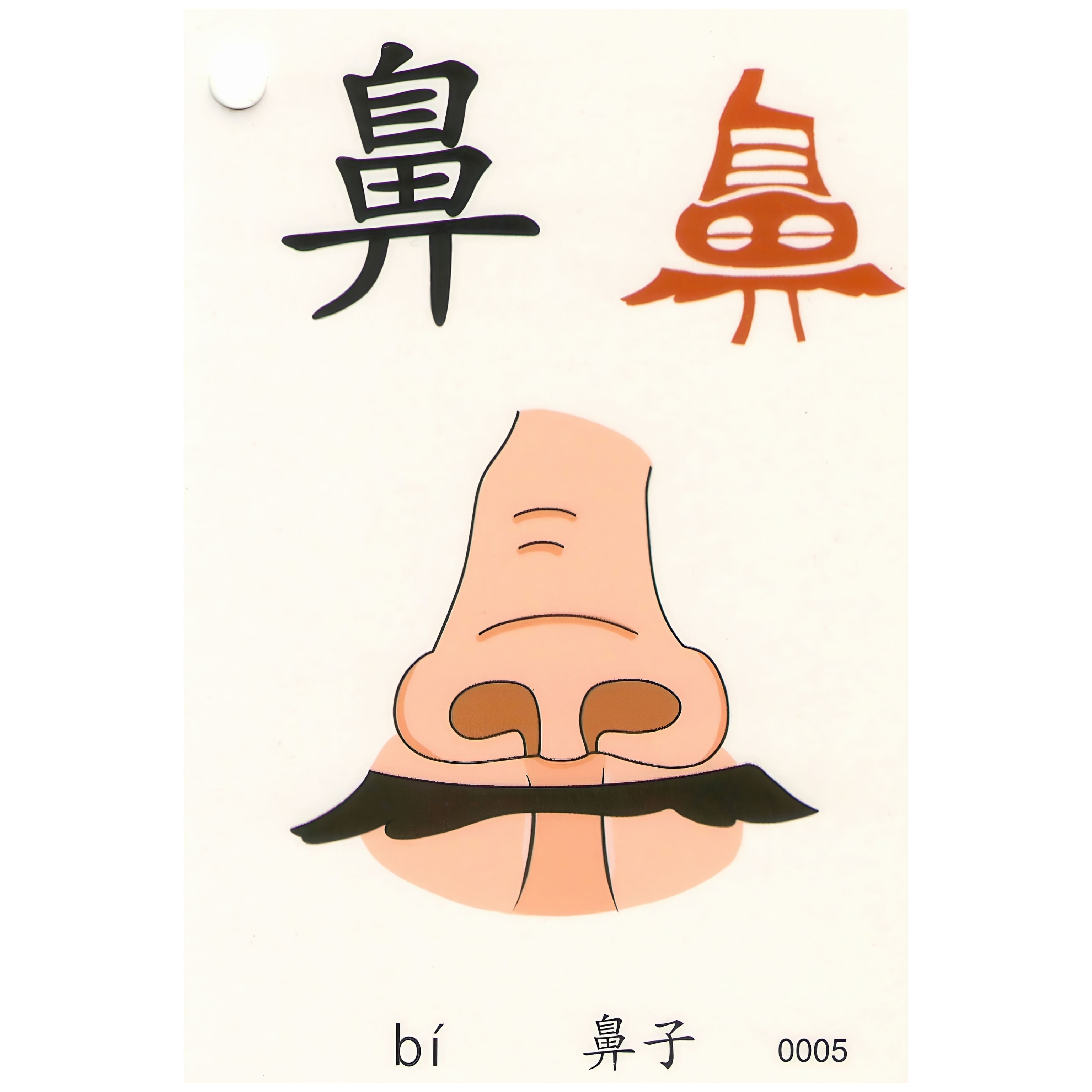
鼻
 03:42
03:42 03:42
03:42Mô tả
The character "鼻" is a compound ideogram consisting of the radical "自" (self) on top and "畀-bì" (to give) at the bottom. It resembles the shape of a nose.
it is consisting of the radical "自" (self) on top and "畀-bì" (to give) at the bottom. It resembles the shape of a nose.
Meaning (字义)
The character "鼻" primarily means "nose." It can also relate to smelling and breathing.
Usage (用法)
"鼻" is commonly used in words and phrases related to the nose and its functions.
Example Words (例词)
1.鼻子 (bí zi) - nose
他的鼻子很大。 (Tā de bí zi hěn dà.)
His nose is very big.
2.鼻涕 (bí tì) - nasal mucus
孩子流了鼻涕。 (Háizi liú le bí tì.)
The child has a runny nose.
3.鼻孔 (bí kǒng) - nostril
我的鼻孔痒痒的。 (Wǒ de bí kǒng yǎng yǎng de.)
My nostrils are itchy.
Example Sentences (例句)
1.他用鼻子闻花香。 (Tā yòng bí zi wén huā xiāng.)
He smells the flowers with his nose.
2.她的鼻子很好看。 (Tā de bí zi hěn hǎo kàn.)
Her nose is very pretty.
3.不要用手指挖鼻孔。 (Bù yào yòng shǒuzhǐ wā bí kǒng.)
Don't pick your nose with your fingers.
Idiom (四字成语)
成语: 鼻青脸肿 (bí qīng liǎn zhǒng)
Meaning (意义)
"鼻青脸肿" literally means "nose bruised and face swollen." It describes someone who has been beaten up, with a bruised nose and swollen face.
Example Sentence (例句)
他刚打完了一架,鼻青脸肿。 (Tā gāng dǎ wán le yí jià , bí qīng liǎn zhǒng.)
He came back from a fight, looking bruised and swollen.
Summary
The character "鼻" is related to the nose and its functions. Its usage is common in everyday language. The idiom "鼻青脸肿" describes someone who looks bruised and swollen, often after a fight or accident.
Kênh Podcast
每日一字
Tác giả
Tất cả các tập

026 - to egg someone on
13:07
All About Cats Introduction
00:42
Episode #40 - New discoveries in a new town
05:09
Scary Job Interview In English or IELTS speaking test...
06:07
Could you scan this for me please?
01:51
Speak Malayalam for Kids — Part 2: Real Sentences for Ages 9 to 13
08:43
#202 朝の散歩コースについて!
04:59
Threads is Coming (with transcript)
13:13Các tập phổ biến
Brentoni's English Podcast
026 - to egg someone on
13:07All About Cats
All About Cats Introduction
00:42Slow Japanese
Episode #40 - New discoveries in a new town
05:09Job Interview Preparation | Build Strong Communication Under Pressure
Scary Job Interview In English or IELTS speaking test...
06:07DAILY Business English VOCABULARY builder
Could you scan this for me please?
01:51Speak Real Malayalam | Slow • Clear • Natural
Speak Malayalam for Kids — Part 2: Real Sentences for Ages 9 to 13
08:43Atsushi のJapanese podcast (travel/daily life/culture/news etc…)
#202 朝の散歩コースについて!
04:59Teacher Joseph's Podcast
Threads is Coming (with transcript)
13:13
