Key takeaways
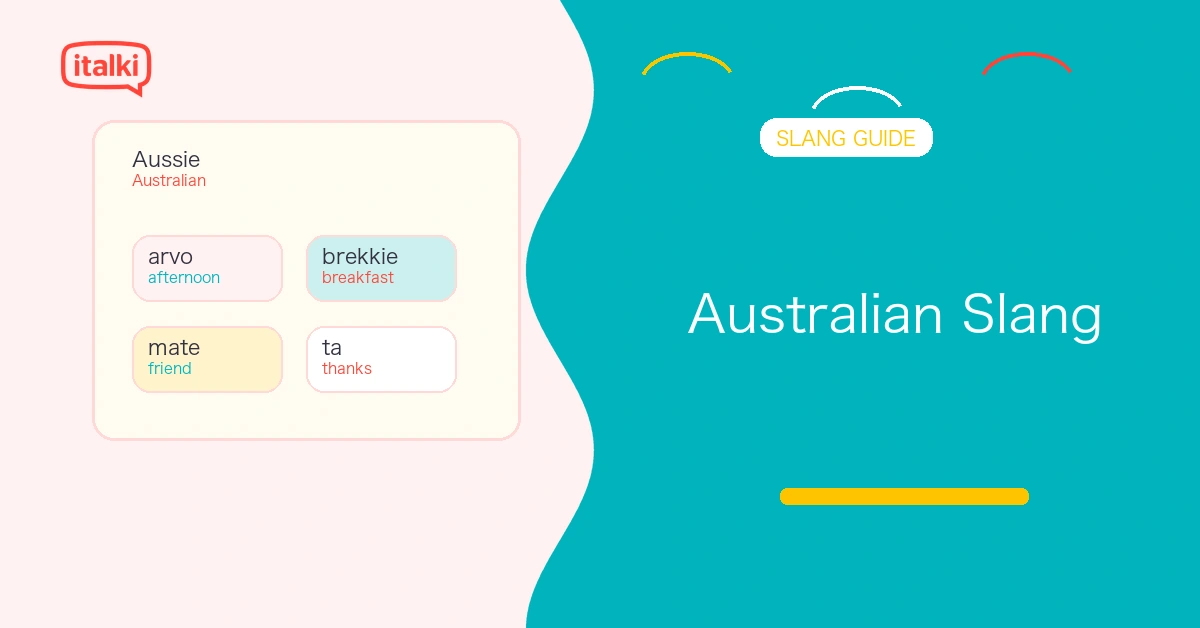
- Australian slang is distinctive for its heavy use of word shortening: almost any noun can be cut short and given a -o or -ie/-y suffix. Afternoon becomes arvo, breakfast becomes brekky, and a service station becomes a servo. This pattern is so consistent it works like a system rather than a collection of exceptions.
- Several Australian words have meanings that differ completely from their British or American equivalents. Tea can mean the evening meal. Crook means sick or unwell, not a criminal. Thongs are sandals, not underwear. These differences can cause genuine confusion in context.
- Australian slang is used across a wider range of social contexts than British or American slang. Informal terms appear in everyday conversation, in the media, and even between colleagues in professional settings. Knowing the slang is genuinely useful for understanding Australians in any situation.
- Many Australian expressions reflect specific cultural values: no worries for relaxed acceptance, fair go for the ideal of equal opportunity, and mate as a universal term of address that signals respect, solidarity, and goodwill regardless of whether the speaker actually knows the other person.
For anyone learning English or planning to spend time in Australia, Australian slang is a substantial part of everyday communication. Standard English dictionaries cover relatively little of it, and the words cannot always be decoded from their components.
italki connects learners with Australian English tutors who can help you understand and produce Australian slang naturally in real conversation. This guide covers the core Australian word-shortening system, 100 common terms organized by category, key differences from British English, and usage notes to help you know when each term is appropriate.
Find an English tutor online who specializes in Australian English to practice everyday Aussie conversation and get comfortable with the vocabulary you will actually encounter.

Find your perfect teacher
Build real English confidence with personalized lessons from a teacher who matches your goals, schedule, and learning style.
Book a trial lesson
How australian slang works: the shortening system
Australian slang has a distinctive structural method: take a word, cut it short, and add -o or -ie/-y. This pattern is so widespread that new words are still created by applying it.
The -o ending:
- afternoon – arvo
- service station – servo
- registration (car documents) – rego
- ambulance officer – ambo
- devastated – devo
- derelict/empty – deso
The -ie/-y ending:
- breakfast – brekky
- biscuit – biccy
- barbecue – barbie
- chocolate – choccy
- sunglasses – sunnies
- gift/present – pressie
- mosquito – mozzie
- Australia – Aussie
- kindergarten – kindy
- football – footie
- underwear – undies
- relatives – rellies
- television – telly
- university – uni
Once you know the pattern, you can decode many Australian words you have never heard before. If someone mentions a postie they mean a postal delivery worker. A truckie is a truck driver. A sparky is an electrician.
Greetings and social expressions
| Slang | Meaning | Usage note |
|---|---|---|
| G’day | Good day / Hello | The signature Australian greeting, used at any time of day |
| How ya going? | How are you? | Standard informal greeting, equivalent to How are you doing? |
| No worries | No problem / You’re welcome | The most characteristic Australian expression; indicates easy acceptance |
| She’ll be right | It’ll be fine | Used to reassure someone that a problem will sort itself out |
| Fair go | A fair chance / Be reasonable | Give it a fair go or Fair go, mate when something seems unfair |
| Mate | Friend / buddy | Used for anyone, including strangers; signals friendliness |
| Reckon | Think / believe | I reckon it’ll rain today (I think it’ll rain) |
| Yeah nah | No (despite starting with yeah) | Yeah nah, I don’t think so means no |
| Nah yeah | Yes (despite starting with no) | Nah yeah, that’s exactly right means yes |
| Cheers | Thanks / goodbye | Imported from British English, now common in Australia |
Find your perfect teacher
Build real English confidence with personalized lessons from a teacher who matches your goals, schedule, and learning style.
Book a trial lesson
People and personalities
| Slang | Meaning | Usage note |
|---|---|---|
| Bloke | A man | He’s a good bloke means he’s a decent guy |
| Sheila | A woman | Becoming dated; still widely understood but used less in recent decades |
| Mate | Friend / companion | Universal term of address, positive in tone |
| Drongo | A stupid or foolish person | Mild insult, rarely used seriously |
| Bogan | Person seen as unsophisticated | Can be affectionate or insulting depending on tone |
| Larrikin | A person who is mischievous but likable | Generally positive: He’s a bit of a larrikin |
| Dag | Unfashionable or dorky person | Often affectionate rather than insulting |
| Legend | A greatly admired person | You’re a legend, mate is a sincere compliment |
| Battler | An ordinary person trying hard | Used with respect: She’s a real battler |
| Bruce | Generic name for a man | Mostly used for comic effect in parody, less in actual speech |
Food and drink
| Slang | Meaning | Usage note |
|---|---|---|
| Brekky | Breakfast | Universal; used by all ages |
| Barbie | Barbecue | Both the event and the cooking device |
| Snags | Sausages | Essential barbie vocabulary |
| Chook | Chicken | We’re having chook for dinner |
| Biscuit / biccy | Biscuit / cookie | |
| Tim Tam | A chocolate biscuit brand | So popular the brand name is now a generic cultural reference |
| Choccy milk | Chocolate milk | |
| Avo | Avocado | Australians were shortening avocado to avo before it was internationally trendy |
| Servo food | Food bought at a service station | |
| Cuppa | A cup of tea or coffee | Want a cuppa? |
| Flat white | An espresso-based coffee with steamed milk | Australia’s contribution to global coffee culture |
| Schooner / pot | Beer glass sizes | Vary by state; ordering correctly signals you know the local system |
| Goon | Cask wine | Usually cheap; associated with student culture |
Find your perfect teacher
Build real English confidence with personalized lessons from a teacher who matches your goals, schedule, and learning style.
Book a trial lesson
Places, shopping, and daily life
| Slang | Meaning | Usage note |
|---|---|---|
| Arvo | Afternoon | See you this arvo |
| Servo | Service station / gas station | |
| Bottle-o | Bottle shop (liquor store) | I’m heading to the bottle-o |
| Chemist | Pharmacy / drugstore | Standard Australian term, not slang; chemist is the normal word |
| Footy | Australian Rules Football or rugby depending on the state | Rules vs rugby debate varies by region |
| Rego | Vehicle registration | Is your rego up to date? |
| Thongs | Flip-flops / sandals | NOT underwear in Australian English |
| Bathers / cossie | Swimsuit / swimming costume | Varies by state (bathers in Victoria, cossie elsewhere) |
| Jumper | Sweater / sweatshirt | Imported from British English; standard term in Australia |
| Arvo tea | Afternoon tea / afternoon snack |
Feelings and states
| Slang | Meaning | Usage note |
|---|---|---|
| Crook | Sick / unwell | I’ve been crook all week (I’ve been sick all week) |
| Stoked | Very happy / excited | I’m stoked about the trip |
| Rapt | Delighted / very pleased | She was absolutely rapt |
| Chuffed | Pleased / proud | Shared with British English |
| Stuffed | Exhausted OR full (from eating) | Context determines meaning |
| Knackered | Very tired | Also shared with British English |
| Cranky | Irritable / angry | Don’t wake him, he gets cranky in the mornings |
| Rooted | Broken / exhausted | Informal; can have stronger meaning in some contexts |
| Flat out | Extremely busy | I’ve been flat out all week |
| Over the moon | Very happy | Shared idiom with other Englishes |
Find your perfect teacher
Build real English confidence with personalized lessons from a teacher who matches your goals, schedule, and learning style.
Book a trial lesson
Actions and activities
| Slang | Meaning | Usage note |
|---|---|---|
| Arvo swim | Swim in the afternoon | Compound using arvo |
| Chuck a sickie | Call in sick to work | He chucked a sickie on Monday |
| Bludge | Avoid work / be lazy | He’s been bludging all day |
| Whinge | Complain / whine | Stop whinging |
| Dob in | To inform on someone / report them | She dobbed him in to the teacher |
| Spit the dummy | Have a tantrum | From the image of a baby spitting out a pacifier |
| Pull your head in | Stop being aggressive / calm down | Pull your head in, mate |
| Have a crack | To try something | Give it a crack |
| Root | To have sex (vulgar) | Be aware of this meaning when using it |
| Shoot through | To leave quickly | He shot through before anyone noticed |
Animals and nature slang
| Slang | Meaning | Usage note |
|---|---|---|
| Joey | A baby kangaroo | Used in formal and informal speech |
| Roo | Kangaroo | Common informal shortening |
| Croc | Crocodile | |
| Galah | A pink and grey cockatoo; also a fool | What a galah means what a fool |
| Cocky | Cockatoo | |
| Mozzie | Mosquito | |
| Midgies | Tiny biting insects (midges) | Common at dusk near water |
| Snaky | Angry / irritable | From the behavior of startled snakes |
Find your perfect teacher
Build real English confidence with personalized lessons from a teacher who matches your goals, schedule, and learning style.
Book a trial lesson
Quick reference: 100 australian slang terms
| Term | Meaning |
|---|---|
| G’day | Hello |
| How ya going? | How are you? |
| No worries | No problem |
| She’ll be right | It’ll be fine |
| Fair go | A fair chance |
| Mate | Friend / buddy |
| Reckon | Think / believe |
| Yeah nah | No |
| Nah yeah | Yes |
| Cheers | Thanks |
| Bloke | A man |
| Sheila | A woman |
| Drongo | A fool |
| Bogan | Unsophisticated person |
| Larrikin | Lovable troublemaker |
| Dag | Dorky but likable person |
| Legend | Greatly admired person |
| Battler | Hardworking ordinary person |
| Brekky | Breakfast |
| Barbie | Barbecue |
| Snags | Sausages |
| Chook | Chicken |
| Avo | Avocado |
| Cuppa | Cup of tea or coffee |
| Goon | Cheap cask wine |
| Arvo | Afternoon |
| Servo | Service station |
| Bottle-o | Liquor store |
| Rego | Vehicle registration |
| Thongs | Flip-flops |
| Bathers | Swimsuit (Victoria) |
| Cossie | Swimsuit (other states) |
| Jumper | Sweater |
| Footy | Football |
| Crook | Sick / unwell |
| Stoked | Very happy |
| Rapt | Delighted |
| Chuffed | Pleased |
| Stuffed | Exhausted or very full |
| Knackered | Very tired |
| Cranky | Irritable |
| Flat out | Extremely busy |
| Sunnies | Sunglasses |
| Kindy | Kindergarten |
| Pressie | Gift / present |
| Mozzie | Mosquito |
| Biccy | Biscuit |
| Choccy | Chocolate |
| Rellies | Relatives |
| Uni | University |
| Telly | Television |
| Postie | Postal worker |
| Truckie | Truck driver |
| Sparky | Electrician |
| Ambo | Ambulance worker |
| Chippy | Carpenter |
| Bikie | Motorcyclist |
| Tradie | Tradesperson |
| Smoko | Smoke break / any short break |
| Arvo tea | Afternoon snack |
| Devo | Devastated |
| Maccas | McDonald’s |
| Hungry Jack’s | Burger King (Australian brand name) |
| Servo food | Convenience store food |
| Flat white | Coffee with steamed milk |
| Joey | Baby kangaroo |
| Roo | Kangaroo |
| Croc | Crocodile |
| Galah | Cockatoo; also: a fool |
| Cocky | Cockatoo |
| Midgies | Tiny biting insects |
| Chuck a sickie | Call in sick |
| Bludge | Be lazy |
| Whinge | Complain |
| Dob in | Inform on someone |
| Spit the dummy | Have a tantrum |
| Have a crack | Try something |
| Shoot through | Leave quickly |
| Pull your head in | Calm down |
| Dead set | Absolutely true / genuine |
| Ripper | Excellent / great |
| Bonzer | Excellent (older/classic term) |
| Sweet as | Very good / all good |
| Arvo reckon | Afternoon guess/plan |
| Yeah nah mate | Emphatic no |
| Beauty | Expression of approval or admiration (What a beauty) |
| Strewth | Expression of surprise |
| Crikey | Expression of surprise (made internationally famous by Steve Irwin) |
| Ta | Thank you (informal) |
| Oi | Hey (to get attention) |
| Sook | A crybaby or overly sensitive person |
| Yakka | Hard work (hard yakka) |
| Arvo knock-off | End of work in the afternoon |
| In a tick | In a moment / soon |
| Good on ya | Well done / good for you |
| She’s apples | Everything is fine |
| Heaps | A lot / many (heaps of fun) |
Australian slang vs British English
Australian English has a British base but diverged significantly over two centuries. Some terms look the same but mean different things; others are unique to Australia.
| Word | In British English | In Australian English |
|---|---|---|
| Tea | The hot beverage | Tea OR the evening meal |
| Hotel | A place to stay | Can mean a pub or bar |
| Crook | A criminal | Sick / unwell |
| Thongs | Underwear | Sandals / flip-flops |
| Rubber | An eraser | Often has adult connotations; use eraser to be safe |
| Biscuit | A cookie or cracker | Same meaning |
| Footpath | Sidewalk | Same meaning |
| Chemist | Pharmacist | Same meaning |
For a guide to British informal vocabulary and how it compares to Australian and American usage, the guide to British English slang covers key British expressions alongside their Australian and American equivalents.
Find your perfect teacher
Build real English confidence with personalized lessons from a teacher who matches your goals, schedule, and learning style.
Book a trial lesson
FAQ
Is Australian slang hard to understand?
It can be initially. The main challenges are the word-shortening system (arvo, servo, brekky), words that look familiar but mean something different (crook, thongs, tea as a meal), and the speed and directness of Australian speech. Spending time with Australian English through films, podcasts, or conversation practice makes the slang increasingly natural.
Do all Australians use the same slang?
Most core Australian slang is national, but some terms vary by state. Bathers is the Melbourne term for swimwear; Sydney speakers more often say cossie. Footie refers to Australian Rules Football in Victoria and South Australia but to rugby in New South Wales and Queensland. Learning the regional variations is part of learning Australian English fully.
Is it rude to use Australian slang as a non-Australian?
Using Australian slang as a learner is generally welcomed by Australians, who often find it endearing when someone makes the effort to engage with local vocabulary. The exception is terms that can be offensive in certain contexts: check the register before using anything that sounds potentially impolite. Starting with universal terms like G’day, no worries, and mate is always safe.
What does mate actually mean in Australia?
In Australia, mate is a universal term of address that signals goodwill and informal friendliness. It can be used for a close friend, an acquaintance, or even a stranger. Good on ya, mate or Thanks, mate are everyday expressions. It does not necessarily imply actual friendship; it is closer to an informal friend or buddy used in any casual interaction.
What is no worries used for?
No worries is the most versatile Australian expression. It serves as: a response to thank you (equivalent to you’re welcome), a response to an apology (equivalent to it’s fine or don’t worry about it), a general affirmation that something is acceptable, and a reassurance that a problem will resolve itself. It reflects the relaxed, non-confrontational tone associated with Australian culture.
Want to learn a language at italki?
Here are the best resources for you!