Key takeaways
- The best way to learn Chinese pairs daily self-study with live correction from a native Chinese tutor, since most learners cannot hear their own tone mistakes without outside feedback. A Mandarin tutor catches those errors in real time, something apps and vocabulary lists cannot do.
- Pinyin and the four tones come before vocabulary or characters. Mandarin sits in the hardest category the Foreign Service Institute tracks, needing around 2,200 class hours to reach professional working proficiency.
- Full literacy is not the starting line. Most learners hold real conversations with 800 to 1,500 high-frequency words before they tackle reading or writing in depth.
- Listening, vocabulary apps, and a language exchange partner build recognition, but only regular speaking practice with a native speaker turns that recognition into actual conversation skills.
- Best ways to learn Chinese at a glance
- What are the best way to learn Chinese?
- 2. Learn pinyin and the four tones first
- 3. Build a working vocabulary before chasing full literacy
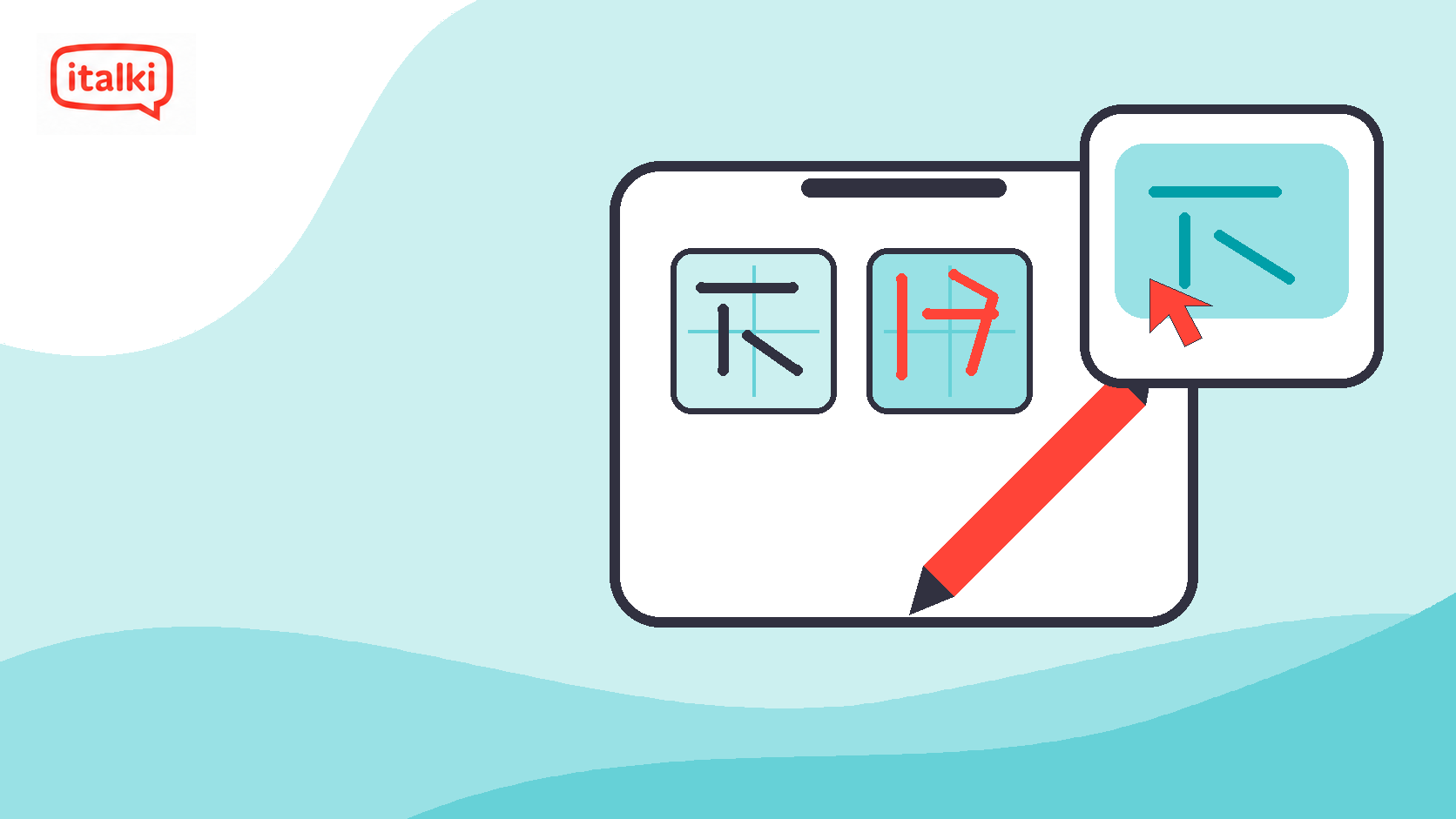
- 4. Learn how Chinese characters and stroke order work
- 5. Immerse yourself in real Chinese content daily
- 6. Practice speaking out loud every day, beyond recognition
- 7. Use a language exchange partner to fill the gaps between lessons
- 8. Set a realistic timeline using real benchmarks
- FAQ
The best way to learn Chinese in 2026 is to combine daily self-study of pinyin, tones, characters, and vocabulary with regular speaking practice. Most learners struggle with pronunciation and speaking confidence long before they run out of words to learn.
This guide covers the key skills for learning Chinese effectively, including pronunciation, character learning, listening, speaking, and building a sustainable study routine.
While self-study builds knowledge, regular feedback turns that knowledge into real communication skills. That’s where italki helps. With personalized lessons from native Chinese tutors, learners can improve pronunciation, build confidence, and practice real-world conversations. Trusted by more than 10 million learners and supported by 30,000+ teachers over the past 15+ years, italki helps learners stay consistent and make measurable progress.
Ready to put your Chinese into practice? Find a Chinese tutor and book a trial lesson today.

Find Your Perfect Teacher
Your Chinese doesn’t have to sound like a textbook. Get personalized lessons from native tutors who’ll help you speak naturally, not just correctly.
Book a trial lesson
Best ways to learn Chinese at a glance
What are the best way to learn Chinese?
1. Work with a native Chinese tutor
Working with a native Chinese tutor is one of the most effective ways to learn Chinese because it solves the problem that holds most learners back: speaking. While apps, textbooks, and videos can teach vocabulary and grammar, they can’t tell you exactly why your pronunciation sounds unnatural or which tone you missed in conversation.
Mandarin relies on four tones, and small pronunciation mistakes can completely change a word’s meaning. Without regular feedback, those mistakes become habits that are difficult to correct. That’s why many self-taught learners plateau even as their vocabulary continues to grow.
This is where italki helps. By connecting learners with native Chinese tutors for one-on-one lessons, italki makes it easy to get personalized feedback, conversation practice, and real-time correction. Whether you’re preparing for travel, HSK exams, business communication, or everyday conversations, lessons can be tailored to your goals and learning style.
Instead of practicing alone, learners can get targeted feedback from tutors who identify mistakes early, answer questions in real time, and help turn passive knowledge into confident communication.
Find a Chinese language tutor who matches your goals and start practicing real conversations today.
Find Your Perfect Teacher
Your Chinese doesn’t have to sound like a textbook. Get personalized lessons from native tutors who’ll help you speak naturally, not just correctly.
Book a trial lesson
2. Learn pinyin and the four tones first
Pinyin and the four tones come before vocabulary or characters, because pronunciation habits formed in your first weeks are the hardest to undo later. Pinyin is the romanization system that spells Mandarin sounds using the Latin alphabet, and several of its letters represent sounds that do not exist in English.
The same syllable means four different things depending on tone, which is why drilling tones early matters more than expanding vocabulary:
Drilling these daily with minimal pairs, words that differ only by tone, trains your ear to catch the difference before it becomes an unconscious habit. Skipping this step is the single most common reason beginners spend months unlearning pronunciation mistakes that early tone drilling prevents.
A Mandarin teacher drills these tone pairs live until the difference becomes automatic.
3. Build a working vocabulary before chasing full literacy
A working vocabulary of 800 to 1,500 high-frequency words gets most learners through real conversations, well before full literacy matters. Chasing a large word count before using any of it in a sentence slows progress rather than speeding it up.
A practical order to build that vocabulary:
- Learn 100 to 150 basic words first: greetings, numbers, and everyday objects.
- Add common verbs and connectors once those words feel automatic.
- Practice each new word in a full sentence, not in isolation.
- Review with spaced repetition so words stay accessible under pressure.
Under the new HSK standards rolling out in July 2026, HSK 6 will require around 5,400 vocabulary words, and the new advanced levels 7 through 9 expect close to 11,000 words, according to DigMandarin. That is a useful long-term target, but it has little to do with holding your first real conversation.
An online Mandarin tutor turns a flat word list into sentences you use in real conversation.
Find Your Perfect Teacher
Your Chinese doesn’t have to sound like a textbook. Get personalized lessons from native tutors who’ll help you speak naturally, not just correctly.
Book a trial lesson
4. Learn how Chinese characters and stroke order work
You do not need to know every Chinese character to speak Mandarin, but a working understanding of how characters function matters once you aim for intermediate fluency or beyond. Speaking and literacy are separate skills in Mandarin in a way they are not in alphabet-based languages, so real conversation comes well before you read a newspaper.
Each Chinese character represents a syllable and usually carries meaning, and most words combine two or more characters together. Characters follow a fixed stroke order, and learning that order correctly from the start makes characters easier to recognize and write later, since stroke order affects how dictionaries and apps index a character.
Two character systems are in active use today:
Confirm which system your goal requires before committing to a textbook or app, since material built for one does not transfer cleanly to the other. A native Chinese teacher walks through stroke order and meaning together, so characters stick faster than flashcards alone.
5. Immerse yourself in real Chinese content daily
Daily exposure to Chinese content made for native speakers trains your ear for natural speed and slang in a way textbook audio cannot. Dramas, podcasts, and short videos expose you to how Chinese people talk day to day, including the contractions and casual phrasing that formal lessons skip.
A realistic immersion progression:
- Start with content made for learners: slower speech, clearer pronunciation.
- Move to native-level dramas or podcasts once individual words become recognizable in full sentences.
- Rewatch or relisten to the same short clip until the fast parts stop sounding like noise.
Immersion builds listening comprehension and cultural familiarity, both useful for understanding Chinese culture beyond the textbook, but it does not correct how you produce sounds yourself. A Chinese teacher online explains the slang and fast speech you might miss when working through native content alone.
6. Practice speaking out loud every day, beyond recognition
Practicing speaking matters more than vocabulary memorization, because recognizing a word and producing it correctly under pressure are different skills. Many learners recognize thousands of words on flashcards and still freeze the first time someone asks them a question in real life.
Speaking out loud daily, even alone during solo study, does three things vocabulary apps do not:
- Forces quick word retrieval instead of slow recognition.
- Exposes tone control gaps that silent study hides completely.
- Builds comfort with making mistakes in front of another person, which is the fastest way to stop repeating the same one.
Native Mandarin speakers tend to respond to learner mistakes with kind words and encouragement rather than correction for its own sake, which makes daily practice easier to stick with than most learners expect going in. Mandarin tutors online give you a safe space to make mistakes out loud and fix them in the same sentence.
Find Your Perfect Teacher
Your Chinese doesn’t have to sound like a textbook. Get personalized lessons from native tutors who’ll help you speak naturally, not just correctly.
Book a trial lesson
7. Use a language exchange partner to fill the gaps between lessons
A language exchange partner adds informal speaking practice between lessons, but exchange partners are not trained to diagnose why a tone error happened or how to fix it.
What an exchange partner gives you:
- Casual, low-stakes conversation practice.
- Exposure to everyday phrasing and slang.
- Comfort with making mistakes in front of someone else.
What they do not replace:
- A diagnosis of exactly which tone or sound went wrong.
- A specific drill to correct the error.
- Structured progress toward a learning goal.
Chinese tutoring fills in the diagnosis a casual exchange partner cannot offer.
8. Set a realistic timeline using real benchmarks
A realistic Mandarin timeline starts from documented data, not guesswork.
The Foreign Service Institute classifies Mandarin as a Category V “super-hard” foreign language, requiring around 2,200 class hours, or 88 weeks of full-time study, to reach professional working proficiency, according to the U.S. State Department.
Learners who study daily and add regular speaking practice tend to reach comfortable conversation well before the professional-proficiency mark, since consistent live correction is what shortens the timeline most, not raw hours logged with an app.
Knowing this benchmark upfront helps you judge progress against reality instead of against unrealistic “fluent in three months” claims that ignore how difficult Mandarin is to learn for English speakers.
Ready to speak Chinese?
Speaking Chinese confidently comes from consistent correction, not from reaching some grammar or vocabulary threshold first. A native Chinese teacher on italki gives you that correction from your first lesson, with sessions priced from $4 so practice fits any routine and schedule.
Learn Chinese faster with personal guidance from qualified Chinese tutors trusted by over 10 million learners worldwide. Book your trial lesson today today.
Find Your Perfect Teacher
Your Chinese doesn’t have to sound like a textbook. Get personalized lessons from native tutors who’ll help you speak naturally, not just correctly.
Book a trial lesson
FAQ
Is it possible to learn Chinese on your own without a tutor?
Yes, self-study with apps, vocabulary lists, and immersion content builds real vocabulary and listening comprehension. The ceiling is pronunciation and tone accuracy, since most learners rarely hear their own tone errors without outside correction. Combining self-study with even occasional lessons from a native Mandarin tutor closes that gap faster than self-study alone.
What is the best way to learn Mandarin Chinese?
The best way to learn Mandarin Chinese is to combine self-study with regular lessons from a native Chinese tutor. While apps and textbooks build vocabulary and grammar, tutors help you master tones, improve pronunciation, and gain confidence in real conversations. With italki, you can learn with native Chinese tutors through personalized one-on-one lessons tailored to your goals and schedule.
What is the difference between learning Mandarin and Cantonese?
Mandarin and Cantonese share a writing system but are not mutually intelligible when spoken, with different tone systems and pronunciation rules entirely. Confirm which one your goal requires before choosing textbooks, apps, or a tutor, since material built for one does not transfer cleanly to the other.
Want to learn a language at italki?
Here are the best resources for you!