JapaneseJapanese phrases
What Is Your Name in Japanese? Natural Ways to Ask and Reply
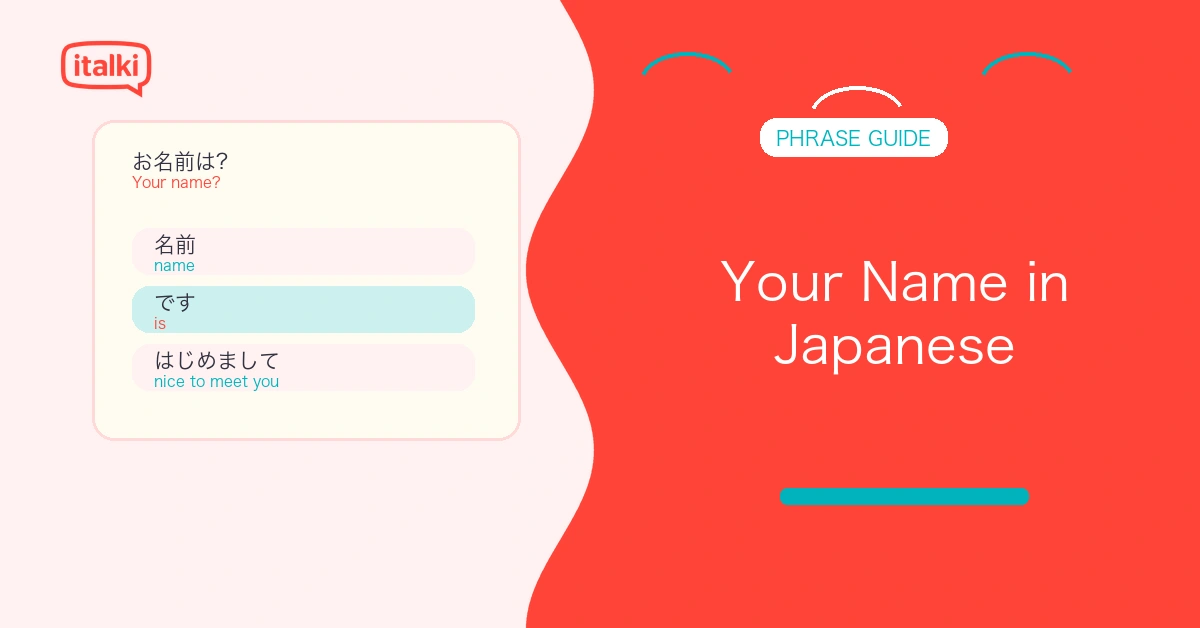
お名前は何ですか (onamae wa nan desu ka) is the polite way to ask someone’s name in Japanese.
お名前は何ですか (onamae wa nan desu ka) is the polite way to ask someone’s name in Japanese.
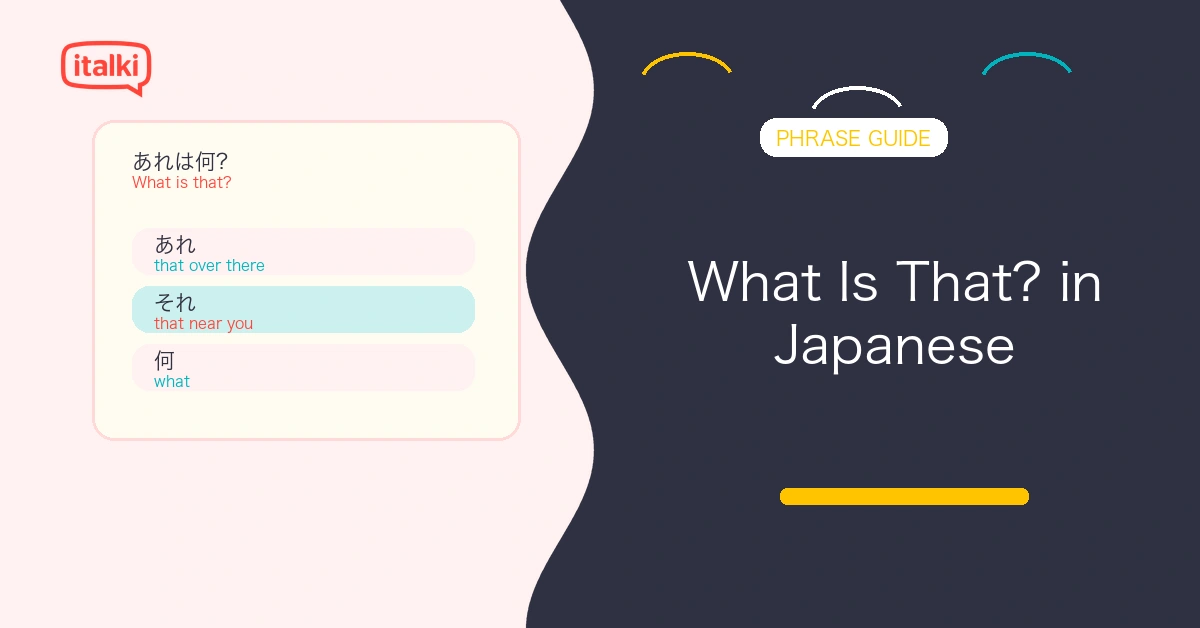
あれは何ですか (are wa nan desu ka) means “what is that?” for objects far from both speaker and listener.

A parent-focused comparison of the top 5 Chinese classes for kids in 2026, covering formats, ages, pricing, and best-fit use cases—from live 1-on-1 tutoring to structured curricula and study apps.
Transport idioms are built from vehicles, journeys, roads, and navigation but describe situations that have nothing to do with travel.
Studying harder is not the same as studying smarter: the method matters as much as the hours.
Beginners should start with texts where they understand roughly 80 percent of the vocabulary without a dictionary.
Spanish articles (el, la, los, las, un, una, unos, unas) must agree with the gender and number of the noun they modify.
The most common way to wish someone “safe travels” in Japanese is 気をつけて (ki wo tsukete): “please take care / be careful.”
Cantonese is a distinct language from Mandarin Chinese, not a dialect: the two are not mutually intelligible in spoken form.
The four main irregular verbs in French are avoir (to have), être (to be), aller (to go), and faire (to do/make). Every French learner needs to know all.
French reflexive verbs use a reflexive pronoun (me, te, se, nous, vous, se) to show the subject acts on itself.
Regular -IR verbs follow a consistent pattern in the present tense using endings: -is, -is, -it, -issons, -issez, -issent.
The most common way to say “good afternoon” in Japanese is こんにちは (konnichiwa), used from late morning through early evening.
The futur proche (immediate future) is formed with: conjugated aller (present tense) + infinitive of main verb.
Native speakers use these idioms without thinking about their origins, and learners who avoid them sound noticeably non-native.