Key takeaways
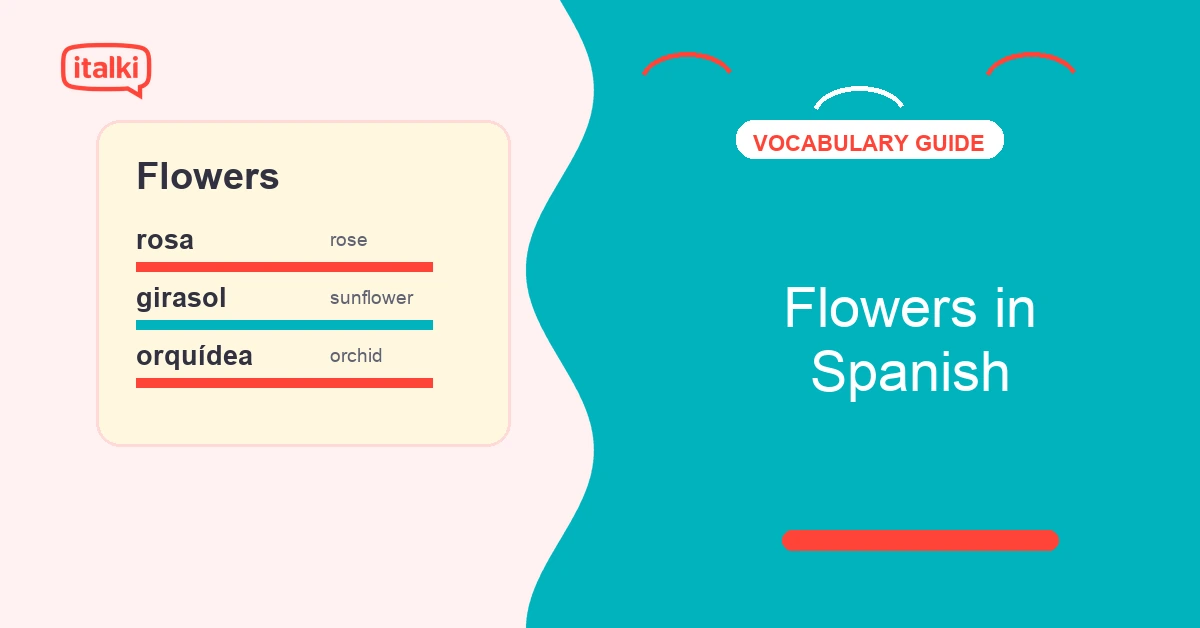
- Most flower names in Spanish are feminine: la rosa, la margarita, la orquídea, la azalea. Some are masculine: el clavel, el girasol, el tulipán, el lirio.
- Spanish has flower vocabulary that English lacks equivalents for, and flower names often appear in given names, place names, and idioms, which makes this vocabulary unexpectedly useful.
- Many Spanish flower names share Latin roots with English and are therefore near-cognates: orquídea (orchid), magnolia (magnolia), jazmín (jasmine), violeta (violet).
- Flowers carry cultural significance in Spanish-speaking cultures: certain flowers are associated with specific events, seasons, and regional traditions, which affects the vocabulary learners encounter in real contexts.
Flower vocabulary in Spanish is practical in ways that go beyond botany. Markets, florists, garden visits, gifts, wedding planning, the names of streets, neighborhoods, and people, all require some command of flower names. Rosario (rosary, named for the rose), Violeta, Azucena, Flor are all Spanish given names. Las Margaritas, Los Girasoles are place names.
Dar calabazas (to reject someone romantically) comes from the word for squash, not a flower, but it illustrates how plant vocabulary runs deep into the language.
This guide covers 200+ flower names in Spanish organized by category, notes on gender and pronunciation, florist vocabulary, and the cultural associations worth knowing.
italki has been connecting learners with Spanish teachers since 2007, with 10M+ learners matched across 150+ languages. A Spanish tutor can bring this vocabulary to life in conversation: describing a garden, planning a market visit, or simply practicing the noun genders in real sentences.
Find one and try a session built around a topic you actually need.

Find your perfect teacher
Build real speaking confidence with personalized lessons from a teacher who matches your goals, schedule, and learning style.
Book a trial lesson
Common garden flowers
Roses and classics
| Spanish | English | Gender |
|---|---|---|
| la rosa | rose | feminine |
| el clavel | carnation | masculine |
| la margarita | daisy | feminine |
| el tulipán | tulip | masculine |
| la violeta | violet | feminine |
| el lirio | lily, iris | masculine |
| la azucena | white lily, Madonna lily | feminine |
| el narciso | narcissus, daffodil | masculine |
| la peonia | peony | feminine |
| el pensamiento | pansy | masculine |
| la begonia | begonia | feminine |
| el geranio | geranium | masculine |
| la lavanda / el lavando | lavender | feminine/masculine (varies) |
| el jacinto | hyacinth | masculine |
| la dalia | dahlia | feminine |
Sunflowers and large blooms
| Spanish | English | Gender |
|---|---|---|
| el girasol | sunflower | masculine |
| el crisantemo | chrysanthemum | masculine |
| la zinnia | zinnia | feminine |
| la caléndula | marigold (pot marigold) | feminine |
| el gladiolo | gladiolus | masculine |
| la amapola | poppy (red) | feminine |
| la peonía | peony | feminine |
| la hortensia | hydrangea | feminine |
| el amaranto | amaranth | masculine |
Spring and bulb flowers
| Spanish | English | Gender |
|---|---|---|
| el tulipán | tulip | masculine |
| el jacinto | hyacinth | masculine |
| el narciso | narcissus, daffodil | masculine |
| la fresia | freesia | feminine |
| el crocus / el azafrán | crocus / saffron crocus | masculine |
| la anémona | anemone | feminine |
| la ranúncula | ranunculus | feminine |
| la iris | iris (also el lirio) | feminine |
Wild and meadow flowers
| Spanish | English | Gender |
|---|---|---|
| la amapola | red poppy | feminine |
| el cardo | thistle | masculine |
| la manzanilla | chamomile | feminine |
| la lavanda | lavender | feminine |
| el romero | rosemary | masculine |
| el tomillo | thyme | masculine |
| la retama | broom (yellow-flowering shrub) | feminine |
| el espliego | lavender (another name, Spain) | masculine |
| la dedalera | foxglove | feminine |
| la onagra | evening primrose | feminine |
| el trébol | clover | masculine |
| la centáurea | cornflower, bachelor’s button | feminine |
| la milenrama | yarrow | feminine |
| el diente de león | dandelion | masculine |
| la borraja | borage | feminine |
| el gordolobo | mullein | masculine |
| la hierba de San Juan | St. John’s wort | feminine |
Find your perfect teacher
Build real speaking confidence with personalized lessons from a teacher who matches your goals, schedule, and learning style.
Book a trial lesson
Tropical and exotic flowers
These are particularly relevant for learners focusing on Latin American Spanish, where tropical flora is part of everyday language.
| Spanish | English | Gender |
|---|---|---|
| la orquídea | orchid | feminine |
| la flor de la pasión / la pasiflora | passionflower | feminine |
| el ave del paraíso | bird of paradise | masculine |
| la bromelia | bromeliad | feminine |
| la helicoinia | heliconia, lobster claw | feminine |
| la flor de mayo | may flower, frangipani | feminine |
| el anthurio / el anturio | anthurium | masculine |
| la plumeria | plumeria, frangipani | feminine |
| el hibisco / la hibiscus | hibiscus | masculine/feminine (varies) |
| la cataleya | cattleya orchid | feminine |
| la buganvilia / la bugambilia | bougainvillea | feminine |
| la maracuyá (flor) | passionflower (passion fruit flower) | feminine |
| la cala | calla lily | feminine |
| el jengibre (flor) | ginger flower | masculine |
Country-specific significance:
- The cataleya orchid is the national flower of Colombia, famously referenced in García Márquez’s El amor en los tiempos del cólera.
- The buganvilia (bougainvillea) is widely used in Mexican and Central American gardens and streetscapes.
- La flor de mayo (plumeria) is associated with Mexico, Central America, and Caribbean traditions.
Working through tropical flower vocabulary with a Spanish teacher from Colombia, Mexico, or Central America adds the regional associations and pronunciation that a word list cannot provide. Many of these names appear in Spanish cognates (orchid/orquídea, passion/pasión, hibiscus/hibisco), which means English speakers already have a pronunciation anchor.
Trees and shrubs with notable flowers
| Spanish | English | Gender |
|---|---|---|
| el cerezo (en flor) | cherry tree (in blossom) | masculine |
| el almendro (en flor) | almond tree (in blossom) | masculine |
| la mimosa | mimosa | feminine |
| la magnolia | magnolia | feminine |
| la azalea | azalea | feminine |
| el rosal | rose bush | masculine |
| el jazmín | jasmine | masculine |
| la madreselva | honeysuckle | feminine |
| el saúco | elderflower / elderberry tree | masculine |
| la glicinia / glicinía | wisteria | feminine |
| el limonero (en flor) | lemon tree (in blossom) | masculine |
| el naranjo (en flor) | orange tree (in blossom) | masculine |
| el jacarandá | jacaranda | masculine |
The jacarandá is closely associated with Buenos Aires and Mexico City, where the purple-flowering trees are a seasonal landmark in spring.
Find your perfect teacher
Build real speaking confidence with personalized lessons from a teacher who matches your goals, schedule, and learning style.
Book a trial lesson
Gender patterns for flower nouns
Most Spanish flower nouns are feminine, but there are productive patterns for identifying masculine ones.
Generally feminine:
- Names ending in –a: la rosa, la margarita, la violeta, la dalia
- Names ending in –ia: la begonia, la zinnia, la magnolia
- Names ending in –ción: la flor de la pasión
Generally masculine:
- Names ending in –o: el romero, el tomillo, el geranio, el amaranto
- Names ending in –án or –ón: el tulipán, el gordolobo
- Names ending in –io: el lirio, el narciso, el jacinto
- Names ending in –al: el rosal (rose bush)
Exceptions to watch for:
- el lirio is masculine despite ending in –o: the noun gender is what matters, not the ending’s predictability.
- la flor (flower) is itself feminine, even though the –or ending is often masculine (el color, el olor).
For the full set of rules governing Spanish noun gender, including the patterns that apply beyond flowers, the guide to Spanish nouns covers the system in detail.
Florist and garden vocabulary
| Spanish | English |
|---|---|
| la floristería / la florería | florist’s shop |
| el florero | vase |
| el ramo | bouquet |
| la corona | wreath, crown |
| el arreglo floral | floral arrangement |
| el tallo | stem |
| el pétalo | petal |
| la hoja | leaf |
| la espina | thorn |
| el capullo / el botón | bud |
| florecer | to bloom, to flower |
| marchitarse | to wilt |
| regar | to water |
| podar | to prune |
| plantar | to plant |
| el jardín | garden |
| el invernadero | greenhouse |
| el semillero | seedbed, seed tray |
| el abono | fertiliser |
| la temporada de floración | blooming season |
At the florist:
| Spanish | English |
|---|---|
| ¿Qué flores tiene hoy? | What flowers do you have today? |
| Quiero un ramo de rosas rojas. | I’d like a bouquet of red roses. |
| ¿Cuánto cuesta este arreglo? | How much is this arrangement? |
| ¿Tiene flores de temporada? | Do you have seasonal flowers? |
| ¿Me lo puede envolver para regalo? | Can you wrap it as a gift? |
Find your perfect teacher
Build real speaking confidence with personalized lessons from a teacher who matches your goals, schedule, and learning style.
Book a trial lesson
Cultural notes: flowers in Spanish-speaking contexts
Flowers and mourning: White and yellow chrysanthemums (crisantemos) are strongly associated with funerals in Spain. Bringing them as a casual gift would be inappropriate. In Latin America, customs vary but crisantemos are still often associated with the cemetery.
Día de Muertos: Marigolds (cempasúchil or flor de muerto, Tagetes erecta) are the defining flower of Día de Muertos in Mexico and parts of Central America. The correct Spanish name in this context is cempasúchil (from Nahuatl), not caléndula.
Flowers as names: Violeta, Rosa, Flor, Azucena, Rosario, Margarita, Lirio, Azalea are all common Spanish women’s names. Jacinto is a Spanish men’s name. Knowing the flower gives you an immediate connection to any Spanish speaker who has a flower-based name.
Wedding flowers: White roses and orange blossom (flor de azahar) are traditional Spanish wedding flowers. Azahar specifically refers to orange or lemon blossom and is associated with brides and spring in Spanish poetry and song.
Flowers as living vocabulary
Flower vocabulary might seem specialist, but it appears across everyday Spanish: florist visits, gift conversations, garden walks, market stalls, and the names of streets, people, and places. Knowing el girasol from la margarita and el clavel from la rosa makes a florist conversation natural and removes the uncertainty that comes from pointing and guessing.
italki has 30,000+ teachers across 150+ languages, including Spanish teachers who can turn a list of nouns into a real conversation: describing a favourite garden, talking about what flowers mean in your culture, practicing the kind of small talk that happens at a market or a flower shop. Find an online Spanish tutor and practice this vocabulary in sentences, not just lists.
Find your perfect teacher
Build real speaking confidence with personalized lessons from a teacher who matches your goals, schedule, and learning style.
Book a trial lesson
FAQ
Are most flower names in Spanish feminine?
Yes, the majority are feminine: la rosa, la margarita, la orquídea, la dalia. But there are significant masculine exceptions: el clavel (carnation), el girasol (sunflower), el tulipán (tulip), el lirio (lily). The definite article (la or el) is the most reliable guide.
How do you say “bouquet” in Spanish?
Un ramo de flores. The word ramo is masculine: un ramo de rosas (a bouquet of roses). Un ramo nupcial is a bridal bouquet.
What is the most important flower in Día de Muertos?
El cempasúchil (also spelled cempazúchitl), a type of marigold native to Mexico with an intense orange-yellow colour and a strong scent. It is used to create paths and altars to guide the dead home during Día de Muertos.
What does flor de azahar mean?
Orange blossom or lemon blossom, specifically the flower of the citrus tree. It appears in Spanish poetry and song as a symbol of weddings, spring, and purity, and is strongly associated with the region of Andalusia in Spain.
How do you say “to water the flowers” in Spanish?
Regar las flores. Regar is the verb for watering plants: ¿Has regado las plantas? (Have you watered the plants?)
Want to learn a language at italki?
Here are the best resources for you!