Key takeaways
- italki connects you with native speakers for personalized one-on-one lessons in 150+ languages
- Duolingo offers gamified lessons perfect for building daily study habits and basic vocabulary foundations
- Rosetta Stone uses immersive methods ideal for visual learners who want context-based learning
- Apps work best when combined with live conversation practice to develop real conversation skills
- One-on-one tutoring complements app learning and accelerates conversational progress
Finding the best apps for learning languages transforms how you acquire new skills. Whether you’re preparing for travel, advancing your career, or connecting with family, the right language learning app can make acquiring a new language accessible and effective.
This guide compares the top language learning apps of 2026, breaking down features, pricing, and real-world effectiveness to help you choose wisely. You’ll find options for every learning style, budget, and goal.
Prefer to jump straight in? Find a native-speaking tutor on italki and start learning with Spanish tutors, Japanese tutors, French tutors, English tutors, and many more.

Find Your Perfect Teacher
Get personalized lessons from native tutors who’ll help you speak naturally, not just correctly.
Book a trial lesson
Quick comparison table: top language learning apps
Here’s a quick overview to help you compare the best language learning apps at a glance:Apps are more effective when paired with feedback; how to learn a language fast depends on tutoring, speaking, and accountability as much as app time.
Even the best app works better inside a routine, and a language study plan helps busy professionals turn tools into weekly practice.
While each app serves different learning needs, italki stands out for learners prioritizing real conversation practice.
The 10 Best Apps for Learning Languages in 2026
1. italki: best for live conversation and personalized learning
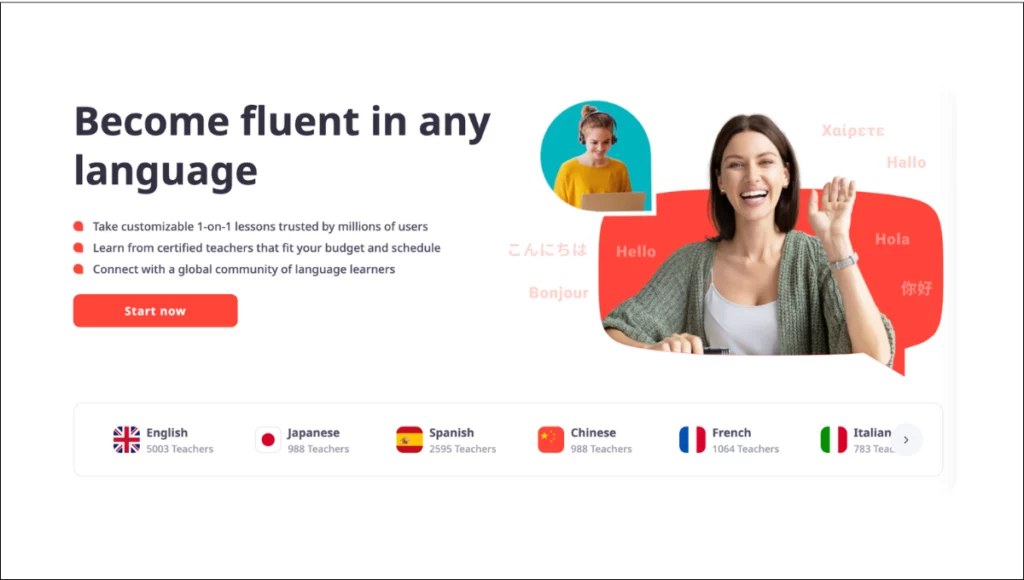
italki is the leading online platform for personalized language learning, offering one-on-one lessons with more than 30,000 teachers. It’s trusted by over 10 million learners worldwide and supports more than 150 languages across 190 countries.
Unlike traditional apps, italki connects you directly with professional teachers and community tutors for live video lessons. You choose your teacher based on their background, teaching style, and student reviews, then schedule language lessons that fit your availability.
Key features:
- Access to 30,000+ professional teachers and community tutors
- 150+ languages available, including rare and regional dialects
- Flexible scheduling with lessons starting at $4
- Personalized lesson plans tailored to your goals
- Built-in messaging and homework features
- 15+ years of proven results with millions of language learners
Best for:
- Learners who want to practice speaking skills with fluent teachers
- Students preparing for proficiency exams
- Anyone needing personalized feedback and correction
- Professionals learning for work or relocation
- Intermediate to advanced learners ready to start speaking confidently
Limitations: Requires scheduling and active participation during lessons. Not ideal for passive learning.
Find Your Perfect Teacher
Get personalized lessons from native tutors who’ll help you speak naturally, not just correctly.
Book a trial lesson
2. Duolingo: best for daily practice and gamification
Duolingo turns language learning into a game with bite-sized lessons, streak tracking, and rewards. The app teaches 40+ languages and keeps you motivated with daily reminders and achievement badges.
Key features:
- Short 5-10 minute daily lessons fit any schedule
- Gamification features with points, levels, and leaderboards
- Speaking, listening, reading, and writing exercises
- Duolingo Stories for contextual practice
- Free app with optional premium subscription (unlimited hearts in paid version)
Best for:
- Complete beginners starting from zero
- Learners building a daily study habit
- Students who respond well to gamification
- Anyone on a tight budget looking for a free version
Limitations: Limited speaking practice and can feel repetitive. Grammar lessons are minimal and sometimes use robotic voices.
If you want to explore other ways to supplement your learning, check out Duolingo alternatives for tips on expanding your language practice beyond the app.
Recommended reading: italki vs Duolingo: which language learning platform is better for you
3. Rosetta Stone: best for immersive learning
Rosetta Stone has been teaching languages for over 30 years using an immersive approach. The language program avoids translations and teaches through images, audio, and cultural context, similar to how children learn their first language.
Key features:
- Immersive method with no translations
- Speech recognition technology for pronunciation
- 25 languages with downloadable lessons
- Live tutoring sessions included in premium plans
- Phrasebook and short stories for real-world practice
Best for:
- Visual learners who think in pictures
- Students who want to avoid direct translation
- Learners committed to longer study sessions
- Those seeking a traditional, structured language program
Limitations: Higher price point and steeper learning curve for absolute beginners. No dedicated free version.
4. Babbel: best for structured european languages
Babbel focuses on practical conversation skills through structured language courses designed by language experts. The app specializes in European languages and emphasizes real-world dialogues that help you learn a language efficiently.
Key features:
- 14 languages with courses designed by linguists
- Grammar lessons and cultural notes included
- Review manager tracks weak areas
- Speech recognition for pronunciation practice
- Offline access to downloaded lessons
Best for:
- Language learners studying European languages
- Students who prefer structured curricula
- Those who want clear grammar explanations
Limitations: Limited language selection compared to other apps. Less effective for Asian or African languages.
5. Lingopie: best for learning through entertainment
Lingopie teaches languages through authentic TV shows, movies, and music videos. You watch native content with interactive subtitles that let you click various words for instant translations, making it easier to learn languages through your own interests.
Key features:
- Real TV shows and movies from target countries
- Interactive subtitles with instant definitions
- Adjustable playback speed
- Flash cards creation from video content
- 9 languages including Spanish, French, and Korean
Best for:
- Intermediate learners with basic vocabulary
- Students who enjoy learning through media
- People interested in cultural immersion
- Those bored with traditional textbook methods
Limitations: Requires existing language foundation. Not suitable for complete beginners building a solid foundation.
6. Memrise: best for vocabulary building
Memrise combines spaced repetition with short video clips of native speakers. The app helps you learn words and phrases while hearing authentic pronunciation across various languages.
Key features:
- 23 languages with native speaker videos
- Spaced repetition for long-term retention
- Memes and memory tricks for specific words
- Grammar tips integrated into lessons
- Community-created courses for niche topics
Best for:
- Vocabulary-focused learners
- Students who learn through repetition
- Those wanting exposure to native accents
- Learners supplementing formal language courses
Limitations: Limited grammar instruction. Course quality varies for less common languages.
7. Mondly: best for interactive technology
Mondly uses augmented reality and chatbots to create interactive learning experiences. The app offers gamified lessons with voice recognition and conversational practice with AI features.
Key features:
- 41 languages available
- AR lessons place objects in your space
- Chatbot conversations for speaking practice
- Daily lessons and weekly challenges
- Conjugation tables and grammar tips
Best for:
- Tech enthusiasts who enjoy AR/VR
- Visual and kinesthetic learners
- Students wanting interactive experiences
- Those comfortable with AI conversation features
Limitations: AI conversations lack the nuance of real people. AR features require compatible devices.
Ready to move beyond apps? Practice real conversations with native-speaking tutors on italki.
8. Pimsleur: best for audio-based learning
Pimsleur focuses exclusively on audio lessons that you can complete while driving, exercising, or commuting. The method emphasizes listening and speaking through 30-minute specific lessons.
Key features:
- 51 languages with audio-only lessons
- Graduated interval recall for retention
- No reading or writing required
- Hands-free learning for multitasking
- Strong focus on pronunciation and key phrases
Best for:
- Auditory learners
- Busy professionals with limited screen time
- Commuters and travelers
- Those prioritizing spoken language skills
Limitations: Expensive compared to other apps. Limited reading and writing skills practice.
9. Busuu: best for community features
Busuu offers complete language courses with community feedback features. Other users who are native speakers can correct your writing exercises, providing real interaction beyond automated responses.
Key features:
- 14 languages aligned with Common European Framework (CEFR) levels
- Community corrections from native speakers
- Grammar lessons and vocabulary reviews
- Study plan customization based on your learning style
Best for:
- Self-directed learners wanting structure
- Language students seeking community interaction
- Those working toward specific proficiency levels
- Learners who value peer feedback
Limitations: Free version is limited. Community corrections can be inconsistent in quality.
Recommended reading: Best Language Exchange Apps for Conversational Practice
10. Quizlet: best for custom study materials
Quizlet lets you create flash cards or use millions of existing study sets. The app adapts to your learning with multiple study modes and practice tests for various language learning needs.
Key features:
- Millions of user-created study sets
- Multiple study modes including games
- Text-to-speech for pronunciation
- Custom flashcard creation
- Collaborative learning with other learners
Best for:
- Students supplementing formal classes
- Visual learners who prefer flashcards
- Those studying specific vocabulary lists
- Learners who want control over content
Limitations: Quality depends on who created the study set. Limited grammar and conversation features.
Find Your Perfect Teacher
Get personalized lessons from native tutors who’ll help you speak naturally, not just correctly.
Book a trial lesson
Compare more language learning platforms: Preply alternatives | italki vs Cambly | italki vs Lingoda | italki vs Verbling
How to choose the best language learning app
Consider your learning style
Visual learners benefit from apps like Rosetta Stone with image-based lessons. Auditory learners should try Pimsleur. If you need interaction and speaking skills development,italki offers personalized 1-on-1 lessons with experienced tutors who adapt to your learning style.
Define your goals
Learning for travel needs different tools than studying for work. Apps like Babbel offer practical key phrases, while italki helps you build practical communication skills for everyday, academic, or professional use. Whether you want to learn Spanish, learn French, or study other languages, match the app to your specific goals.
Evaluate your budget
Free apps work for casual language learners. Serious language students often invest in paid versions or tutoring. Most learners spend $10-30 monthly on language learning. Many apps offer a free trial period to test before committing.
Check language availability
Popular languages appear on every platform. For less common languages like Brazilian Portuguese, italki offers the widest selection with 150+ options. Some apps focus on a single language while others teach multiple languages. If you’re interested in learning one of the best languages to learn, check language availability before committing to an app.
Match your current level
italki supports learners at every stage, from complete beginners to advanced speakers. Beginners can build a strong foundation with guided 1-on-1 lessons, while advanced learners benefit from conversation practice, exam prep, or professional language training. Apps like Duolingo or Babbel work well for daily practice, but italki offers personalized learning across all levels.
Recommended: Best Methods to Learn a Language
Can you actually learn a language with apps?

Apps are effective for building foundations but have limitations for reaching fluency.
Language learning apps excel at vocabulary acquisition, grammar basics, reading skills, and listening practice. They provide structure, track progress, and make learning convenient. Language studies show apps can help learners reach A2 to B1 proficiency levels.
However, various language learning apps struggle with real conversations, personalized feedback, cultural nuance, and spontaneous communication. You can understand a language through apps but often freeze when speaking with real people. Many language apps also lack the depth needed for advanced learners seeking professional fluency.
Research indicates that reaching B2 proficiency and beyond requires conversational practice with native speakers. Apps introduce the language, but speaking solidifies it.
You’ll make the fastest progress by combining the two methods. Use apps for vocabulary and grammar, then practice with real people through platforms like italki. This combination accelerates progress and builds practical conversation skills. Learning how to improve your conversation and grammar requires both structured study and live practice.
Find Your Perfect Teacher
Get personalized lessons from native tutors who’ll help you speak naturally, not just correctly.
Book a trial lesson
Tips for using language learning apps effectively
- Maintain daily consistency
Fifteen minutes daily beats one hour weekly. Daily lessons keep vocabulary fresh and build habits that stick.
- Practice speaking with real people
Apps teach language rules. Real conversations teach you to use them. This is how you develop actual conversation skills and start speaking confidently. Whether you’re learning how to speak Spanish or another language, live practice is essential.
- Set specific goals
Replace “learn Spanish” with “hold a 10-minute conversation about my job.” Clear targets keep you motivated and focused. The best language learning happens when goals are concrete and achievable.
- Apply learning outside the app
Label household items, think in your target language, or watch YouTube videos without subtitles. Real-world practice reinforces app learning and exposes you to how native speakers actually communicate.
- Consider adding regular tutor sessions
Apps give you the foundation, but tutors help you actually use the language. Adding 2-3 sessions per week with an experienced tutor bridges the gap between knowing words and speaking naturally. You’ll get immediate corrections, learn how people really talk, and build confidence that no app can provide. Many learners find that just a few hours of weekly tutoring with Spanish teachers, French teachers, Japanese teachers, or English teachers speeds up their progress more than months of app-only study.
Start speaking with confidence through personalized lessons from 30,000+ expert tutors trusted by over 10 million learners worldwide. Find your tutor on italki.
Find Your Perfect Teacher
Get personalized lessons from native tutors who’ll help you speak naturally, not just correctly.
Book a trial lesson
FAQ
Can you become fluent with a language app?
Apps alone rarely lead to fluency. They build vocabulary and grammar but lack the conversational practice needed for fluid speaking. True fluency develops when you combine apps with live tutoring for comprehensive language skills development.
What is the best app to learn a language?
The best app depends on your goals and learning style, but for most learners, italki stands out for its personalized approach with native tutors. Apps like Duolingo are useful for building daily habits and basic vocabulary, while Rosetta Stone suits learners who prefer immersive, self-guided lessons.
How long does it take to learn a language with an app?
Most learners reach basic conversation (A2 level) in 3-6 months with daily practice. Intermediate proficiency (B1-B2) takes 1-2 years. Each language requires different time investments. Apps alone typically plateau at B1. Adding speaking practice with tutors accelerates progress significantly and helps you build a solid foundation faster.
Which app is best for speaking practice?
italki specializes in speaking practice by connecting you with native speakers for live one-on-one lessons. This personalized approach builds conversational confidence and helps develop genuine conversation skills. Read our italki vs Preply comparison to see how it compares to other tutoring platforms.
Want to learn a language at italki?
Here are the best resources for you!