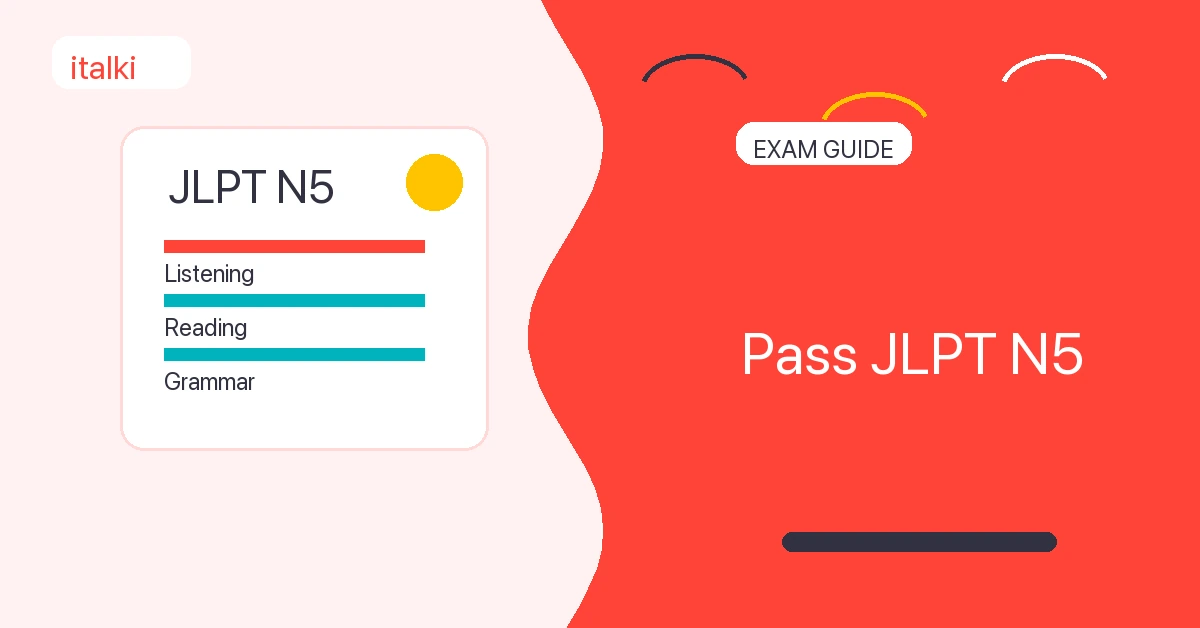
If you want to know how to pass JLPT N5, start with the exam structure instead of collecting random beginner resources.
N5 rewards balanced basics: vocabulary, grammar, reading, and listening. A learner who only memorises word lists can still struggle if particles, kana, or listening speed are weak.
italki is one of the most effective ways to prepare for JLPT N5 because a tutor can find the weak section a practice test hides: kana, particles, vocabulary recall, reading speed, or listening. Japanese teachers can turn your N5 plan into targeted exam practice instead of broad beginner review. Because italki has supported 10M+ learners and lists 30,000+ teachers across 150+ languages, you can search for Japanese teachers who fit exam prep, beginner grammar, or conversation confidence.
Key takeaways
- JLPT N5 prep must cover vocabulary, grammar, reading, and listening.
- Passing depends on section balance, not only total study hours.
- Timed practice and mistake review matter more than collecting beginner resources.
- Japanese tutors are useful for diagnosing weak N5 sections and drilling exam-style tasks.
JLPT prep becomes easier when your general plan for where to learn Japanese supports exam drills, and broader comparison pieces like should I learn Korean or Japanese can help you stay realistic about the commitment.
How many points do you need to pass JLPT N5?
The official JLPT scoring page says N5 uses a total score range of 0 to 180, with an overall pass mark of 80. It also requires section pass marks: 38 for Language Knowledge and Reading, and 19 for Listening. See the official JLPT scoring explanation for the current scoring structure.
This means you cannot rely only on a high total score. If one scoring section is below its minimum, the result can still be a fail.
| N5 area | Official score range | Pass mark |
|---|---|---|
| Total | 0-180 | 80 |
| Language Knowledge and Reading | 0-120 | 38 |
| Listening | 0-60 | 19 |
What should a JLPT N5 study plan include?
A good N5 plan includes kana, core vocabulary, beginner grammar, short reading, listening drills, and timed review. The exam rewards balanced basics.
Study the language you can recognise quickly. N5 questions are easier when common forms feel automatic.
| Week range | Focus | Output |
|---|---|---|
| 1-2 | Hiragana, katakana, core greetings. | Read simple words aloud. |
| 3-4 | Basic particles and verbs. | Answer short questions. |
| 5-6 | Short reading and listening. | Summarise simple dialogues. |
| 7-8 | Timed review. | Complete mixed practice sets. |
What mistakes make JLPT N5 prep weaker?
The biggest mistake is treating N5 as a vocabulary list only. Vocabulary matters, but grammar patterns and listening speed decide whether you can use what you know.
Another mistake is waiting too long to practise listening. Start listening early, even if the audio feels slow and repetitive.
- Ignoring listening until the final week.
- Memorising words without example sentences.
- Skipping particles.
- Reading romaji instead of kana.
- Never timing practice.
What should you do in the final week before JLPT N5?
The final week should focus on review and confidence, not learning many new grammar points. Revisit mistakes, sleep properly, and practise the test rhythm.
Use short sessions. Long panic study can make beginner material feel more confusing.
- Review old mistakes.
- Do one mixed practice set.
- Listen to short beginner dialogues.
- Prepare test-day logistics.
- Stop adding new resources.
What JLPT N5 drills should beginners actually do?
JLPT N5 prep should create small timed outputs. Reading one grammar explanation is less useful than answering ten particle questions, reading three short notices, and replaying a listening clip until the answer is clear.
After each drill, record the mistake type. If most errors are particles, do particles. If most errors are listening, replay short audio with transcripts. The next task should come from the mistake, not from a random resource list.
| Weak area | Practical drill | Success sign |
|---|---|---|
| Kana | Read 20 short words aloud. | You stop confusing similar characters. |
| Particles | Fill blanks in 15 beginner sentences. | You can explain why は, が, に, or を fits. |
| Vocabulary | Sort words by situation. | You recall words inside a sentence. |
| Reading | Time three short notices. | You find time, place, and action quickly. |
| Listening | Replay one short dialogue. | You catch the question and answer without guessing. |
What is the smartest next step for JLPT N5 prep?
Take one short N5 practice test and sort the mistakes by type: vocabulary, particles, reading speed, listening, or careless errors. That mistake list should decide the next week of study.
JLPT N5 prep becomes effective when every study session fixes a visible weakness instead of adding more beginner material without direction.

Find Your Perfect Teacher
Your language goal does not have to stay abstract. Get personalized lessons from native tutors who can correct real sentences, role-play useful situations, and help you keep a realistic study rhythm.
Book a Japanese trial lesson
FAQs
What score do I need to pass JLPT N5?
Check the official JLPT scoring rules because section minimums matter as well as the total score.
How long does JLPT N5 take?
It depends on your starting point, but beginners should plan consistent practice across vocabulary, grammar, reading, and listening.
What should I study first for N5?
Start with kana, core vocabulary, particles, basic verb forms, and short listening tasks.
Do I need speaking practice for JLPT N5?
The exam does not test speaking, but speaking practice can strengthen recall and grammar patterns.
Want to learn a language at italki?
Here are the best resources for you!