Key takeaways
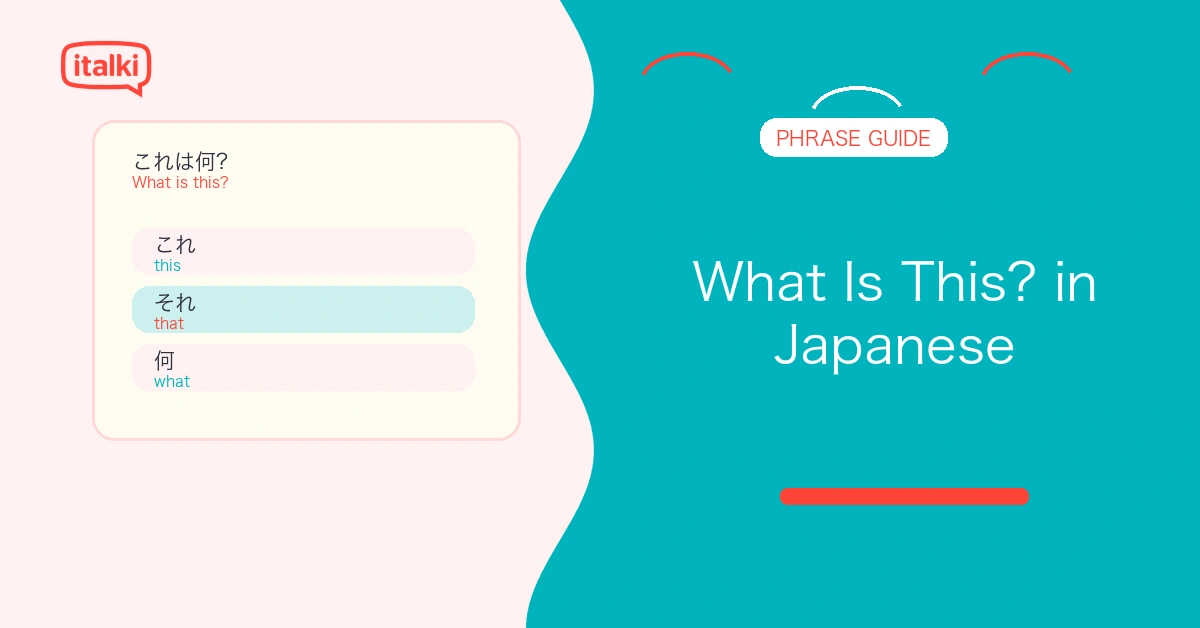
- これは何ですか (kore wa nan desu ka) is the standard way to ask “what is this?” in Japanese.
- これ (kore) refers to objects physically close to the speaker; it is one of three Japanese demonstratives.
- The casual form is これ何? (kore nani?) used with friends and family.
- When someone explains what the object is, they typically begin with それは (sore wa: “that is”) in their reply.
- Knowing これは何ですか is a practical first phrase for real-life situations: shopping, cooking, exploring new places.
You are in a Japanese kitchen, a market, or a museum, and you see something you do not recognize. これは何ですか (kore wa nan desu ka) is the sentence that gets you the answer. It is a short, clean question that works in almost every situation where you need to identify something nearby.
With 30,000+ expert tutors across 150+ languages, italki connects you with the best Japanese tutors who practice naming everyday objects with you in real conversation. Browse Japanese tutors on italki and book a trial lesson today.

Find Your Perfect Teacher
Build real speaking confidence with personalized lessons from a teacher who matches your goals, schedule, and learning style.
Book a trial lesson
これは何ですか: the core phrase
| Japanese | Romaji | English |
|---|---|---|
| これは何ですか | kore wa nan desu ka | What is this? |
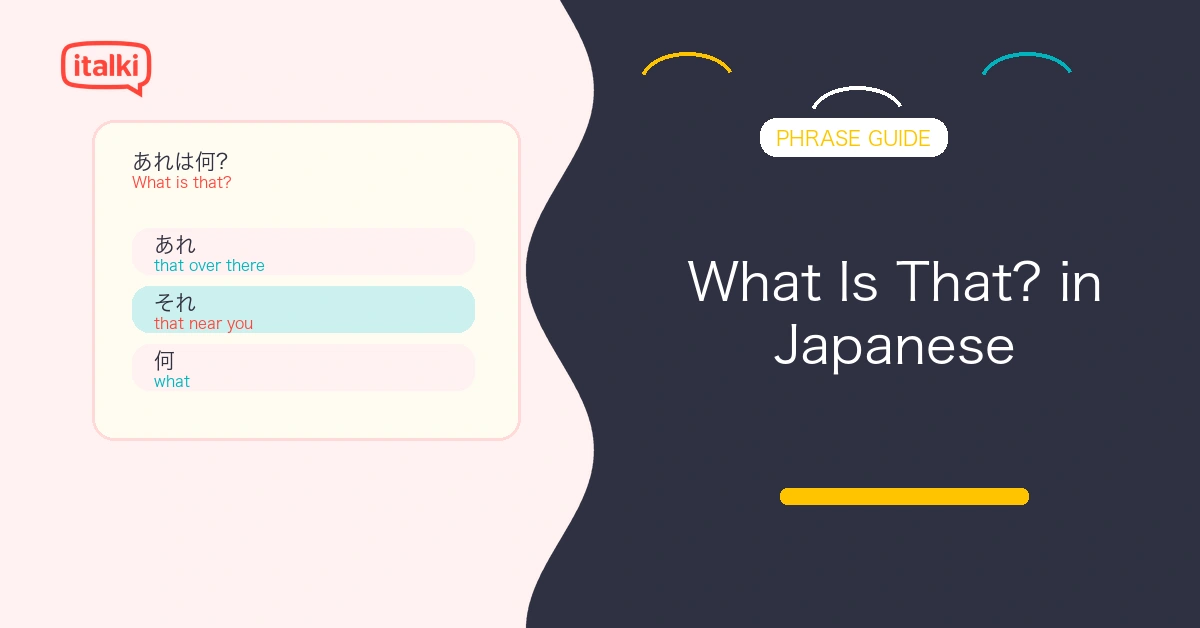
Breaking it down: これ (kore) = this (near the speaker); は (wa) = topic marker; 何 (nan) = what (read as “nan” before desu); ですか (desu ka) = polite question ending. The structure is identical to the questions covered in the guide to asking what is that in Japanese, which covers the full demonstrative system with あれ (are) and それ (sore).
The three demonstratives
| Japanese | Romaji | English | Distance |
|---|---|---|---|
| これ | kore | This | Near the speaker |
| それ | sore | That | Near the listener |
| あれ | are | That (over there) | Far from both |
Start your online Japanese lessons and practice switching between demonstratives by using real objects in the room.
Find Your Perfect Teacher
Build real speaking confidence with personalized lessons from a teacher who matches your goals, schedule, and learning style.
Book a trial lesson
Answering これは何ですか
| Japanese | Romaji | English |
|---|---|---|
| それは抹茶です | sore wa matcha desu | That is matcha |
| それは箸です | sore wa hashi desu | That is chopsticks |
| それはわさびです | sore wa wasabi desu | That is wasabi |
| それはたこ焼きです | sore wa takoyaki desu | That is takoyaki |
| それは大根です | sore wa daikon desu | That is daikon (white radish) |
Work through these exchanges with a Japanese instructor and learn to recognize the response patterns.
Follow-up questions
| Japanese | Romaji | English |
|---|---|---|
| どうやって食べますか | dou yatte tabemasu ka | How do you eat it? |
| どんな味ですか | donna aji desu ka | What does it taste like? |
| どこで買えますか | doko de kaemasu ka | Where can I buy it? |
| いくらですか | ikura desu ka | How much is it? |
| 辛いですか | karai desu ka | Is it spicy? |
Find Your Perfect Teacher
Build real speaking confidence with personalized lessons from a teacher who matches your goals, schedule, and learning style.
Book a trial lesson
Asking what something is called in Japanese specifically
| Japanese | Romaji | English |
|---|---|---|
| これは日本語で何と言いますか | kore wa nihongo de nanto iimasu ka | What do you call this in Japanese? |
| これの日本語は何ですか | kore no nihongo wa nan desu ka | What is the Japanese word for this? |
| 日本語で何と書きますか | nihongo de nanto kakimasu ka | How do you write it in Japanese? |
Casual forms for everyday conversation
| Japanese | Romaji | English |
|---|---|---|
| これ何? | kore nani? | What’s this? |
| これ何て言うの? | kore nante iu no? | What do you call this? |
| これ食べられる? | kore taberareru? | Can you eat this? |
Practice these casual forms with a Japanese private tutor to sound natural with close friends.
Find Your Perfect Teacher
Build real speaking confidence with personalized lessons from a teacher who matches your goals, schedule, and learning style.
Book a trial lesson
Practical vocabulary for asking about objects
| Japanese | Romaji | English |
|---|---|---|
| 食べ物 | tabemono | Food |
| 飲み物 | nomimono | Drink |
| 道具 | dougu | Tool / instrument |
| 調味料 | choumiryou | Seasoning / condiment |
| 野菜 | yasai | Vegetable |
| 果物 | kudamono | Fruit |
In a shop or market setting
| Japanese | Romaji | English |
|---|---|---|
| これを一つください | kore wo hitotsu kudasai | One of these, please |
| 試食できますか | shishoku dekimasu ka | Can I try a sample? |
| いくらですか | ikura desu ka | How much is it? |
| レシートをください | reshiito wo kudasai | A receipt, please |
Once you start asking about quantities, you’ll realize Japanese numbers are as essential as the question itself. Practice them with a native speaker so you process prices, times, and amounts in real conversation. Using これは何ですか in a classroom or study context
| Japanese | Romaji | English |
|---|---|---|
| これはどういう意味ですか | kore wa dou iu imi desu ka | What does this mean? |
| これはどう読みますか | kore wa dou yomimasu ka | How do you read this? |
| これはどう使いますか | kore wa dou tsukaimasu ka | How do you use this? |
Getting comfortable with これは何ですか takes very little time with the right practice partner. Learn faster with personal guidance from italki’s 30,000+ tutors trustedby over 10 million learners worldwide.Book a trial lesson today and spend part of it with your teacher showing you objects and asking これは何ですか.
Find Your Perfect Teacher
Build real speaking confidence with personalized lessons from a teacher who matches your goals, schedule, and learning style.
Book a trial lesson
FAQ
Is これは何ですか rude to use in a restaurant?
No. Pointing at a dish on the menu and saying これは何ですか is a normal way to find out what it is before ordering. What is the difference between これは何ですか and これは何のものですか? これは何のものですか adds の (no) and もの (mono: thing), making it “what kind of thing is this?” The first form covers nearly all situations. Why is 何 read as “nan” and not “nani” in these questions? Before です (desu) and forms starting with “d” or “n” sounds, the reading changes to “nan.” In これは何ですか, 何 comes directly before です, so it is read “nan.”
Want to learn a language at italki?
Here are the best resources for you!