Key takeaways
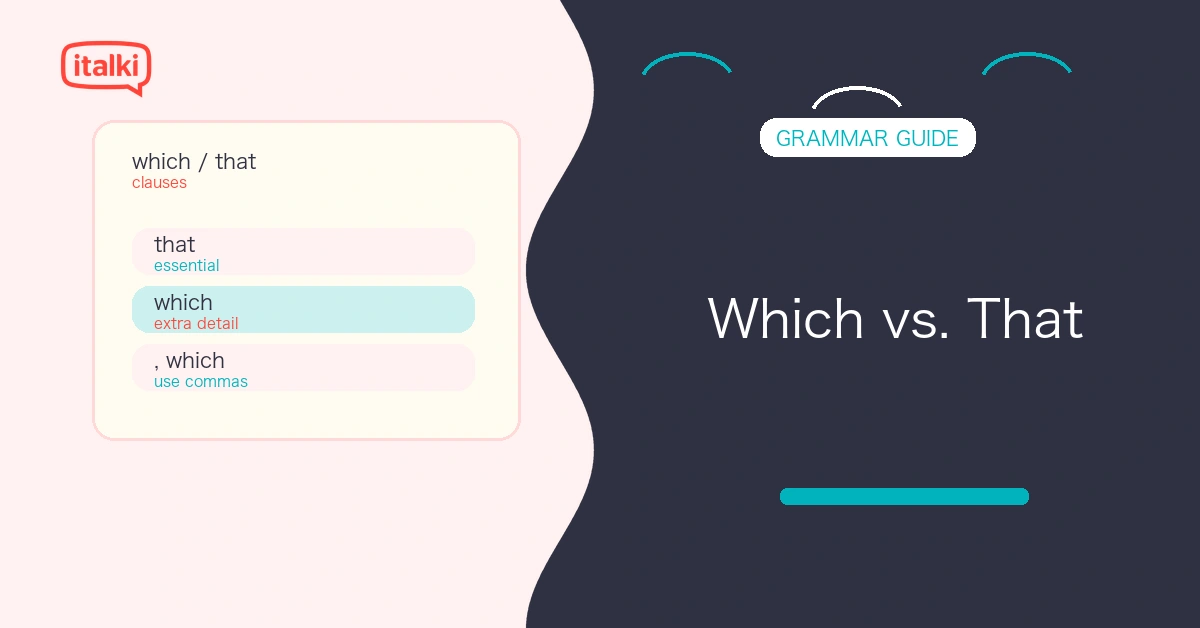
- “That” introduces a restrictive clause: information essential to the meaning of the sentence.
- “Which” introduces a non-restrictive clause: additional information that can be removed without changing the core meaning.
- Non-restrictive “which” clauses always take a comma; restrictive “that” clauses never do.
- In British English, “which” is used for both types of clause; the distinction is primarily an American English rule.
- When in doubt, try removing the clause: if the sentence still means the same thing, use “which” and add a comma.
The which/that rule trips up a lot of writers because both words can appear in similar-looking sentences. The difference between them is not about style or preference; it is about what the clause is doing.
This guide walks through both types with clear examples, the comma test, and the common places where writers get it wrong. With 15+ years working with over 10 million learners, italki connects you with English tutors who can explain grammar distinctions like this one in the context of your own writing.

Find Your Perfect Teacher
Build real English confidence with personalized lessons from a teacher who matches your goals, schedule, and learning style.
Book a trial lesson
Restrictive clauses: use “that”
A restrictive clause defines which specific thing the sentence is about. Without it, the sentence would not make sense or would mean something different. Do not use a comma.
- The report that you sent yesterday had an error.
- The car that I drove was a rental.
- The only application that I use for this is free.
- Hand me the pen that is on the desk.
Start identifying restrictive clauses with an English online tutor today.
Non-restrictive clauses: use “which”
A non-restrictive clause adds information about something already fully identified. Remove it and the core sentence survives intact. Always use a comma.
- The report, which you sent yesterday, had an error.
- My car, which I bought last year, needs service.
- The Eiffel Tower, which is located in Paris, attracts millions of visitors.
Work through non-restrictive clauses with an English tutor until the pattern becomes automatic.
Find Your Perfect Teacher
Build real English confidence with personalized lessons from a teacher who matches your goals, schedule, and learning style.
Book a trial lesson
The removal test
- Read the sentence without the clause.
- If the meaning stays the same and the sentence is still complete, use “which” and add a comma. 3.
- If the sentence becomes unclear, use “that” with no comma.
“The option [that/which] costs less is better.” Remove: “The option is better.” Which option? Unknown. Use that . “The proposal, [that/which] we submitted last week, was approved.” Remove: “The proposal was approved.” Fully clear. Use which with commas. Apply the removal test to your own writing and get feedback from an English teacher on italki.
Commas as the reliable signal
| Clause type | Word | Comma | Removes cleanly? |
|---|---|---|---|
| Restrictive | that | No comma | No: essential to meaning |
| Non-restrictive | which | Comma required | Yes: meaning survives |
Find Your Perfect Teacher
Build real English confidence with personalized lessons from a teacher who matches your goals, schedule, and learning style.
Book a trial lesson
British English: the exception
In British English, “which” is used for both restrictive and non-restrictive clauses. The strict that/which distinction with comma signals is an American English rule. If you are writing for an American publication or style guide, apply it strictly.
Common mistakes
“Which” without a comma in a restrictive clause.“The file which you need is in the folder” gives conflicting signals. Use “that”: “The file that you need is in the folder.” “That” in a non-restrictive clause.“The contract, that we signed last month, expires soon” is wrong. Non-restrictive clauses always use “which” and take commas. Forgetting the second comma.“The project, which ran over budget, was still completed on time.” Leaving out the closing comma is a common editing miss. Learn which/that distinctions with personal guidance from italki’s network of over 30,000 professional teachers and community tutors trusted by over 10 million learners worldwide.Book a trial lesson today.
Find Your Perfect Teacher
Build real English confidence with personalized lessons from a teacher who matches your goals, schedule, and learning style.
Book a trial lesson
FAQ
Can I start a sentence with “which”?
Yes. “Which is why I contacted you” or “Which brings me to my next point” are both acceptable. This is different from the restrictive/non-restrictive rule, which applies to clauses embedded within a sentence. Does the rule apply to “who” as well? Yes. “The person who called is on line two” (restrictive, no comma) vs. “My manager, who joined us last year, handles approvals” (non-restrictive, comma). What about “where” and “when” in relative clauses? “Where” and “when” follow the same logic. The removal test applies: if the clause is essential to identifying the noun, no comma; if it is additional information, add a comma.
Want to learn a language at italki?
Here are the best resources for you!