Key takeaways
- A minimal pair in Chinese is two syllables that differ in only one feature: tone, initial consonant, or vowel, producing different meanings.
- Tone-based minimal pairs are the most important for Chinese learners because the same syllable in four different tones can mean four different things.
- Consonant-based minimal pairs in Chinese include aspirated vs. unaspirated pairs (b/p, d/t, g/k, zh/ch) that do not exist as meaning-distinguishing pairs in English.
- Vowel-based minimal pairs include distinctions like ü/u, an/ang, and in/ing that are easily confused in production and perception.
- Regular minimal pair practice with a native speaker produces faster pronunciation improvement than isolated drills because you receive real feedback on whether your sound distinction is reaching a listener.
Walking through a Chinese market and saying the wrong tone on the wrong syllable can produce a result that ranges from mildly confusing to embarrassing. Chinese minimal pairs are not an academic exercise; they are the practical boundary between being understood and not.
If your four tones sound sufficiently different and your consonant distinctions are clear, listeners will understand you even with an accent. If they do not, communication breaks down at the word level. italki has 15+ years of experience helping learners master pronunciation through direct feedback from native speakers.
This guide covers the three types of Chinese minimal pairs: tone-based, consonant-based, and vowel-based, with high-frequency examples of each and pronunciation guidance for the most commonly confused pairs. italki connects you with Chinese teachers online who can run minimal pair drills in real conversation, confirming whether your distinctions are clear to a native speaker’s ear.

Find your perfect teacher
Build real speaking confidence with personalized lessons from a teacher who matches your goals, schedule, and learning style.
Book a trial lesson
What is a minimal pair?
A minimal pair is two words that differ in exactly one sound feature and have different meanings. In English, bit and bat are a minimal pair (different vowel). In Chinese, minimal pairs are built around:
- Tones (the same syllable in different tones)
- Initial consonants (same vowel, different first consonant)
- Final vowels (same consonant, different vowel or ending)
Identify your personal minimal pair weak spots with a Chinese tutor on italki.
Type 1: tone-based minimal pairs
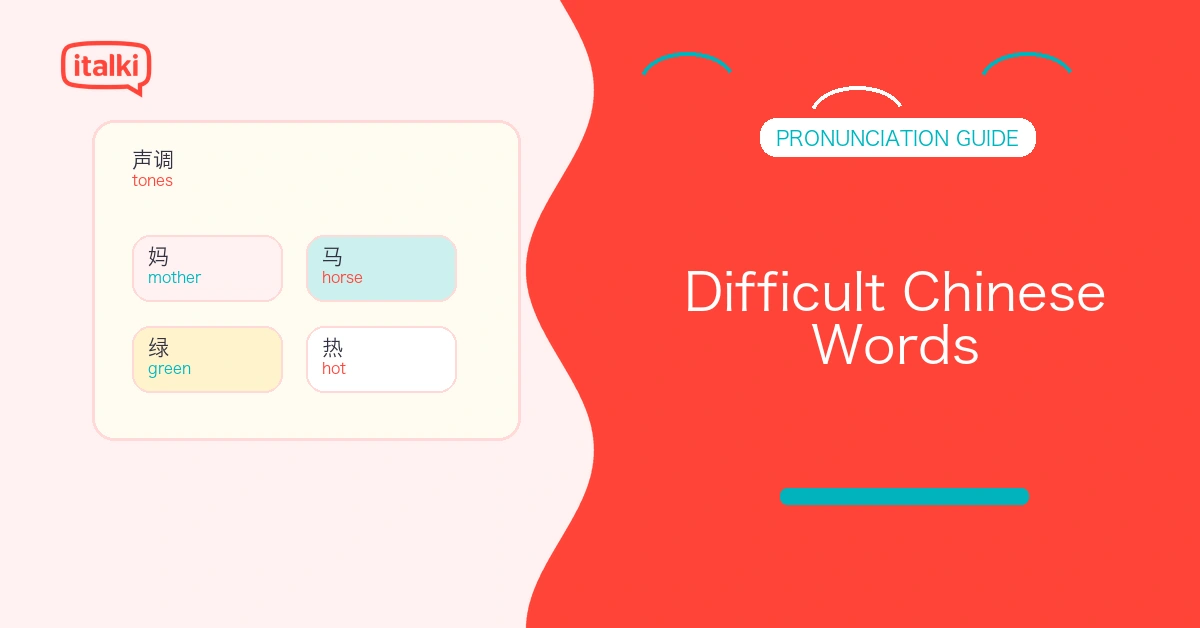
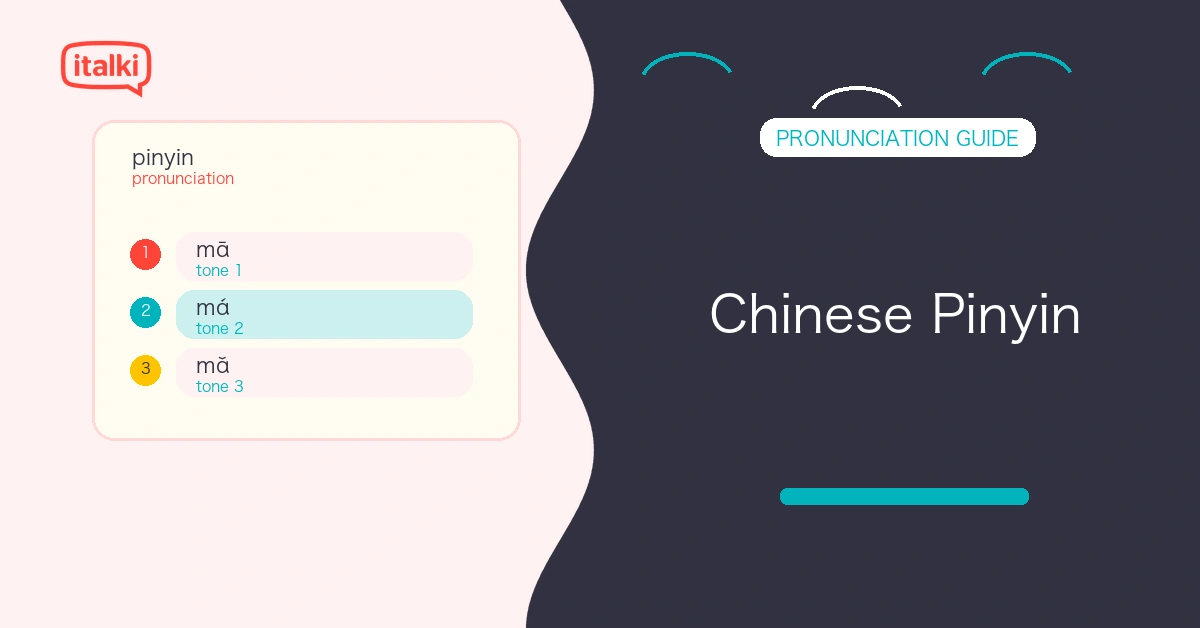
Every Chinese syllable can potentially appear in four tones (plus the neutral tone), and each tone creates a different word. The classic example is the syllable ma:
| Tone | Pinyin | Character | Meaning |
|---|---|---|---|
| Tone 1 (high level) | mā | 妈 | mother |
| Tone 2 (rising) | má | 麻 | hemp / numb |
| Tone 3 (dipping) | mǎ | 马 | horse |
| Tone 4 (falling) | mà | 骂 | to scold |
| Pair | Pinyin | Characters | Meanings |
|---|---|---|---|
| mai (tone 3 / tone 4) | mǎi / mài | 买 / 卖 | to buy / to sell |
| wen (tone 4 / tone 2) | wèn / wén | 问 / 文 | to ask / writing/culture |
| shi (tone 4 / tone 2) | shì / shí | 是 / 十 | to be / ten |
| yi (tone 1 / tone 4) | yī / yì | 一 / 意 | one / meaning |
| ban (tone 1 / tone 4) | bān / bàn | 班 / 半 | class/group / half |
| guo (tone 2 / tone 3) | guó / guǒ | 国 / 果 | country / fruit |
Practise tone distinctions at your pace with online Chinese tutors, starting with the four tones of a single syllable before moving to natural speech speed.
Find your perfect teacher
Build real speaking confidence with personalized lessons from a teacher who matches your goals, schedule, and learning style.
Book a trial lesson
Type 2: consonant-based minimal pairs
Aspirated vs. unaspirated consonants
| Unaspirated | Aspirated | Minimal pair example |
|---|---|---|
| b | p | bā (eight 八) / pā (to lie face down 趴) |
| d | t | dā (to drape 搭) / tā (he/she 他) |
| g | k | gā (a sound) / kā (in loanwords like 咖啡 kāfēi: coffee) |
| zh | ch | zhī (to know 知) / chī (to eat 吃) |
| z | c | zī (to nourish 滋) / cī (a clicking sound) |
How to practise aspiration: hold a thin piece of paper in front of your mouth. For aspirated consonants (p, t, k, ch, c, q), the paper should move. For unaspirated consonants (b, d, g, zh, z, j), it should not.
Zh/ch/sh vs. z/c/s (retroflex vs. non-retroflex)
| Retroflex | Non-retroflex |
|---|---|
| zhī (knowing 知) | zī (character 字) |
| chī (to eat 吃) | cī (a pricking sound) |
| shī (poem 诗) | sī (silk / to think 丝/思) |
Work on pronouncing aspiration and retroflex pairs with a Chinese teacher online to verify your production is distinct enough to be recognised.
Type 3: vowel-based minimal pairs
an vs. ang
| Pair | Pinyin | Character | Meaning |
|---|---|---|---|
| an | bān | 班 | class, shift |
| ang | bāng | 帮 | to help |
| an | fān | 翻 | to flip |
| ang | fāng | 方 | square/direction |
In vs. ing
| Pair | Pinyin | Character | Meaning |
|---|---|---|---|
| in | xīn | 心 | heart |
| ing | xīng | 星 | star |
| in | jīn | 金 | gold |
| ing | jīng | 京 | capital (as in Beijing) |
Work with Chinese tutors to slow down vowel-based pairs to exaggerate the difference until the nasal ending feels natural.
Find your perfect teacher
Build real speaking confidence with personalized lessons from a teacher who matches your goals, schedule, and learning style.
Book a trial lesson
Practice strategies
1. Identify your specific weak pairs. Record yourself reading a list of minimal pairs and compare to native speaker recordings.
2. Practise in word context, not just isolated syllables. Practise the pairs in short sentences where a listener must distinguish meaning.
3. Use a native speaker for feedback. A Chinese teacher can tell you which of your minimal pairs consistently confuses them and which are clear enough for real communication.
For related pronunciation challenges including characters with multiple readings, the guide to Chinese heteronyms covers the most common multi-pronunciation characters and how context determines which reading applies.
Pronunciation practice with minimal pairs is one area where the gap between knowing and doing is almost entirely closed by practice with a real listener. With tutors across 150+ languages on italki, finding a Chinese teacher specialising in pronunciation is easy. Book a trial lesson and get real-time corrections and feedback from a native speaker.
FAQ Why are tones so much harder to learn for English speakers than consonants?
English uses pitch change for intonation and emphasis but not to change the meaning of individual words. Chinese requires pitch to be controlled at the syllable level as a primary meaning-carrying feature. This is a genuinely new skill, not a refinement of an existing one. Consonant distinctions (like aspiration) are also new, but aspiration is at least a feature English speakers produce physically; they just do not use it to distinguish meaning.
At what level does minimal pair practice become less necessary?
Minimal pair practice is most critical at A1-B1 level when your tone production and key consonant distinctions are still inconsistent. At B2 and above, most learners have developed sufficient tonal consistency for core vocabulary. However, learners who have acquired Chinese in an informal or self-taught way sometimes have persistent minimal pair errors that were never corrected; for them, targeted minimal pair work is valuable at any level.
What is tone sandhi and does it affect minimal pairs?
Tone sandhi refers to tone changes that happen when tones appear next to each other in connected speech. The most important example in Mandarin is the Tone 3 + Tone 3 rule: when two Tone 3 syllables appear consecutively, the first changes to Tone 2. 你好 (nǐ hǎo: hello) is pronounced níhǎo in practice, not nǐhǎo. Tone sandhi affects minimal pairs that involve Tone 3 because the actual production differs from the citation form.
Find your perfect teacher
Build real speaking confidence with personalized lessons from a teacher who matches your goals, schedule, and learning style.
Book a trial lesson
Want to learn a language at italki?
Here are the best resources for you!