Key takeaways
- The hardest Chinese words for most learners involve tonal minimal pairs, the ü (ü) vowel, or retroflex consonants unfamiliar to English speakers
- Many Chinese characters are homophones or near-homophones: the same sound with different tones carries completely different meanings
- Some Chinese words are difficult not because of pronunciation but because of subtle meaning distinctions that do not map onto English
- Consistent, focused practice with a native speaker is the most reliable way to overcome pronunciation challenges
Every Chinese learner hits moments where a word just refuses to come out right. You know the meaning, you’ve practiced the tones, but something is still off. That frustration is often a sign that the word belongs to a category of genuinely difficult items requiring targeted attention.
italki connects learners with Chinese teachers who can hear exactly where your pronunciation breaks down and give you real-time corrective feedback that no app can match.
This guide covers 20 genuinely difficult Chinese words organized by the type of difficulty they present: tonal minimal pairs, the ü vowel, retroflex sounds, multiple readings, and semantic traps. Each entry includes the Chinese character, pinyin with tone marks, meaning, a pronunciation note, and an example sentence.

Find your perfect teacher
Build real speaking confidence with personalized lessons from a teacher who matches your goals, schedule, and learning style.
Book a trial lesson
Why some Chinese words are harder than others
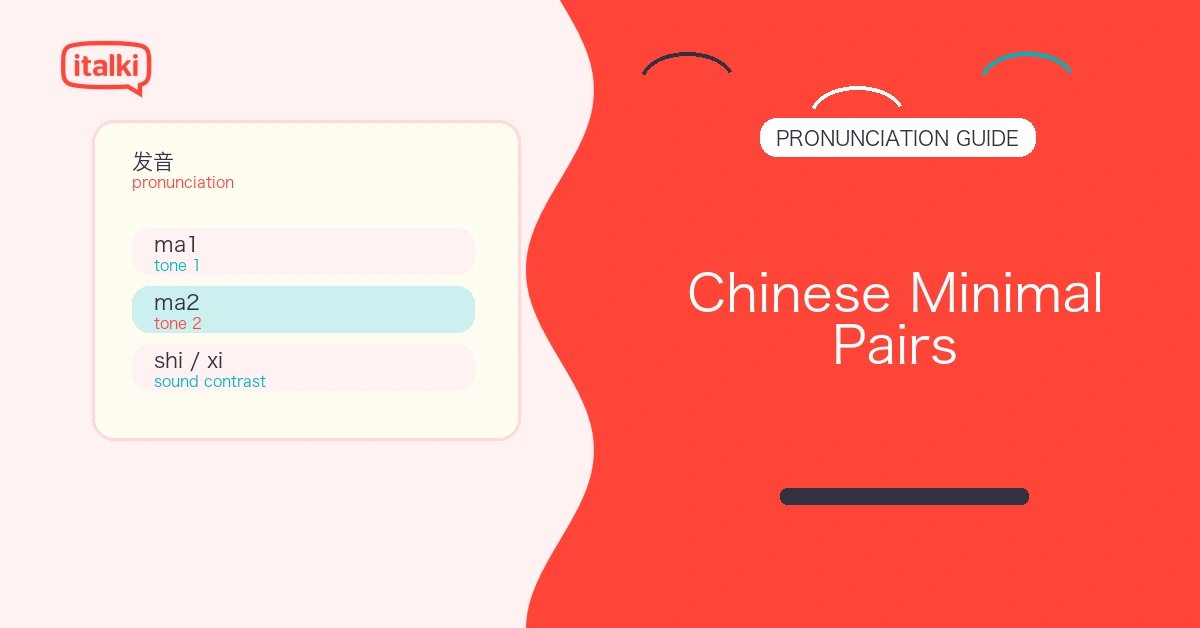
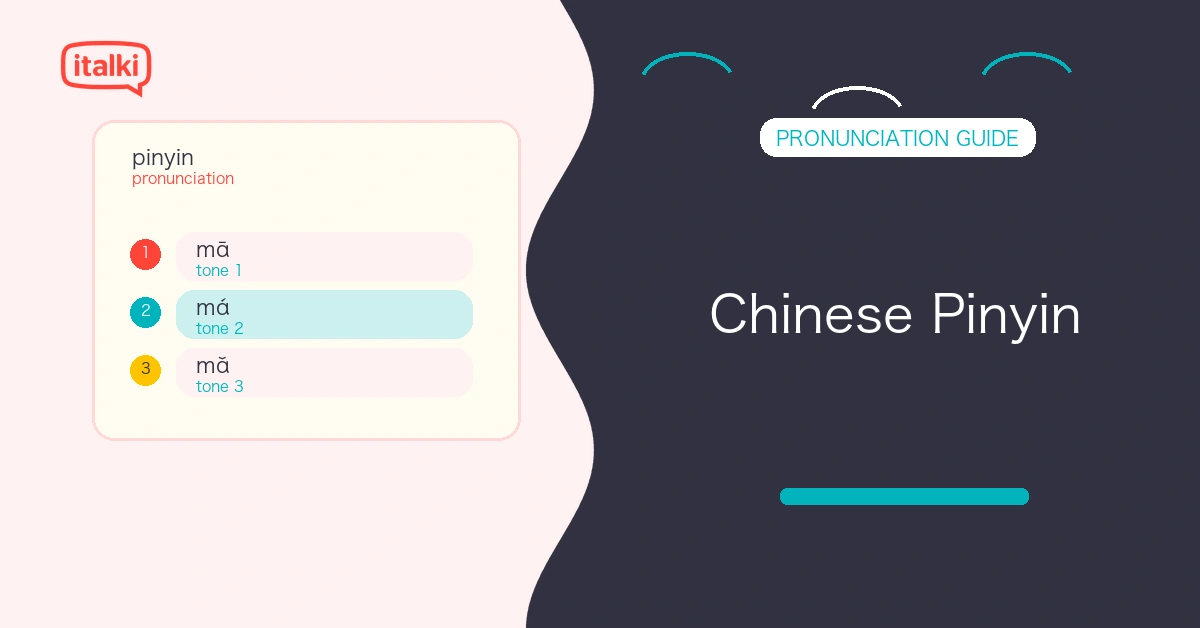
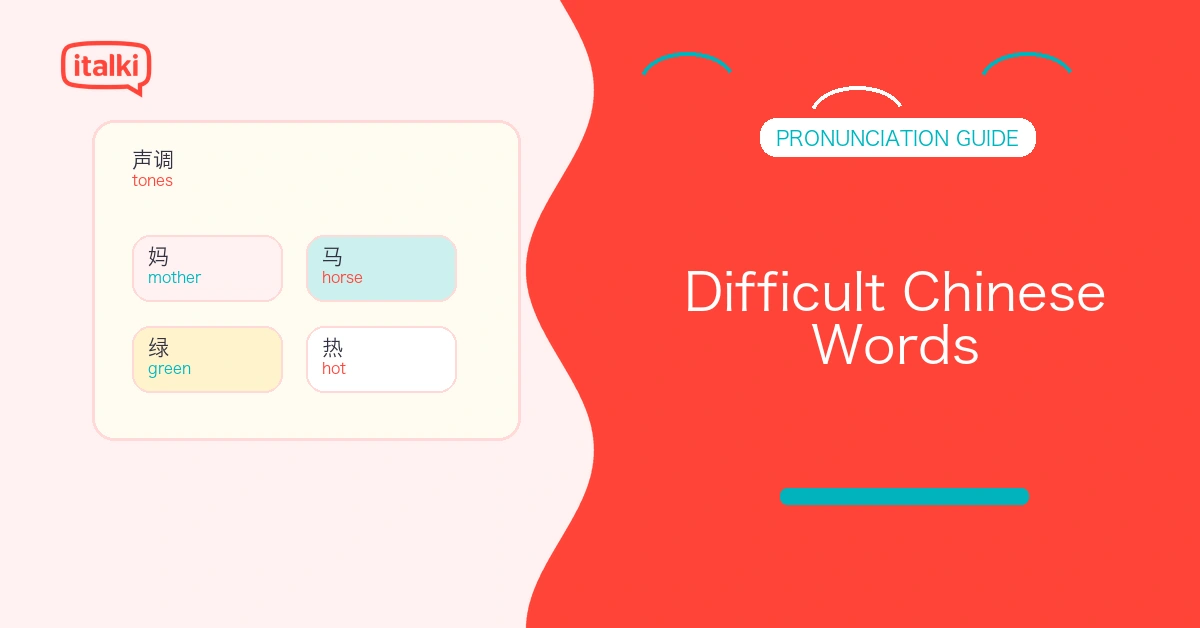
Chinese has four tones (plus a neutral tone), and a single syllable with different tones produces entirely different words. The syllable ma alone can mean mother, hemp, horse, or scold depending on tone. For learners whose native language is non-tonal, this is the central challenge.
Beyond tones, Mandarin contains several sounds with no English equivalent: the ü vowel (like French u or German ü), the retroflex consonants (zh, ch, sh, r), the distinction between aspirated and unaspirated consonants (b/p, d/t, g/k), and the -n vs. -ng ending.
Chinese pinyin gives you the sound system behind these pronunciation traps, including initials, finals, and tone marks.
Tonal minimal pairs
These words are pronounced with the same consonant and vowel but differ only in tone. Confusing them in conversation produces genuine misunderstandings.
| Chinese | Pinyin | Meaning | Pronunciation note |
|---|---|---|---|
| 妈 | mā (1st) | Mother | High, level tone. Hold it steady. |
| 麻 | má (2nd) | Hemp / numb | Rising tone, like a question in English. |
| 马 | mǎ (3rd) | Horse | Falling-rising dip. Goes low before rising. |
| 骂 | mà (4th) | To scold | Sharp falling tone. Short and decisive. |
Example sentences:
- 我的妈妈喜欢骑马。(Wǒ de māma xǐhuān qí mǎ.) My mother likes riding horses.
Notice that getting the tones wrong on this sentence changes it from my mother likes riding horses to something nonsensical or rude. Chinese numbers are useful tone practice because counting forces you to hear and produce distinctions quickly.
More tonal minimal pairs:
| Chinese | Pinyin | Meaning | Example |
|---|---|---|---|
| 买 | mǎi (3rd) | To buy | 我想买书。I want to buy a book. |
| 卖 | mài (4th) | To sell | 他在卖水果。He is selling fruit. |
| 问 | wèn (4th) | To ask | 我想问你一个问题。I want to ask you a question. |
| 吻 | wěn (3rd) | To kiss | 他吻了她的脸。He kissed her cheek. |
Find your perfect teacher
Build real speaking confidence with personalized lessons from a teacher who matches your goals, schedule, and learning style.
Chinese tutors
The ü vowel: lü, nü, and similar sounds
The ü vowel does not exist in English. It is pronounced with lips rounded and pushed forward as if saying oo, while the tongue position mimics the ee sound. Most learners replace it with a plain u, which changes the meaning.
| Chinese | Pinyin | Meaning | Pronunciation note |
|---|---|---|---|
| 女 | nǚ | Woman / female | The ü sound: round your lips tightly while saying ee. |
| 绿 | lǜ | Green | Fourth tone + ü. The tone drop makes learners rush and flatten the vowel. |
| 旅 | lǚ | Travel (as in 旅行) | Third tone + ü. The dip in tone disrupts lip rounding for many learners. |
| 律 | lǜ | Law / rule | Appears in 法律 (fǎlǜ, law). The combination -ü in 4th tone is particularly tricky. |
Practice tip: Say the English word feet, hold the vowel, and then slowly push your lips into an oo shape without moving your tongue. That is the ü sound.
A private Chinese tutor can watch your lip position in a video lesson and pinpoint exactly what needs to adjust.
Retroflex and sibilant confusion
Mandarin distinguishes between retroflex sounds (zh, ch, sh, r) and palatal sounds (j, q, x). English speakers often substitute the wrong one.
| Chinese | Pinyin | Meaning | Common error |
|---|---|---|---|
| 是 | shì (4th) | To be / yes | Learners produce si (flat tongue) instead of shi (curled tongue). |
| 吃 | chī (1st) | To eat | The ch here is retroflex, not like English ch in chair. |
| 热 | rè (4th) | Hot | The Mandarin r is unlike English r: tongue curls back, lips barely round. |
| 知道 | zhīdào | To know (a fact) | The zh sounds like the j in jeans but with the tongue curled back. |
Example sentences:
- 你知道她是谁吗?(Nǐ zhīdào tā shì shéi ma?) Do you know who she is?
- 我不知道,你问她吧。(Wǒ bù zhīdào, nǐ wèn tā ba.) I don’t know, ask her yourself.
Find your perfect teacher
Build real speaking confidence with personalized lessons from a teacher who matches your goals, schedule, and learning style.
Chinese tutors online
Words with multiple readings
Some characters have more than one pronunciation (called 多音字, duōyīnzì) depending on meaning. These must be memorized case by case.
| Character | Reading 1 | Meaning | Reading 2 | Meaning |
|---|---|---|---|---|
| 数 | shù | Number / figure | shǔ | To count |
| 着 | zhe | Ongoing action particle | zháo | To catch / succeed in |
| 长 | cháng | Long | zhǎng | To grow / chief |
| 重 | zhòng | Heavy / important | chóng | To repeat / again |
Example sentences:
- 这条路很长。(Zhè tiáo lù hěn cháng.) This road is very long.
- 他长大了。(Tā zhǎng dà le.) He has grown up.
Usage tip: When you encounter 数, 着, 长, or 重 in a sentence, the surrounding context is your guide to which reading applies. Dictionaries mark these with separate entries for each pronunciation.
Semantic traps: words learners confuse
These words are not necessarily hard to pronounce but are frequently confused because their meanings overlap in ways that do not match English.
| Chinese | Pinyin | Meaning | How it differs from a similar word |
|---|---|---|---|
| 知道 | zhīdào | To know (a fact) | Used for information: 我知道他的名字。(I know his name.) |
| 认识 | rènshi | To know (a person) | Used for acquaintance: 我认识她。(I know her / I am acquainted with her.) |
| 看 | kàn | To look / watch / read | For visual actions: 看书 (read a book), 看电视 (watch TV) |
| 读 | dú | To read aloud / study | Implies vocalization: 读课文 (read the text aloud) |
| 花 | huā | Flower | Also means to spend: 花钱 (spend money), 花时间 (spend time) |
| 上 | shàng | Above / up | Also means to go to / board: 上课 (attend class), 上车 (board the vehicle) |
Example sentences:
- 我知道他的电话号码,但我不认识他。(I know his phone number, but I don’t know him personally.)
- 他花了很多时间学中文。(Tā huā le hěn duō shíjiān xué Zhōngwén.) He spent a lot of time learning Chinese.
Find your perfect teacher
Build real speaking confidence with personalized lessons from a teacher who matches your goals, schedule, and learning style.
online Chinese teacher
Strategies for learning difficult words
1. Study by category. Group tonal minimal pairs together and drill them as sets. Hearing the contrast between mā, má, mǎ, and mà is more effective than learning each in isolation.
2. Record yourself. Use your phone to record your pronunciation and compare it to a native speaker’s recording. The gap between what you think you are saying and what you are actually producing is often surprising.
3. Use spaced repetition. Add difficult words to a spaced repetition system (such as Anki) with audio recordings of a native speaker. Hearing the word at each review interval reinforces the sound pattern.
4. Seek corrective feedback early. Practicing a mispronunciation hundreds of times embeds the error. A Chinese language tutor can catch and correct errors before they become habits.
5. Learn words in context. Isolated drilling is less effective than encountering the word in sentences and conversations. Build example sentences for each difficult word and use them actively.
Once these harder words feel stable, everyday phrase work such as compliments in Chinese helps you use accurate pronunciation in real interactions.
Overcome the hardest Chinese words with expert feedback
Difficult Chinese words become manageable with the right targeted practice. The key is identifying which category of difficulty is tripping you up: tones, unfamiliar sounds, multiple readings, or meaning distinctions. italki has 30,000+ expert tutors and is trusted by over 10 million learners worldwide. Chinese tutor with a Chinese tutor who can pinpoint your exact pronunciation gaps and build a practice plan around them.
Find your perfect teacher
Build real speaking confidence with personalized lessons from a teacher who matches your goals, schedule, and learning style.
Chinese teacher
FAQ
How long does it take to get tones right in Mandarin?
Most learners develop functionally accurate tones for common vocabulary within six to twelve months of consistent study, but high-level tonal accuracy in connected speech often takes several years. The good news is that tones in context are easier than isolated tones: surrounding words, sentence rhythm, and conversational cues all help listeners interpret meaning even when a tone is slightly off.
Are there Chinese words that even native speakers find difficult to pronounce?
Yes. China has a tradition of 绕口令 (ràokǒulìng), tongue twisters designed to be genuinely difficult even for native Mandarin speakers. A classic example: 四是四,十是十,十四是十四,四十是四十 (sì shì sì, shí shì shí…), which drills the distinction between the 4th-tone sì and the 2nd-tone shí. If native speakers use these for practice, they are a useful tool for learners too.
Should I focus on tones or vocabulary first when learning Chinese?
Tones and vocabulary must be learned together, not sequentially. Learning a word without its correct tone is like learning a misspelling: the error is harder to unlearn later. From day one, always learn a new word with its pinyin tone marks and practice the pronunciation aloud before moving on.
Want to learn a language at italki?
Here are the best resources for you!