Key takeaways
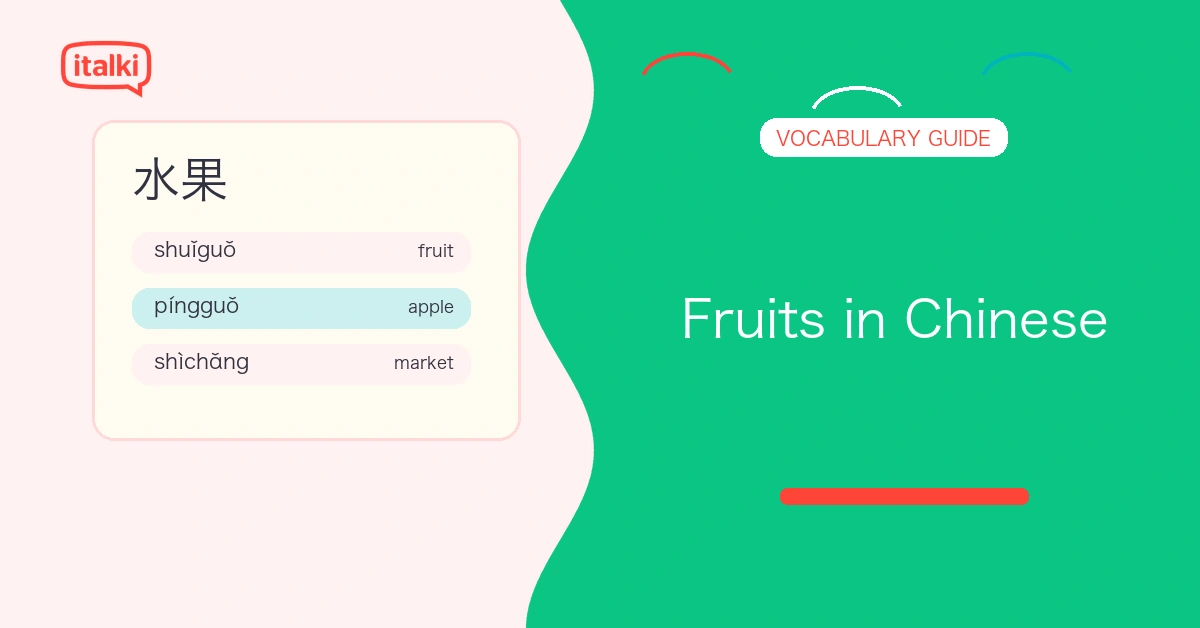
- The word for fruit in Chinese is 水果 (shuǐguǒ), literally water fruit, which reflects the association of fruit with moisture and juice. This is the general term for fruit and also the category name you will see in markets, restaurants, and menus.
- Chinese fruit names often contain characters that describe the fruit’s appearance, origin, or taste. 草莓 (cǎoméi, strawberry) means grass berry; 西瓜 (xīguā, watermelon) means western melon; 菠萝 (bōluó, pineapple) is a phonetic borrowing. Knowing these patterns makes new fruit names easier to remember.
- Fruit is central to Chinese culture: many fruits carry symbolic meaning. 桃子 (táozi, peach) symbolizes longevity; 橙子 (chéngzi, orange) represents prosperity and good luck especially around the Lunar New Year; 苹果 (píngguǒ, apple) sounds like the word for peace (píng’ān) in Chinese.
- At markets in China and other Mandarin-speaking areas, fruit is typically sold by the catty (jin, 斤, approximately 500 grams). Knowing how to ask for a quantity and how to ask the price is practical vocabulary for any market conversation.
Fruit vocabulary is some of the first practical vocabulary a learner encounters in Chinese, appearing in markets, restaurants, menus, and everyday small talk. The names are largely consistent across Mandarin-speaking regions, making this a reliable vocabulary set.
Knowing fruit names also opens the door to food conversations more broadly. It is a natural topic with Chinese speakers in almost any social context. italki connects you with Chinese teachers who can incorporate real-world food and market vocabulary into conversation sessions that feel practical rather than academic.
This guide covers fruits in Chinese across four sections: common everyday fruits, tropical and less common fruits, fruit at the market (shopping phrases), and how to describe fruit by taste and appearance.
A Chinese tutor can run market simulation sessions with you, practicing price negotiation, quantity requests, and fruit descriptions in natural Mandarin so the vocabulary is active, not just recognized.

Find your perfect teacher
Build real speaking confidence with personalized lessons from a teacher who matches your goals, schedule, and learning style.

Common fruits in Chinese
| Chinese | Pinyin | English |
|---|---|---|
| 水果 | shuǐguǒ | fruit (general term) |
| 苹果 | píngguǒ | apple |
| 香蕉 | xiāngjiāo | banana |
| 橙子 | chéngzi | orange |
| 橘子 | júzi | mandarin orange / tangerine |
| 葡萄 | pútáo | grapes |
| 西瓜 | xīguā | watermelon |
| 草莓 | cǎoméi | strawberry |
| 桃子 | táozi | peach |
| 梨 | lí | pear |
| 柠檬 | níngméng | lemon |
| 李子 | lǐzi | plum |
| 樱桃 | yīngtáo | cherry |
| 蓝莓 | lánméi | blueberry |
| 哈密瓜 | hāmìguā | honeydew melon / Hami melon |
| 猕猴桃 | míhóutáo | kiwi fruit (literally macaque peach) |
| 柚子 | yòuzi | pomelo |
| 石榴 | shíliú | pomegranate |
| 无花果 | wúhuāguǒ | fig |
| 甜瓜 | tiánguā | sweet melon / cantaloupe |
Grapes (葡萄, pútáo): Grapes are sold both as table grapes and used for wine (葡萄酒, pútáojiǔ). The word for wine in Chinese literally means grape alcohol.
Apple (苹果, píngguǒ): The character 苹 (píng) sounds like the first syllable of 平安 (píng’ān, peace and safety). This is why apples are sometimes given as gifts, especially on Christmas Eve in China, where the tradition of giving apples (平安果, píng’ān guǒ, peace fruit) on that night is widespread.
Tropical and regional fruits
| Chinese | Pinyin | English |
|---|---|---|
| 芒果 | mángguǒ | mango |
| 菠萝 | bōluó | pineapple |
| 荔枝 | lìzhī | lychee |
| 龙眼 | lóngyǎn | longan (literally dragon eye) |
| 火龙果 | huǒlóngguǒ | dragon fruit (literally fire dragon fruit) |
| 木瓜 | mùguā | papaya (literally wood melon) |
| 榴莲 | liúlián | durian |
| 百香果 | bǎixiāngguǒ | passion fruit (literally hundred fragrance fruit) |
| 山竹 | shānzhú | mangosteen |
| 红毛丹 | hóngmáodān | rambutan |
| 番石榴 | fānshíliú | guava |
| 椰子 | yēzi | coconut |
| 杨桃 | yángtáo | starfruit / carambola |
| 牛油果 / 鳄梨 | niúyóuguǒ / èlí | avocado (regional variation) |
| 蔓越莓 | mànyuèméi | cranberry |
Durian (榴莲, liúlián): One of the most culturally significant tropical fruits in Chinese-speaking regions of Southeast Asia, known for its strong smell and devoted fan base. You will hear strong opinions about it in any Chinese food conversation.
Lychee (荔枝, lìzhī): A highly prized fruit in Chinese culture with a history of imperial gifting. The poet Du Mu wrote about the Tang dynasty empress Yang Guifei’s love of lychees.
A Chinese language tutor can help you practice these fruit names at conversational speed and in natural sentence contexts, since many of these words appear frequently in restaurant menus and food delivery apps.
Find your perfect teacher
Build real speaking confidence with personalized lessons from a teacher who matches your goals, schedule, and learning style.
At the fruit market: shopping phrases
| Chinese | Pinyin | English |
|---|---|---|
| 这个多少钱? | zhège duōshao qián? | How much is this? |
| 一斤多少钱? | yī jīn duōshao qián? | How much per jin (500g)? |
| 给我来两斤苹果。 | gěi wǒ lái liǎng jīn píngguǒ. | Give me two jin of apples. |
| 可以便宜一点吗? | kěyǐ piányí yīdiǎn ma? | Can you lower the price a little? |
| 这个新鲜吗? | zhège xīnxiān ma? | Is this fresh? |
| 能尝一下吗? | néng cháng yīxià ma? | Can I taste one? |
| 甜吗? | tián ma? | Is it sweet? |
| 熟了吗? | shú le ma? | Is it ripe? |
| 帮我装一下。 | bāng wǒ zhuāng yīxià. | Please pack it for me. |
| 我要这些。 | wǒ yào zhèxiē. | I want these ones. |
For how Chinese numbers work in market and price contexts, including counting units and currency, the guide to Chinese numbers covers the number patterns that appear throughout daily shopping conversations.
Describing fruit: taste and appearance
| Chinese | Pinyin | English |
|---|---|---|
| 甜 | tián | sweet |
| 酸 | suān | sour |
| 苦 | kǔ | bitter |
| 涩 | sè | astringent (like an unripe fruit) |
| 清甜 | qīng tián | lightly sweet, refreshing sweet |
| 多汁 | duō zhī | juicy |
| 新鲜 | xīnxiān | fresh |
| 成熟 | chéngshú | ripe |
| 没熟 | méi shú | unripe |
| 过熟 | guò shú | overripe |
| 软 | ruǎn | soft |
| 脆 | cuì | crisp, crunchy |
| 香 | xiāng | fragrant, aromatic |
Common sentences:
- 这个西瓜很甜 (zhège xīguā hěn tián): This watermelon is very sweet.
- 这个柠檬太酸了 (zhège níngméng tài suān le): This lemon is too sour.
- 葡萄新鲜不新鲜?(pútáo xīnxiān bu xīnxiān?): Are the grapes fresh?
Find your perfect teacher
Build real speaking confidence with personalized lessons from a teacher who matches your goals, schedule, and learning style.
Practice Chinese food vocabulary with a teacher
Fruit vocabulary connects directly to market conversations, restaurant ordering, gift-giving, and small talk about food preferences: all high-frequency practical scenarios in Mandarin.
italki has Chinese tutors from across the Mandarin-speaking world who can bring real-world scenarios into lessons: market shopping, restaurant ordering, and discussing food preferences. Book a trial lesson and ask your teacher to practice a market scenario in Chinese, buying and describing fruits so the vocabulary is immediately usable.
Find your perfect teacher
Build real speaking confidence with personalized lessons from a teacher who matches your goals, schedule, and learning style.
FAQ
How do you say fruit in Chinese?
The word for fruit in Chinese is 水果 (shuǐguǒ). The characters mean water fruit, reflecting the moisture and juice associated with fruit. This is the general category term. For specific fruits, each has its own name: 苹果 (píngguǒ, apple), 香蕉 (xiāngjiāo, banana), 葡萄 (pútáo, grapes).
How do you say grapes in Chinese?
Grapes in Chinese are 葡萄 (pútáo). The same word is used in the word for wine: 葡萄酒 (pútáojiǔ, literally grape alcohol). Green grapes are 青葡萄 (qīng pútáo), red grapes are 红葡萄 (hóng pútáo), and seedless grapes are 无籽葡萄 (wú zǐ pútáo).
What do fruit names in Chinese literally mean?
Many Chinese fruit names are descriptive. 西瓜 (xīguā, watermelon) means western melon because watermelons came from the west. 草莓 (cǎoméi, strawberry) means grass berry. 火龙果 (huǒlóngguǒ, dragon fruit) means fire dragon fruit. 猕猴桃 (míhóutáo, kiwi) means macaque peach. These literal meanings make many fruit names memorable once you know the component characters.
What is the difference between 橙子 and 橘子 in Chinese?
Both refer to citrus fruits but are distinct. 橙子 (chéngzi) typically refers to navel oranges or larger oranges. 橘子 (júzi) refers to mandarin oranges or tangerines, which are smaller and easier to peel. In everyday speech, many people use these terms loosely. 橙 (chéng) also appears in the color orange: 橙色 (chéngsè).
How is fruit sold at Chinese markets?
Fruit is typically sold by the 斤 (jīn), a unit equal to approximately 500 grams or about 1.1 pounds. When asking the price, say 一斤多少钱?(yī jīn duōshao qián?, how much per jin?). To buy a quantity, say 给我来两斤… (gěi wǒ lái liǎng jīn…, give me two jin of…).
Want to learn a language at italki?
Here are the best resources for you!