How to learn French for the TEF exam is a question most people ask when Canadian immigration, citizenship, study, or professional certification is on the line, which means the stakes are higher than casual French learning.
For TEF prep, italki is most useful when you need timed speaking practice, writing correction, and feedback from a teacher who understands the exam format rather than general French conversation only.
This guide explains what the TEF tests, what scores you need, and how to prepare for each section in a structured, time-efficient way.

Find Your Perfect Teacher
TEF preparation works best when a tutor simulates exam conditions, corrects oral responses in real time, and helps you build the timed writing and speaking structure the exam rewards.
Book TEF French lessons
Key takeaways
- The TEF (Test d’Évaluation de Français), created by the Paris Chamber of Commerce, tests four skills: reading, listening, written expression, and oral expression, with scores mapped to Canadian Language Benchmark (CLB) levels for immigration purposes.
- TEF Canada is the version required by Immigration, Refugees and Citizenship Canada (IRCC) for federal immigration programs, provincial nominations, and Canadian citizenship applications.
- The oral expression section is where most self-taught learners underperform, because it requires timed speaking responses to unfamiliar prompts under exam conditions.
- In TEF French lessons, a tutor who knows the TEF format can run mock oral sessions, correct spoken errors, and help you build the response structure the exam rewards.
What is the TEF exam and who needs it?
The TEF (Test d’Évaluation de Français) is a standardized French language proficiency test created and administered by the Paris Île-de-France Chamber of Commerce and Industry (CCI Paris Île-de-France). It measures French language proficiency across listening, reading, writing, and speaking for non-native speakers.
If TEF preparation is tied to immigration or work rather than a general certificate, French in Canada gives useful context for why the exam target matters beyond the test itself.
The TEF Canada version is specifically recognized by Immigration, Refugees and Citizenship Canada (IRCC) as one of the two approved French language tests for federal immigration programs, provincial nominee programs, and Canadian citizenship applications. The other approved test is the TCF Canada. Both map scores to Canadian Language Benchmark (CLB) levels that immigration programs use to set minimum language requirements.
The TEF is also used for:
- Academic admissions at some French-speaking institutions
- Professional licensing that requires proof of French proficiency
- Quebec immigration under the Ministère de l’Immigration, de la Francisation et de l’Intégration (MIFI)
- French citizenship applications in some contexts
If your goal is specifically Canadian immigration, confirm which exam your program accepts before booking a test date, since some pathways accept both TEF Canada and TCF Canada while others may specify one.
What does the TEF exam test?
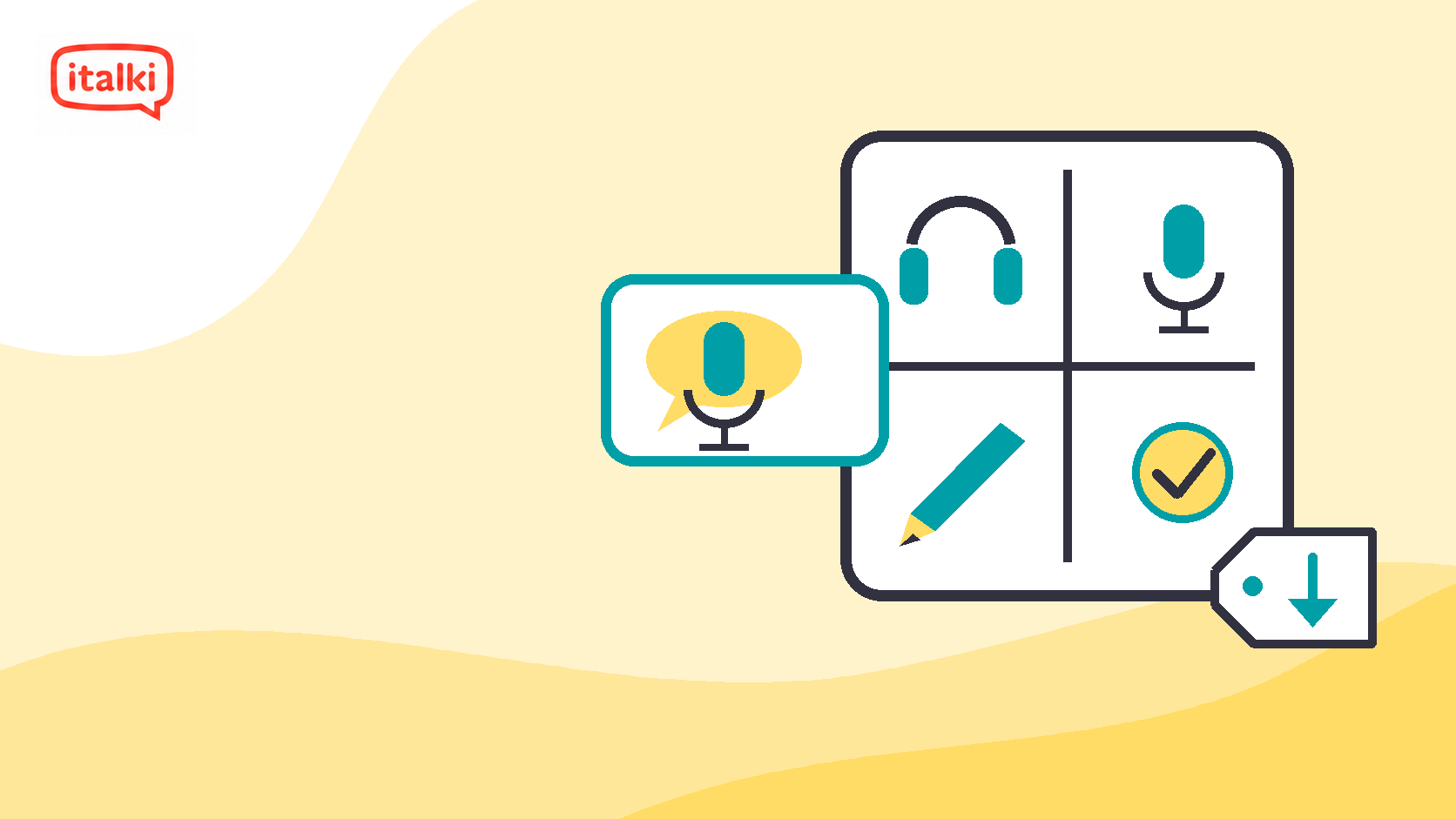
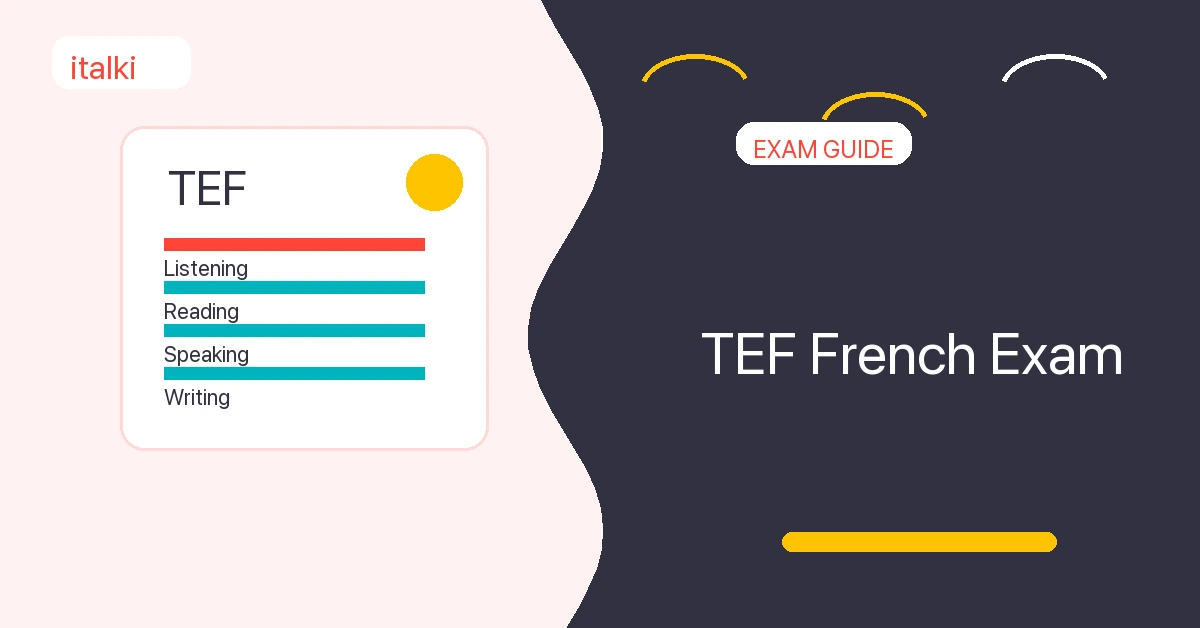
TEF Canada tests four core language skills. Each section is scored separately, and each score maps to a CLB level for immigration purposes.
| Section | What it measures | Format |
|---|---|---|
| Compréhension écrite (Reading) | Reading comprehension of authentic French texts | Multiple choice questions on passages of varying complexity |
| Compréhension orale (Listening) | Listening comprehension of spoken French | Multiple choice questions based on recordings of real conversations, announcements, and broadcasts |
| Expression écrite (Writing) | Ability to write organized, accurate French in response to a prompt | Two written tasks: a short message or letter, and a longer structured text |
| Expression orale (Speaking) | Spoken French in a structured interaction format | Two tasks: reacting to a recorded situation and participating in a simulated phone conversation or dialogue |
The reading and listening sections are scored via multiple choice. The writing and speaking sections are scored by trained raters on criteria including vocabulary range, grammatical accuracy, coherence, and task completion. The speaking section is particularly important for immigration applicants because oral expression is often the section that separates CLB 6 from CLB 7, which is a common threshold for many Canadian federal programs.
What score do you need on the TEF?
The score you need depends entirely on your immigration pathway or certification purpose. TEF Canada scores map to CLB levels, and each immigration program specifies its own CLB requirements.
As a general reference: many federal immigration programs through Express Entry require CLB 7 in all four skills. Some provincial nominee programs accept CLB 5 or CLB 6. Canadian citizenship requires a minimum of CLB 4. Academic institutions set their own thresholds independently.
Always verify the current CLB requirement for your specific program directly with IRCC or the relevant provincial authority before planning your study timeline, because requirements are updated periodically. A score that qualifies you for one program may not qualify you for another, and the point value differences between CLB levels at higher ranges (CLB 7 vs. CLB 8) can significantly affect Comprehensive Ranking System (CRS) scores in Express Entry.
For Canadian immigration context, review the current requirements at the official IRCC website. For comparison with other French proficiency exams, the French proficiency exam overview explains how TEF, TCF, DELF, and DALF relate to each other.
How do you prepare for TEF reading and listening?
TEF reading and listening sections use authentic French texts and recordings drawn from real-world sources: news articles, announcements, interviews, and public communications. Preparing with classroom-only French materials leaves a gap because those materials are simpler and more predictable than authentic content.
For reading preparation:
- Read French news sources daily: Le Monde, Le Figaro, L’Express, and Radio-Canada (the French-language Canadian public broadcaster) all publish articles at the level the TEF reading section requires.
- Practice reading under timed conditions from week two of your preparation. TEF reading is time-pressured, and learners who are accurate but slow lose points.
- Work on identifying the main idea of a paragraph in the first sentence rather than reading every word. The TEF multiple-choice questions often test overall comprehension rather than specific detail recall.
- Build vocabulary for formal and journalistic French specifically, since TEF texts skew toward formal registers more than conversational French does.
For listening preparation:
- Listen to Radio-Canada broadcasts, France 24 news audio, and French-language podcasts daily for at least 20 to 30 minutes.
- Practice listening to announcements and instructions in French, since the TEF listening section includes formal public-address-style recordings.
- Choose the best French learning resources with audio and transcripts so you can verify comprehension precisely instead of guessing from context alone.
- Train your ear for Quebec French as well as European French. For TEF Canada specifically, recordings may include Canadian French speakers, and the rhythms and some vocabulary differ from Parisian French.
Recommended readings:
How do you prepare for TEF oral expression?
TEF oral expression is the section that most self-taught learners underperform in because it cannot be prepared through passive study. The exam requires you to produce structured, coherent spoken French responses to prompts under timed conditions.
The two TEF oral tasks are:
- Task 1: You listen to a recorded situation and respond verbally, demonstrating comprehension and ability to react appropriately in a functional context.
- Task 2: You participate in a simulated conversation, often a phone call or practical interaction, where you must produce relevant, structured responses in real time.
Preparation strategies for oral expression:
- Practice timed responses weekly. Set a timer for two to three minutes and answer a prompt without notes. The TEF oral section does not allow preparation time for task 2 responses.
- Use a standard response structure. State your position in the first sentence, give two or three supporting points with brief explanations, and close with a summary. This structure works under exam pressure and signals organized thinking to raters.
- Record yourself and review. Listen for hesitation fillers (“euh” used excessively), grammar errors that repeat across answers, and pronunciation issues that appear under time pressure.
- Book mock sessions with a tutor. A French tutor can simulate TEF oral prompts, provide the same kind of response that will be expected, and give you feedback on fluency, vocabulary range, and grammar accuracy that a recording cannot.
Your French conversation practice sessions should include at least one TEF-style oral task per session in the month before your exam date.
How do you prepare for TEF written expression?
The TEF written expression section requires two written outputs: a shorter informal message or functional text, and a longer structured piece such as a letter or argumentative response. Both are timed and scored on vocabulary range, grammatical accuracy, coherence, and task completion.
Written expression preparation:
- Practice writing under time pressure from the start. Many learners practice writing carefully without time limits, then find themselves unable to produce organized text in 30 to 45 minutes under exam conditions. Timed writing drills matter.
- Learn three standard writing frameworks. A formal letter framework (opening formula, body paragraphs, closing formula), an informal message framework, and a structured opinion essay framework cover the majority of TEF writing prompts.
- Submit written practice for correction. A tutor who reviews your writing identifies vocabulary gaps, recurring grammatical errors, and organizational weaknesses that self-review misses.
- Build a vocabulary bank for common TEF topics. TEF writing prompts frequently involve work, housing, services, travel, and social situations. Having precise vocabulary for each topic area reduces hesitation and improves response quality under time pressure.
For grammar review that directly supports writing accuracy, a structured approach to how to learn French grammar covers the verb tenses, agreement rules, and sentence structures the TEF writing raters assess most.
What study timeline should you follow for the TEF?
The right timeline depends on your current French level and target CLB score. A rough planning guide:
- Starting from A2 (basic user) targeting CLB 7: Plan for four to six months of structured preparation with five to seven hours of study per week, including at least two tutor sessions per month focused on speaking and writing.
- Starting from B1 (intermediate) targeting CLB 7: Two to three months of intensive preparation with mock tests in all four sections in the final four weeks before the exam.
- Starting from B2 targeting CLB 9 or above: Six to eight weeks of exam-specific preparation, focusing primarily on exam format familiarity, timed practice, and polishing oral expression under test conditions.
For all levels: take a full mock TEF four to six weeks before your exam date to establish a baseline score and identify your weakest section. Then direct 60 to 70 percent of remaining preparation time toward that section specifically. Use a French study plan template to allocate weekly hours across the four sections and track preparation milestones systematically.
Build a TEF plan you can measure
TEF preparation is specific: the exam rewards organized spoken and written responses, authentic listening comprehension, and timed reading skill. The sections that differentiate CLB levels for immigration applicants are oral and written expression, where live correction and exam simulation make the biggest difference in preparation efficiency.
A TEF plan should leave evidence: timed recordings, corrected writing, reading scores, listening scores, and repeated attempts. When those pieces improve together, you are preparing for the exam itself, not just studying French around it.
Find Your Perfect Teacher
Your TEF preparation does not have to be abstract. Get personalized sessions from French tutors who can simulate exam conditions, correct oral responses in real time, and help you reach your target CLB level on schedule.
TEF French tutor
FAQs
Is the TEF harder than DELF?
The TEF and DELF test similar proficiency levels but differ in format and purpose. DELF is a qualification that you pass or fail at a specific level, while TEF gives you a score that maps to a CLB level range. For immigration purposes, the TEF or TCF Canada is required by IRCC, not DELF. For academic or professional certification purposes, the DELF exam may be the better comparison point.
How long is the TEF Canada exam?
TEF Canada takes approximately three to four hours in total across all four sections, depending on the specific test center’s scheduling. The listening and reading sections are completed in one sitting; speaking and writing may be scheduled separately at some centers. Confirm the format with your registered test center.
Can I retake the TEF if I do not reach my target score?
Yes. The TEF Canada can be retaken, but there is typically a waiting period between attempts. Some immigration programs accept the most recent score, while others may accept the best score from multiple attempts. Check the specific rules of your immigration pathway before booking a retake.
Does the TEF test Quebec French or Parisian French?
TEF Canada tests standard French comprehension and production, and recordings may include both European and Canadian French speakers. The oral expression section is assessed on general French communication skills rather than regional accent. Familiarity with Canadian French pronunciation, particularly for the listening section, is an advantage for TEF Canada test-takers.
How do I find a TEF preparation tutor on italki?
Search for French tutors on italki and filter by exam preparation specialization, or specify “TEF” or “TEF Canada preparation” in your message when booking a trial lesson. Many French tutors have worked with immigration applicants and are familiar with the CLB level requirements and TEF task formats.
Want to learn a language at italki?
Here are the best resources for you!