Key takeaways:
- Consistency beats intensity. 30-60 minutes daily works better than cramming, even 15 minutes counts if done regularly
- Balance all four skills (listening, speaking, reading, writing) rather than focusing only on grammar or passive learning
- Start speaking from day one. Waiting until you’re “ready” is the most common mistake that delays progress
- Track your progress monthly and adjust your study plan based on what’s actually working
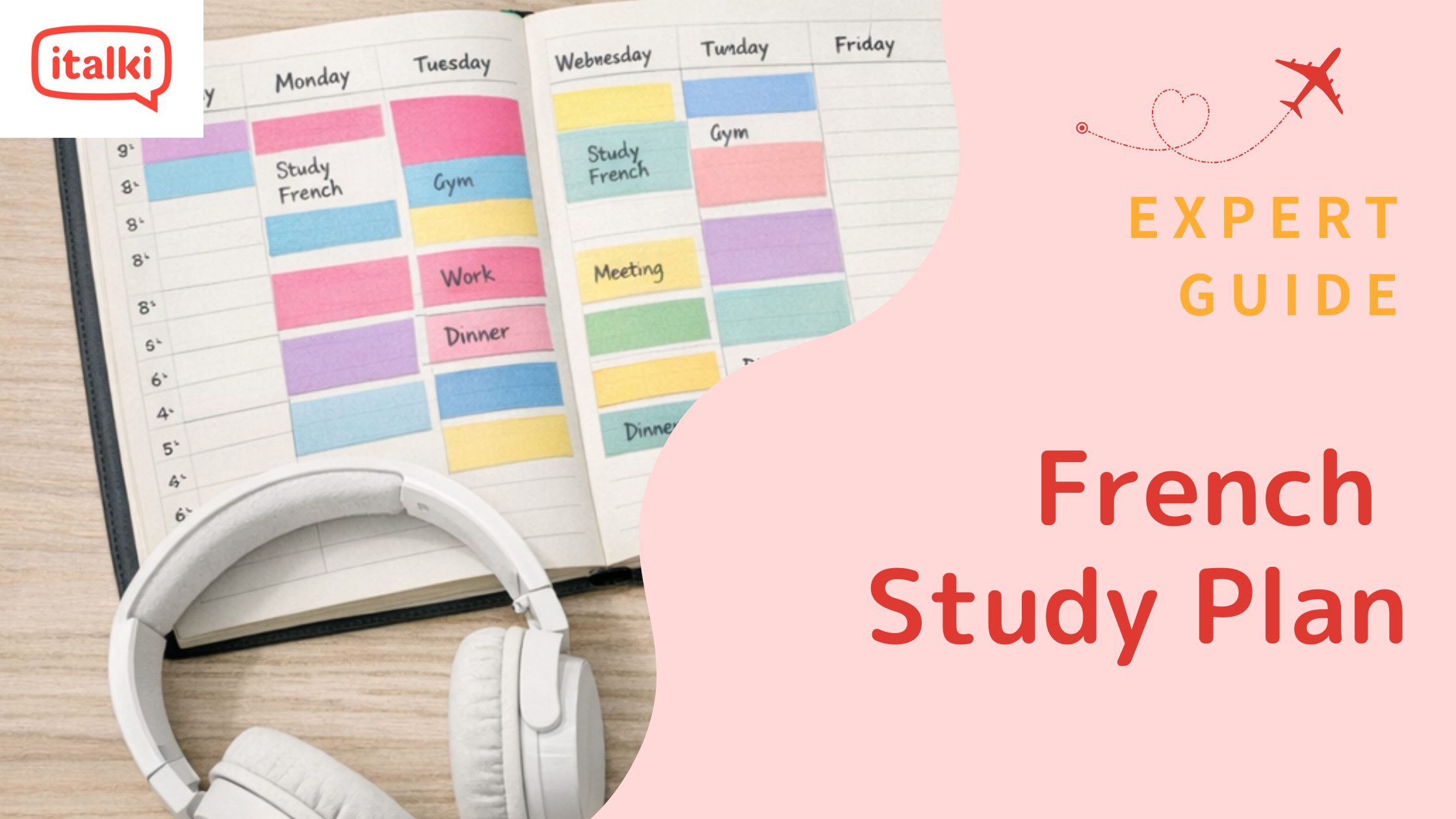
A solid French study plan is one of the most effective ways to make real progress and avoid feeling stuck. Many learners start learning French with motivation. But without structure, progress often slows down or becomes inconsistent.
If you’re wondering about the best way to learn French, the answer starts with a solid study plan that fits your life and goals.
This guide is for beginners and intermediate learners who want a clear, realistic plan to follow. You’ll learn how to assess your level, organise your weekly schedule, practise each skill effectively, and stay motivated over time. All advice comes from a French teacher with experience teaching French to adult learners with different goals and schedules.

Find Your Perfect Teacher
Your French doesn’t have to sound like a textbook. Get personalized lessons from native tutors who’ll help you speak naturally, not just correctly.
Book a trial lesson
How to build Your French study plan
Step 1: Assess your level and set goals
Before building a study plan for learning French, you need a clear starting point. This doesn’t have to be perfect or overly technical.
Once the basics are stable, a B2 French study plan should include native-speed listening, corrected writing, and unscripted speaking rather than more beginner-style review.You can assess your level by:
- Taking a short online placement test
- Reviewing CEFR descriptions (A1–B2)
- Noting what you can already do (introduce yourself, understand basic conversations, write short texts)
Once you have a rough level, set realistic goals. Short-term goals might include holding a 5-minute conversation or understanding a podcast episode. Long-term goals could be passing a DELF exam, working in French, or reaching B2.
From my teaching experience, learners who progress fastest are those with clear, measurable goals, not vague ones like “become fluent”.
If you want to know which habits actually speed things up, this guide on how do I learn French fast breaks it down by method and timeline.
Step 2: Design your weekly study schedule
Consistency matters more than long study sessions. A good French learning schedule fits your real life.
For most learners, 30–60 minutes per day is effective when used well. Instead of doing everything every day, rotate skills across the week.
A balanced weekly plan includes:
- Listening
- Speaking
- Reading
- Writing
- Grammar and vocabulary
For example:
- 10–15 minutes of grammar
- 15 minutes of listening or reading
- 15–30 minutes of speaking or writing
Sample weekly schedule
This approach helps you learn French step by step without burnout.
Step 3: Focused skill practice
Listening
Listening builds comprehension and French pronunciation naturally. Use podcasts, short videos, or French music. At beginner level, focus on understanding keywords and basic sentence structures. At intermediate level, aim for meaning rather than every word.
Speaking
Speaking French regularly is essential. This can include:
- Working with a French tutor
- Practising with a language exchange partner
- Speaking out loud to yourself
Many learners understand French but struggle to speak because they don’t practice actively. Speaking turns passive knowledge into real ability.
Find Your Perfect Teacher
Your French doesn’t have to sound like a textbook. Get personalized lessons from native tutors who’ll help you speak naturally, not just correctly.
Book a trial lesson
Reading
Start with graded readers or short articles. News websites and blogs work well for intermediate learners. Reading reinforces vocabulary, verb forms, and sentence patterns in context.
Writing
Writing helps organise your thoughts in French. Try:
- A short daily journal
- Writing social media posts in French
- Answering common conversation questions
Keep it simple and focus on clarity, not perfection.
Grammar and vocabulary
French Grammar works best in small, focused sessions. Use flashcards, spaced repetition, and example sentences. Always connect grammar to real use, not isolated rules.
If you want more guidance, these tips to learn French grammar and improve your French learning routine can help you stay organised.
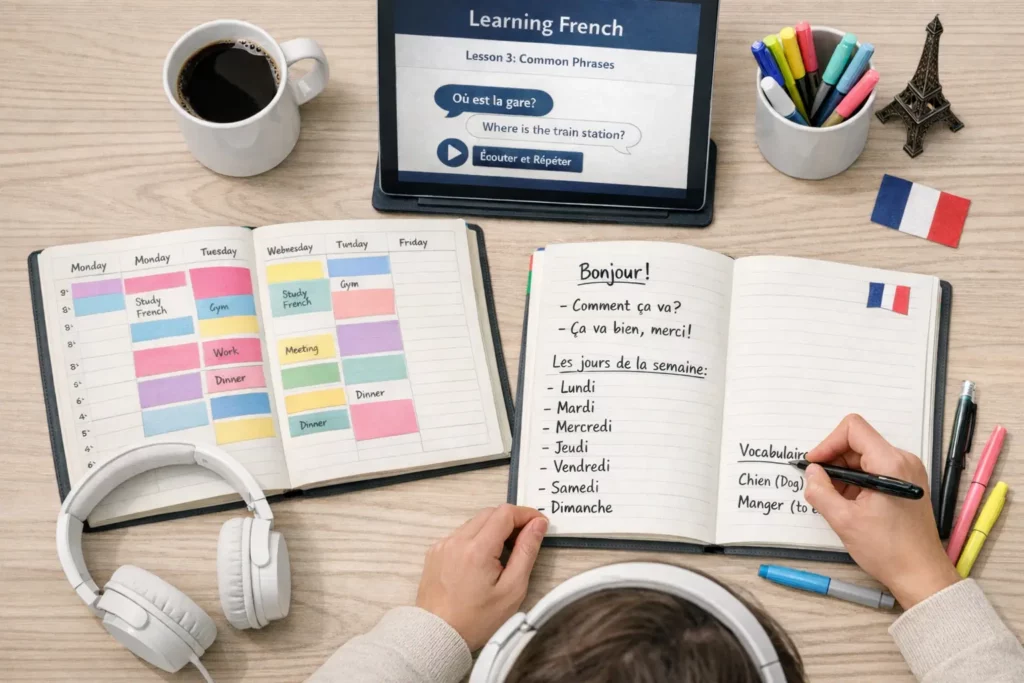
Step 4: Use resources effectively
You don’t need dozens of apps or courses. Too many resources often slow learners down. Choose:
- One main course or textbook
- One listening resource
- One speaking outlet
This keeps your study plan simple and sustainable. If you’re learning independently, these guides can help:
For a complete overview of materials and tools, explore the French learning resources guide. Learning French online works best when resources are combined with real speaking practice.
Step 5: Track your progress and adjust
Progress isn’t always linear. That’s normal.
Track your learning by:
- Keeping a short learning journal
- Recording yourself speaking once a month
- Revisiting old exercises to see improvement
If something isn’t working, adjust. Spend more time on listening if comprehension is weak, or increase speaking if you feel blocked. A flexible French study plan is more effective than a rigid one.
Step 6: Stay motivated
Motivation fades when learners expect fast results. French takes time, but steady progress adds up.
To stay motivated:
- Build learning into a daily habit
- Accept plateaus as part of the process
- Reward milestones (first full conversation, first article read without translating)
Many learners wonder how long does it take you to learn French and the answer depends on consistency more than talent. Regular practice outweighs natural ability every time.
Structure also matters. If you’ve struggled to make progress, this guide on is French hard to learn breaks down which aspects are genuinely challenging and which just need the right approach.

Ready-to-use French study plans for different schedules
Now that you understand the principles, here are three complete study plans you can start using today. Choose based on your available time and goals.
How to learn French if you have only 30 minutes per day
Key point: With limited time, prioritise speaking and listening. Don’t forget to practice actively, passive learning alone won’t make you fluent.
How to learn French if you have 1 hour a day
Key point: One hour allows you to balance all skills daily. Split sessions between grammar/vocabulary (morning) and active skills (evening) to maintain focus.
French B2 study plan
This plan is for intermediate level learners aiming to reach B2 within 6-12 months. At B2, you’ll express opinions, understand complex texts, and hold detailed conversations.
Key point: B2 requires consistent speaking with native speakers or a qualified tutor. Find your French tutor online to practice real conversations and receive feedback on mistakes.
For B2 preparation, also explore:
- French for business – workplace vocabulary and phrases
- Interviewing in French – professional communication skills
A strong French study plan combines structure, balance, and flexibility. By setting clear goals, organising weekly practice, focusing on each skill, and tracking progress, learners can move forward with confidence.
Speaking practice plays a key role in long-term progress. Many learners choose to learn French online to build consistency.
Working with a French tutor can also help refine pronunciation, correct mistakes early, and keep motivation high. Find your French tutor online to practice real conversations and stay accountable:
With the right plan and regular practice, steady progress is absolutely achievable.
Learn French faster with personal guidance from expert online French teachers trusted by over 10 million learners worldwide. Book a trial lesson today.
Find Your Perfect Teacher
Your French doesn’t have to sound like a textbook. Get personalized lessons from native tutors who’ll help you speak naturally, not just correctly.
Book a trial lesson
FAQ
What is the daily study plan for French?
A balanced daily plan includes 30-60 minutes split between grammar, listening, and speaking or writing.
How many hours a day should you study French?
Most learners progress well with 30-60 minutes daily. Consistency matters more than long sessions.
Can I learn French in 3 months?
You can build strong basics and confidence in three months, but fluency takes longer.
What is the 80/20 rule in French?
Focus on high-frequency vocabulary, common verbs, and everyday sentence structures that appear most often.
Can I get B2 French in 1 year?
Yes, with regular study, frequent speaking practice, and a structured plan, many learners reach B2 within a year.
Want to learn a language at italki?
Here are the best resources for you!