What are Japanese irregular verbs?
Japanese irregular verbs are the two verbs that do not follow the conjugation patterns of Group 1 or Group 2 verbs: する (suru, to do) and くる (kuru, to come). Unlike English, which has dozens of irregular verbs, Japanese has two fully irregular verbs, which makes learning them a manageable and high-return task.
A small number of other verbs have one or two irregular forms (ある has an unusual negative, and いく has an irregular te-form), but only する and くる are irregular across multiple conjugation forms.
Key takeaways
- Japanese has only two truly irregular verbs: する (suru, to do) and くる (kuru, to come), both belonging to Group 3 (不規則動詞, fukisoku dōshi).
- する is the most frequently used verb in the language because it turns thousands of nouns into action verbs: 勉強する (benkyō suru, to study), 電話する (denwa suru, to call).
- する and くる each have a small set of stems (し/さ/せ for する; き/こ for くる) that do not derive from Group 1 or Group 2 rules, but once those stems are known, many endings follow the same patterns as regular verbs.
- Common mistakes include applying ichidan (Group 2) patterns to する and forgetting that くる changes its initial syllable in several forms.
A learner who can conjugate regular verbs smoothly will still make errors in real conversation if する and くる are not solid. These two verbs appear hundreds of times per day in spoken and written Japanese, and every form changes unpredictably compared to regular verb groups.
italki connects learners with native Japanese tutors who can drill these conjugations in real conversation, not just on flashcards.
Ready to get started? Book a trial lesson and ask the teacher to run a する and くる conjugation check in the first session.

Find Your Perfect Teacher
Build real speaking confidence with personalized lessons from a teacher who matches your goals, schedule, and learning style.

How does Japanese classify its verbs?
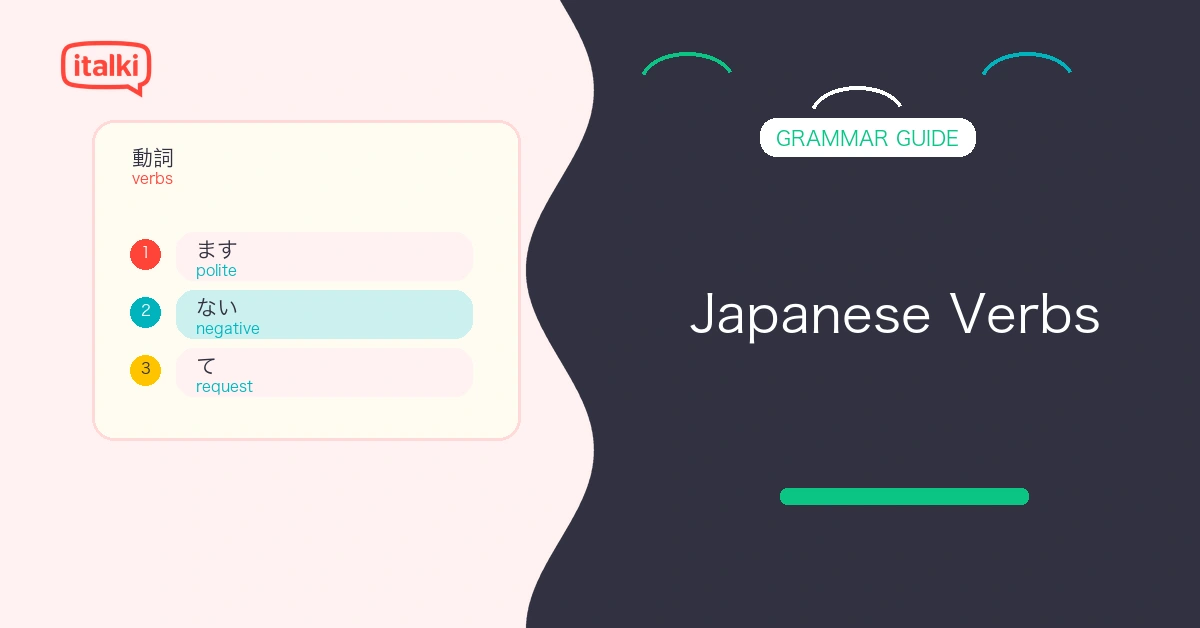
Japanese verbs fall into three groups based on how they conjugate.
| Group | Name | How to identify | Example |
|---|---|---|---|
| Group 1 | 五段動詞 (godan dōshi) / u-verbs | Ends in a u-row syllable other than る, or ends in る after a non-i/e vowel | 書く (kaku, to write), 飲む (nomu, to drink) |
| Group 2 | 一段動詞 (ichidan dōshi) / ru-verbs | Ends in いる or える (i-row or e-row + る) | 食べる (taberu, to eat), 起きる (okiru, to wake up) |
| Group 3 | 不規則動詞 (fukisoku dōshi) / irregular | Memorized individually | する (suru), くる (kuru) |
Group 1 and Group 2 each follow predictable patterns. Group 3 does not follow those patterns, but する and くる are not completely random. Each uses a fixed set of stems: し/さ/せ for する and き/こ for くる. Once those stems are memorized, the endings that attach to them often follow the same logic as regular verbs. The challenge is that the stems themselves cannot be predicted from any rule.
Full conjugation table for する (suru)
する (suru) means “to do” but its most important role is as a helper verb that converts nouns into verbs.
| Form | Plain | Polite |
|---|---|---|
| Non-past (present/future) | する (suru) | します (shimasu) |
| Past | した (shita) | しました (shimashita) |
| Negative non-past | しない (shinai) | しません (shimasen) |
| Negative past | しなかった (shinakatta) | しませんでした (shimasen deshita) |
| Te-form | して (shite) | N/A |
| Volitional | しよう (shiyō) | しましょう (shimashō) |
| Conditional (ba) | すれば (sureba) | N/A |
| Conditional (tara) | したら (shitara) | N/A |
| Causative | させる (saseru) | させます (sasemasu) |
| Passive | される (sareru) | されます (saremasu) |
| Potential | できる (dekiru) | できます (dekimasu) |
| Imperative | しろ (shiro) / せよ (seyo) | してください (shite kudasai) |
Note: the potential form of する is not させる or しられる. It is a completely separate verb: できる (dekiru, to be able to do / can do). This is one of the most common surprises for intermediate learners.
Find Your Perfect Teacher
Build real speaking confidence with personalized lessons from a teacher who matches your goals, schedule, and learning style.
Full conjugation table for くる (kuru)
くる (kuru) means “to come.” Its stem changes across forms in a way that is unpredictable from any standard pattern.
| Form | Plain | Polite |
|---|---|---|
| Non-past (present/future) | くる (kuru) | きます (kimasu) |
| Past | きた (kita) | きました (kimashita) |
| Negative non-past | こない (konai) | きません (kimasen) |
| Negative past | こなかった (konakatta) | きませんでした (kimasen deshita) |
| Te-form | きて (kite) | N/A |
| Volitional | こよう (koyō) | きましょう (kimashō) |
| Conditional (ba) | くれば (kureba) | N/A |
| Conditional (tara) | きたら (kitara) | N/A |
| Causative | こさせる (kosaseru) | こさせます (kosasemasu) |
| Passive | こられる (korareru) | こられます (koraremasu) |
| Potential | こられる (korareru) | こられます (koraremasu) |
| Imperative | こい (koi) | きてください (kite kudasai) |
The stem shifts between く (ku-), き (ki-), and こ (ko-) across different forms. The stems themselves cannot be derived from any rule, but once known, they combine with familiar endings: き + ます = きます, き + て = きて, こ + ない = こない.
Find Your Perfect Teacher
Build real speaking confidence with personalized lessons from a teacher who matches your goals, schedule, and learning style.
する compounds: the most useful irregular patterns
する‘s most important function is making nouns into verbs. Any noun can be followed by する to create an action verb. These compound verbs conjugate like する in all forms.
| Compound | Reading | Meaning |
|---|---|---|
| 勉強する | べんきょうする (benkyō suru) | to study |
| 電話する | でんわする (denwa suru) | to call (phone) |
| 運動する | うんどうする (undō suru) | to exercise |
| 料理する | りょうりする (ryōri suru) | to cook |
| 旅行する | りょこうする (ryokō suru) | to travel |
| 確認する | かくにんする (kakunin suru) | to confirm |
| 説明する | せつめいする (setsumei suru) | to explain |
| 準備する | じゅんびする (junbi suru) | to prepare |
| 卒業する | そつぎょうする (sotsugyō suru) | to graduate |
| 結婚する | けっこんする (kekkon suru) | to marry |
To use any of these in the past polite, replace する with しました. To make it negative, replace する with しません. The pattern transfers from する to every compound.
Find Your Perfect Teacher
Build real speaking confidence with personalized lessons from a teacher who matches your goals, schedule, and learning style.
Common mistakes with Japanese irregular verbs
Mistake 1: Treating する like a Group 2 verb A common error is applying ichidan endings directly to する. The correct negative is しない (shinai), but learners sometimes produce すない or するない by analogy with regular verb negatives. The correct te-form is して (shite), not するて. The volitional is しよう (shiyō); learners sometimes produce するよう, which is not standard. The stem し cannot be derived from する by any regular rule; it must be learned directly.
Mistake 2: Forgetting the stem change in くる Learners often apply the く stem to all forms: くない (incorrect negative), くて (incorrect te-form). The stem shifts to こ for the negative (こない) and to き for the polite forms and te-form (きます, きて).
Mistake 3: Using する for the potential instead of できる The potential of する is できる, not しられる or せられる. できる is a Group 2 verb that must be learned separately from the する paradigm.
Mistake 4: Confusing した (shita) with きた (kita) Both する‘s past plain form した (shita) and くる‘s past plain form きた (kita) are high-frequency and single-syllable past forms. Learners occasionally mix them up under time pressure in conversation, producing the wrong verb entirely.
Find Your Perfect Teacher
Build real speaking confidence with personalized lessons from a teacher who matches your goals, schedule, and learning style.
Practice prompts for する and くる
These prompts are designed for self-study or use with a tutor. Produce the requested form before checking against the conjugation tables.
- Conjugate 運動する (undō suru) in the past polite, negative polite, and te-form.
- Conjugate くる (kuru) in the volitional plain, conditional (tara), and causative polite.
- Convert these nouns into する verbs and use each in a sentence: 報告 (hōkoku, report), 連絡 (renraku, contact), 練習 (renshū, practice).
- Write three sentences using できる in the negative to express inability.
- Describe tomorrow’s schedule using する compounds in the future polite form.
A Japanese language tutor can run these drills live, provide immediate correction, and adjust difficulty based on which forms are causing errors.
Find Your Perfect Teacher
Build real speaking confidence with personalized lessons from a teacher who matches your goals, schedule, and learning style.
Where do learners go from here?
Mastering する and くる unlocks a large portion of Japanese grammar. Both verbs appear in foundational constructions: てくる (te kuru, to come to do), てする (does not exist; a common trap), ようにする (yō ni suru, to make an effort to), and する noun compounds that cover much of the vocabulary in news and academic Japanese.
italki has connected learners with Japanese teachers since 2007. A Japanese teacher online can move through the full する and くる paradigm in a single structured session and then integrate both verbs into conversation drills.
Learn Japanese faster with personal guidance from qualified Japanese tutors trusted by over 10 million learners worldwide. Book a trial lesson with a Japanese tutor online and experience the difference personalized learning makes.
Find Your Perfect Teacher
Build real speaking confidence with personalized lessons from a teacher who matches your goals, schedule, and learning style.
FAQ
How many irregular verbs does Japanese have?
Two fully irregular verbs: する (suru, to do) and くる (kuru, to come). A few other verbs have one or two irregular forms: ある uses ない as its negative instead of the expected あらない, and いく has the irregular te-form いって. Only する and くる are irregular across their entire conjugation paradigm.
Is する really irregular if its pattern is learnable?
Yes. する is classified as irregular because its conjugations cannot be derived from the same rules that apply to Group 1 and Group 2 verbs. The forms must be learned individually.
What is the te-form of する?
して (shite). This is one of the most frequently used conjugations because it appears in compound expressions: してください (shite kudasai, please do), してみる (shite miru, to try doing), してある (shite aru, to have done and left in that state).
How is できる related to する?
できる (dekiru, to be able to / can do) is the potential form of する. Unlike other verbs, which form their potential by changing the ending (食べられる from 食べる), する uses an entirely different verb for its potential meaning.
Should beginners memorize all する forms at once?
No. Learn the non-past, past, negative, and te-form first. These four cover the majority of everyday usage. Add volitional, conditional, and causative forms once the core forms are automatic.
Want to learn a language at italki?
Here are the best resources for you!