Key takeaways
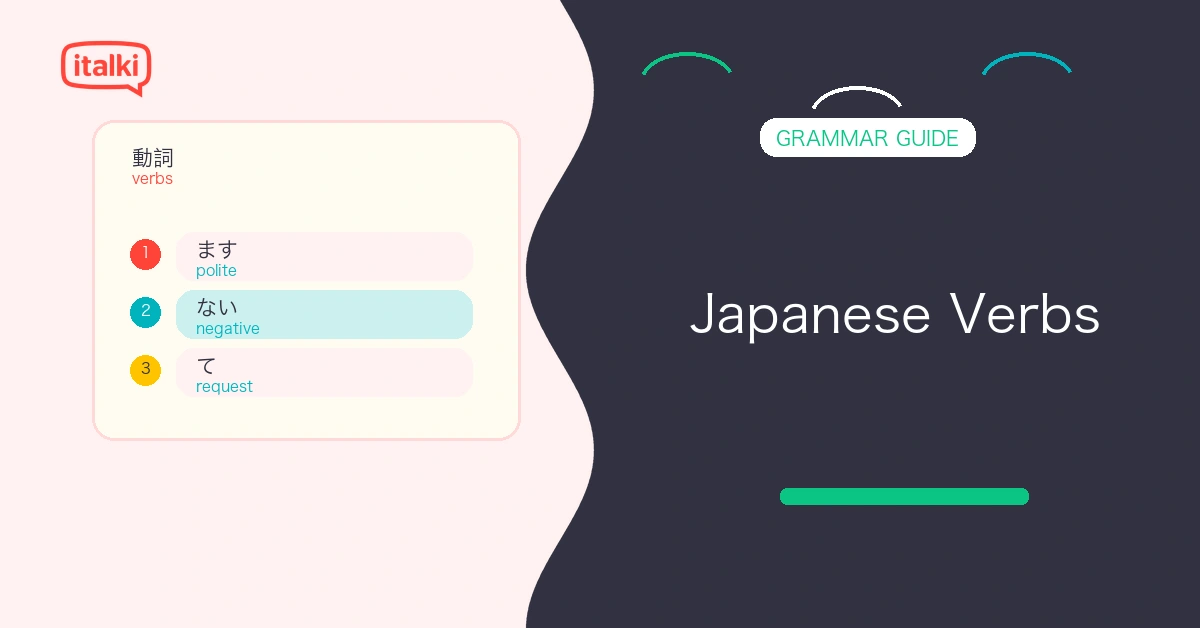
- Japanese verbs fall into three groups: Group 1 (u-verbs), Group 2 (ru-verbs), and Group 3 (irregular verbs: suru and kuru). The group determines which conjugation pattern to apply.
- Every Japanese verb base form ends in a u-row sound (u, ku, gu, su, tsu, nu, bu, mu, ru). Conjugation involves changing that final sound according to the target form.
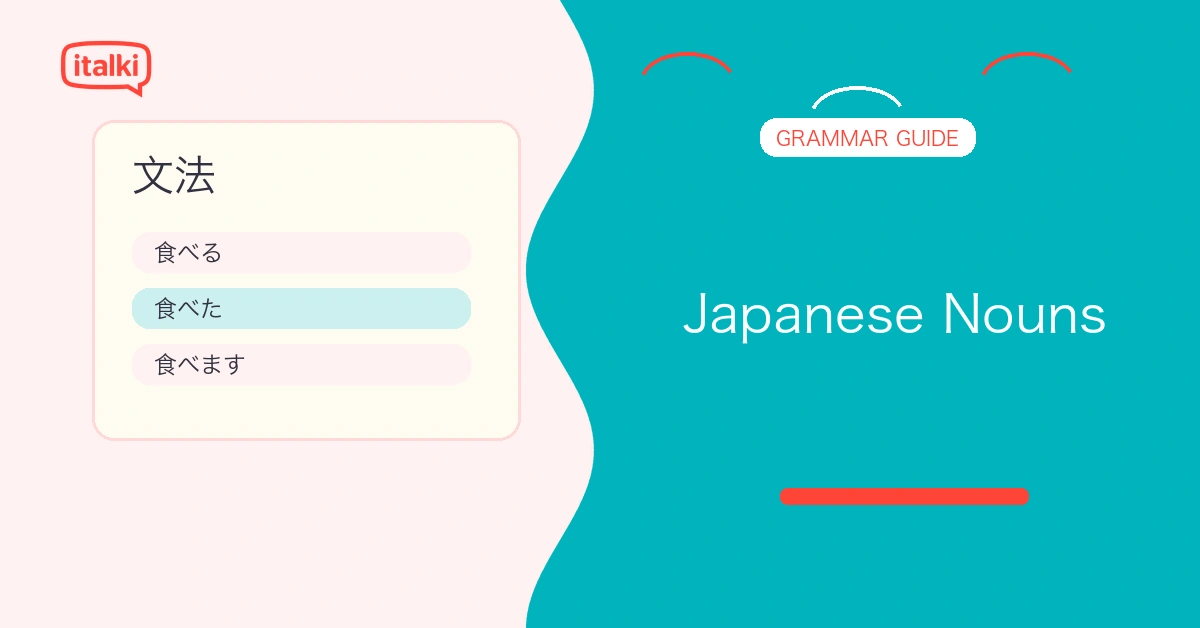
- The te-form is one of the most important forms in Japanese. It connects actions (tabete nonde: eat and drink), makes requests (tabete kudasai: please eat), and builds progressive forms (tabete iru: is eating).
- Japanese verbs do not change for person or number. The same verb form is used whether the subject is I, you, he, she, we, or they.
Japanese verbs conjugate differently from European languages. There is no subject agreement (the verb is the same regardless of who is doing it), but verbs do change based on tense, politeness level, and what grammatical function the form serves in the sentence.
Understanding the system as a system, rather than memorizing individual forms in isolation, makes learning each new verb faster. italki connects learners with Japanese teachers who can walk through verb conjugation in real sentences, which is where the system starts to feel intuitive rather than abstract.
This guide covers the three verb groups, the most important Japanese verb forms (polite present, negative, past, te-form, potential, volitional, and conditional), and how these forms combine in real sentences.

Find your perfect teacher
Build real speaking confidence with personalized lessons from a teacher who matches your goals, schedule, and learning style.
Book a trial lesson
The three Japanese verb groups
Identifying a verb’s group is the first step in conjugation. The group tells you which pattern to apply.
Group 1: u-verbs (godan verbs)
These verbs end in a consonant + u sound. Most Japanese verbs belong to this group.
| Dictionary form | Romaji | Meaning | Ends in |
|---|---|---|---|
| 書く | kaku | to write | ku |
| 話す | hanasu | to speak | su |
| 待つ | matsu | to wait | tsu |
| 読む | yomu | to read | mu |
| 飲む | nomu | to drink | mu |
| 遊ぶ | asobu | to play | bu |
| 泳ぐ | oyogu | to swim | gu |
| 買う | kau | to buy | u |
| 帰る | kaeru | to return | ru* |
*帰る (kaeru) ends in -iru/-eru but is a Group 1 verb. This is the key exception to watch for.
Group 2: ru-verbs (ichidan verbs)
These verbs end in -iru or -eru. The conjugation is simpler: drop the final -ru to get the stem.
| Dictionary form | Romaji | Meaning |
|---|---|---|
| 食べる | taberu | to eat |
| 見る | miru | to see/watch |
| 起きる | okiru | to wake up |
| 着る | kiru | to wear (upper body) |
| 寝る | neru | to sleep |
| 開ける | akeru | to open |
| 教える | oshieru | to teach |
Group 3: irregular verbs
Only two verbs: する (suru: to do) and くる (kuru: to come). These have unique conjugation patterns that must be memorized separately.
Work through verb group identification with a Japanese language tutor who can quiz you on new verbs until classifying them becomes automatic.
Polite present and past forms
The masu-form is the standard polite register used in everyday formal situations, including the email contexts covered in writing an email in Japanese.
Group 1 conjugation to masu-form: Change the final u-row sound to the i-row sound, then add masu.
| Dictionary | Stem change | Masu-form | Meaning |
|---|---|---|---|
| 書く (kaku) | kak- – kaki | 書きます (kakimasu) | write |
| 話す (hanasu) | hanas- – hanashi | 話します (hanashimasu) | speak |
| 待つ (matsu) | mat- – machi | 待ちます (machimasu) | wait |
| 読む (yomu) | yom- – yomi | 読みます (yomimasu) | read |
| 買う (kau) | ka- – kai | 買います (kaimasu) | buy |
Group 2 conjugation to masu-form: Drop -ru, add -masu.
| Dictionary | Masu-form | Meaning |
|---|---|---|
| 食べる (taberu) | 食べます (tabemasu) | eat |
| 見る (miru) | 見ます (mimasu) | see |
| 起きる (okiru) | 起きます (okimasu) | wake up |
Group 3 (irregular):
- する – します (shimasu)
- くる – きます (kimasu)
Past polite form: Replace -masu with -mashita.
- 食べます – 食べました (tabemashita: ate)
- 書きます – 書きました (kakimashita: wrote)
Negative polite form: Replace -masu with -masen.
- 食べます – 食べません (tabemasen: do not eat)
Negative past polite: Replace -masu with -masen deshita.
- 食べません deshita (tabemasen deshita: did not eat)
Find your perfect teacher
Build real speaking confidence with personalized lessons from a teacher who matches your goals, schedule, and learning style.
Book a trial lesson
Negative forms
| Form | Pattern | Example |
|---|---|---|
| Polite negative present | -masen | 食べません (tabemasen: do not eat) |
| Polite negative past | -masen deshita | 食べませんでした (tabemasen deshita: did not eat) |
| Plain negative present | -nai form | 食べない (tabenai: do not eat) |
| Plain negative past | -nakatta | 食べなかった (tabenakatta: did not eat) |
Forming the plain negative (-nai form):
Group 1: Change the final u-row to a-row, then add -nai.
- 書く (kaku) – 書かない (kakanai)
- 読む (yomu) – 読まない (yomanai)
- 買う (kau) – 買わない (kawanai) [u – wa, not ka]
Group 2: Drop -ru, add -nai.
- 食べる (taberu) – 食べない (tabenai)
- 見る (miru) – 見ない (minai)
Group 3:
- する – しない (shinai)
- くる – こない (konai)
Te-form
The te-form is the most versatile and important Japanese verb form. It serves as a connector, a request maker, and the base for the progressive aspect.
Forming the te-form:
Group 1 rules vary by the verb’s ending:
| Verb ending | Te-form change | Example |
|---|---|---|
| -ku | -ite | 書く – 書いて (kaite) |
| -gu | -ide | 泳ぐ – 泳いで (oyoide) |
| -su | -shite | 話す – 話して (hanashite) |
| -tsu, -u, -ru | -tte | 待つ – 待って (matte), 買う – 買って (katte) |
| -nu, -bu, -mu | -nde | 飲む – 飲んで (nonde), 遊ぶ – 遊んで (asonde) |
Exception: 行く (iku: to go) – 行って (itte), not 行いて.
Group 2: Drop -ru, add -te.
- 食べる – 食べて (tabete)
- 見る – 見て (mite)
Group 3:
- する – して (shite)
- くる – きて (kite)
Uses of the te-form:
| Structure | Meaning | Example |
|---|---|---|
| Te-form + ください (kudasai) | Please do… | 座ってください (suwatte kudasai: please sit down) |
| Te-form + いる (iru) | Is/am/are doing… | 食べている (tabete iru: is eating) |
| Te-form + も いい (mo ii) | It is okay to… | 入ってもいいですか (haitte mo ii desu ka: may I come in?) |
| Te-form + はいけない (wa ikenai) | Must not… | 触ってはいけない (sawatte wa ikenai: must not touch) |
| Te-form connecting verbs | And then… | 起きて、シャワーを浴びて、行きます (woke up, showered, and went) |
The te-form for requests is essential for everyday situations, including ordering at restaurants. Japanese restaurant vocabulary shows these request patterns in context, especially ください phrases used when ordering or asking for items.
Find your perfect teacher
Build real speaking confidence with personalized lessons from a teacher who matches your goals, schedule, and learning style.
Book a trial lesson
Plain form
The plain form (also called the dictionary form) is used in informal speech, subordinate clauses, and when modifying nouns.
Plain past form:
Group 1: The pattern mirrors the te-form with -ta instead of -te.
| Verb ending | Past form | Example |
|---|---|---|
| -ku | -ita | 書く – 書いた (kaita: wrote) |
| -su | -shita | 話す – 話した (hanashita: spoke) |
| -tsu, -u, -ru | -tta | 待つ – 待った (matta: waited) |
| -nu, -bu, -mu | -nda | 飲む – 飲んだ (nonda: drank) |
Group 2: Drop -ru, add -ta.
- 食べる – 食べた (tabeta: ate)
- 見る – 見た (mita: saw)
Group 3:
- する – した (shita: did)
- くる – きた (kita: came)
Plain form in relative clauses: Japanese uses the plain form before a noun to modify it, where English would use a relative clause.
- 昨日食べた料理 (kinō tabeta ryōri: the dish I ate yesterday)
- 私が書いた手紙 (watashi ga kaita tegami: the letter that I wrote)
An online Japanese teacher can build plain-form sentences with you in conversation and correct the natural tendency to use the masu-form everywhere, including in subordinate clauses where plain form is required.
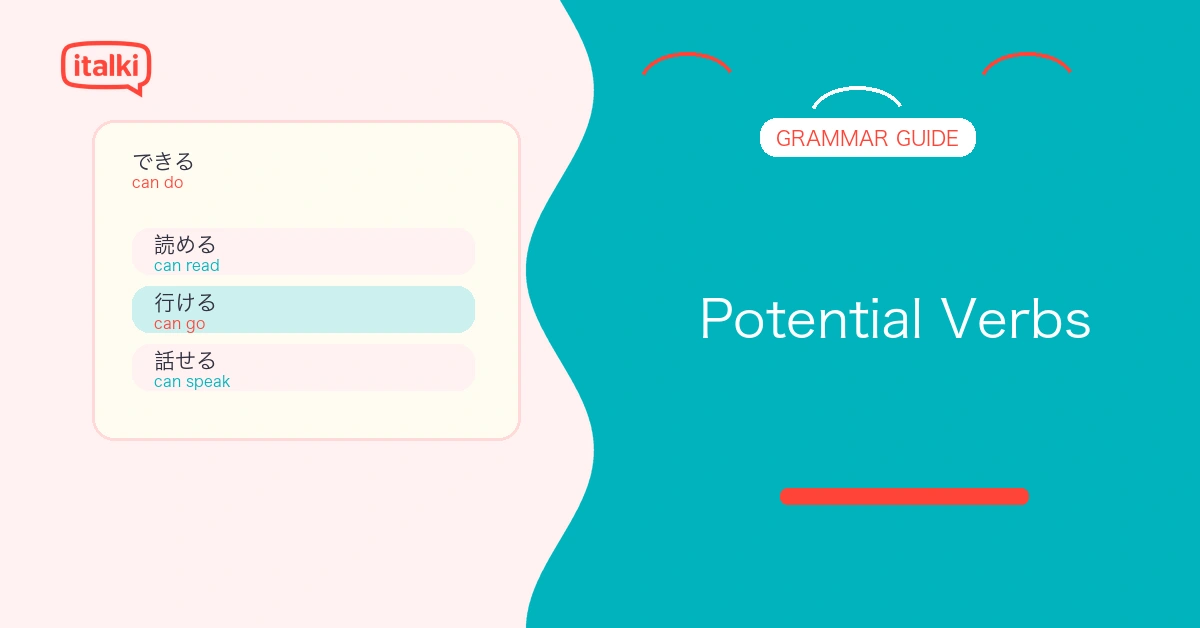
Potential form
The potential form expresses ability (can do, is able to do).
Group 1: Change the final u-row to e-row, add -ru.
- 書く (kaku) – 書ける (kakeru: can write)
- 読む (yomu) – 読める (yomeru: can read)
- 話す (hanasu) – 話せる (hanaseru: can speak)
Group 2: Drop -ru, add -rareru (or in casual speech, -reru).
- 食べる (taberu) – 食べられる (taberareru: can eat) / casual: 食べれる (tabereru)
- 見る (miru) – 見られる (mirareru: can see)
Group 3:
- する – できる (dekiru: can do)
- くる – こられる (korareru: can come)
| Japanese | Romaji | English |
|---|---|---|
| 日本語が話せます | nihongo ga hanasemasu | I can speak Japanese |
| 漢字が読めません | kanji ga yomemasen | I cannot read kanji |
| 明日来られますか? | ashita koraremasu ka | Can you come tomorrow? |
| 泳げる? | oyogeru? | Can you swim? (casual) |
Find your perfect teacher
Build real speaking confidence with personalized lessons from a teacher who matches your goals, schedule, and learning style.
Book a trial lesson
Volitional form
The volitional form means let’s or shall we and also expresses intention.
Polite volitional: Replace -masu with -mashō.
- 食べます – 食べましょう (tabemashō: let’s eat)
- 行きます – 行きましょう (ikimashō: let’s go)
Plain volitional (Group 1): Change final u-row to o-row + u.
- 書く – 書こう (kakō: let’s write)
- 読む – 読もう (yomō: let’s read)
Plain volitional (Group 2): Drop -ru, add -yō.
- 食べる – 食べよう (tabeyō: let’s eat)
- 見る – 見よう (miyō: let’s see)
Group 3:
- する – しよう (shiyō: let’s do)
- くる – こよう (koyō: let’s come)
Conditional form
The conditional expresses if or when a condition is met.
-ba conditional: For Group 1, change final u-row to e-row + ba. For Group 2, drop -ru, add -reba.
| Dictionary | Conditional | Meaning |
|---|---|---|
| 書く (kaku) | 書けば (kakeba) | if (I) write |
| 読む (yomu) | 読めば (yomeba) | if (I) read |
| 食べる (taberu) | 食べれば (tabereba) | if (I) eat |
| する | すれば (sureba) | if (I) do |
| くる | くれば (kureba) | if (I) come |
-tara conditional: Based on the plain past form + ra. Used for sequential actions and once X happens.
- 食べた – 食べたら (tabetara: once I eat / when I eat)
- 着いたら電話します (tsuitara denwa shimasu: I will call once I arrive)
Find your perfect teacher
Build real speaking confidence with personalized lessons from a teacher who matches your goals, schedule, and learning style.
Book a trial lesson
How verb forms combine in sentences
Verb forms connect to each other and to grammar patterns in chains. Understanding combinations is more useful than memorizing each form in isolation.
| Pattern | Form used | Example |
|---|---|---|
| Progressive | te + iru | 食べている (tabete iru: is eating) |
| Permission | te + mo ii | 見てもいいです (mite mo ii desu: it’s okay to look) |
| Try doing | te + miru | 食べてみる (tabete miru: try eating) |
| Do and give | te + ageru/kureru/morau | 書いてもらいました (kaite moraimashita: had it written for me) |
| Obligation | nai + to ikenai | 行かないといけない (ikanai to ikenai: must go) |
| Want to | masu-stem + tai | 食べたい (tabetai: want to eat) |
Practice Japanese verbs with a teacher
Japanese verb conjugation follows consistent patterns, but those patterns only become automatic through production: generating the right form under conversational pressure rather than looking it up in a table. The te-form, the potential, and the plain form in subordinate clauses are where learners most often make errors in conversation.
italki has 30,000+ expert tutors trusted by over 10 million learners worldwide, with Japanese tutors who can run live conjugation drills, catch errors in real time, and build the kind of sentence variety that makes verb forms feel natural. Book a trial lesson and ask for a verb-focused session covering the forms that cause you the most trouble.
Find your perfect teacher
Build real speaking confidence with personalized lessons from a teacher who matches your goals, schedule, and learning style.
Book a trial lesson
FAQ
How many verb forms does a beginner need before they can start having basic conversations?
The masu-form (present and past polite) and the te-form for requests cover most basic conversational needs. With those two forms plus the negative masen, a beginner can ask questions, make requests, describe ongoing actions, and talk about the past. The other forms in this guide expand what you can express – they are not prerequisites for starting to speak.
Why do Japanese textbooks teach the masu-form before the plain form?
The masu-form is socially safer for beginners. Using it with strangers, teachers, and new acquaintances is always appropriate. The plain form is used with close friends and family – contexts a beginner does not typically navigate immediately. Textbooks prioritize masu because it works in more situations without causing unintended rudeness.
Do native Japanese speakers ever make conjugation mistakes?
Yes, particularly with Group 1 verbs that look like Group 2 verbs (ending in -iru or -eru but conjugating as Group 1). 帰る (kaeru: to return), 切る (kiru: to cut), and 知る (shiru: to know) are common examples that trip up both learners and occasionally native speakers under speed. Context usually prevents misunderstanding even when an error occurs.
Want to learn a language at italki?
Here are the best resources for you!