Key takeaways:
- Barcelona is a bilingual city where both Spanish (Castilian) and Catalan are spoken. Spanish works everywhere and is the safe default for tourists.
- 50-100 hours of focused Spanish practice is enough for most travelers to handle restaurants, navigation, shopping, and social situations with confidence.
- The phrases that matter most in Barcelona are not textbook phrases. They’re the ones locals actually use in cafes, markets, and transport.
- italki has native Spanish-speaking tutors available from $4/lesson, including speakers from Spain who can walk you through Barcelona-specific vocabulary and local expressions.
If you’re heading to Barcelona and want to connect with the city on more than a tourist level, italki is where you can practice the exact phrases in this guide with a native Spanish speaker before you land. With over 10 million learners and 30,000+ teachers across 150+ languages, italki makes it possible to go from zero to conversational Spanish in a few focused weeks.
Book a session with a Spanish tutor online from Spain before your trip. Lessons start from $4 and even two or three sessions will sharpen your confidence in the situations

Find Your Perfect Teacher
Your Spanish doesn’t have to sound like a textbook. Get personalized lessons from native tutors who’ll help you speak naturally, not just correctly.

Do you need Spanish to travel to Barcelona?
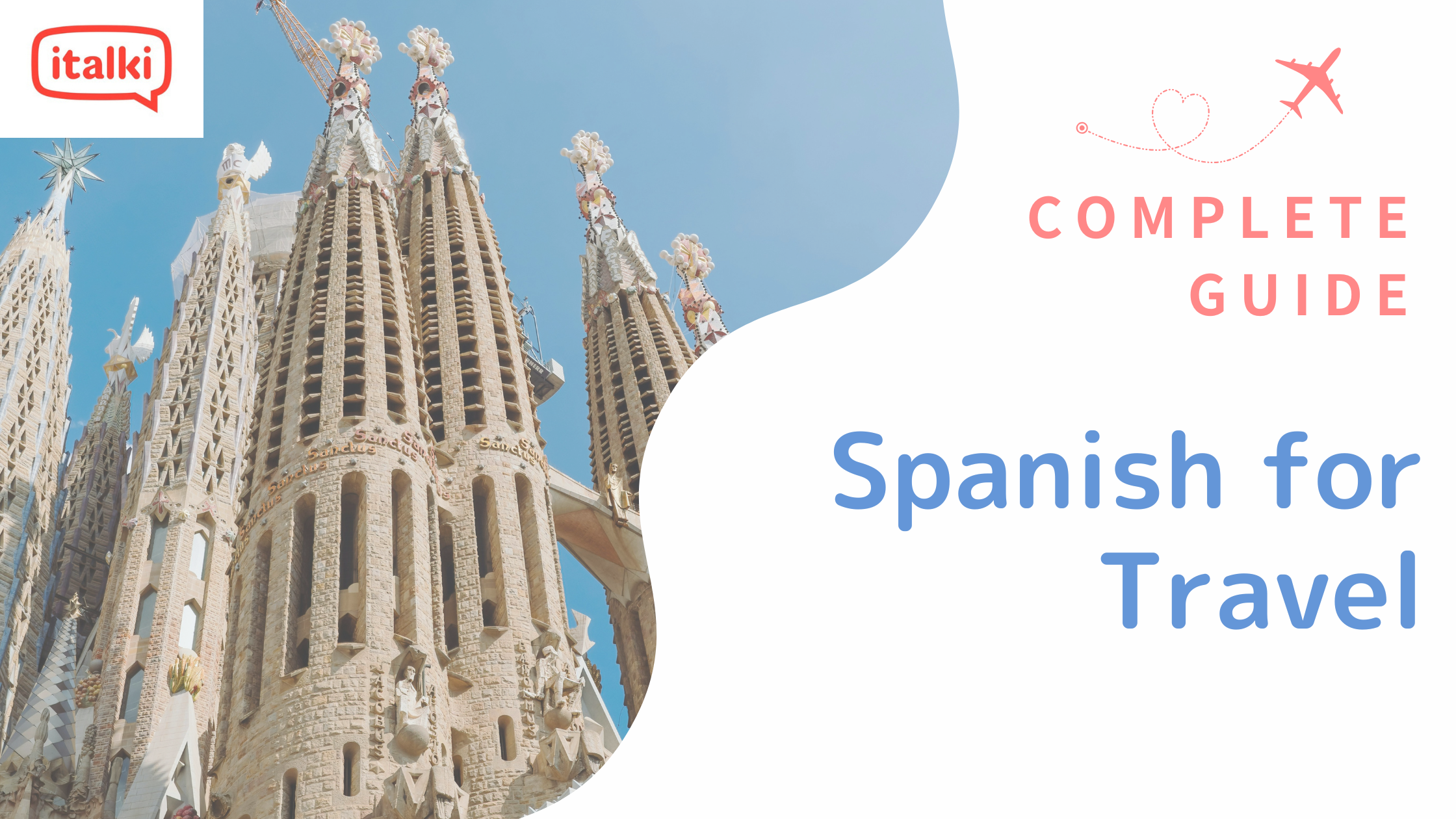
Barcelona is the capital of Catalonia, an autonomous region of Spain with its own co-official language, Catalan. Street signs, menus, and official communications appear in both Catalan and Spanish, and many locals speak both as a first language.
For tourists, Spanish is the practical choice. English is widely spoken in the tourist areas of the Gothic Quarter, the Eixample, and along Las Ramblas. Once you move into local neighborhoods, markets, and family-run restaurants, Spanish opens doors that English does not.
Catalan is distinct from Spanish, not a dialect, and while locals appreciate any attempt, few tourists learn it before a trip. Spanish is the correct starting point and will serve you across the entire visit, including day trips to other parts of Catalonia.
Even a few hours of focused pre-trip Spanish practice with a Spanish teacher online who’s based in Spain will tune your ear to the Castilian accent you’ll hear on arrival.
Essential Spanish phrases for getting around Barcelona
Barcelona’s public transport system is extensive. The metro, buses, and FGC trains are easy to navigate with a few key phrases.
At the metro or transport desk:
| Phrase | Pronunciation | Meaning |
|---|---|---|
| ¿Dónde está el metro? | DOHN-de es-TAH el MEH-tro | Where is the metro? |
| ¿Cuánto cuesta un billete? | KWAHN-to KWES-ta oon bee-YEH-teh | How much is a ticket? |
| Una tarjeta de diez viajes, por favor | OO-na tar-HEH-ta deh DYEH-s BYAH-hes | A 10-trip card, please |
| ¿Este tren va a…? | ES-teh TREN bah ah | Does this train go to…? |
| ¿Cuántas paradas faltan? | KWAHN-tas pa-RAH-das FAL-tan | How many stops left? |
Asking for directions:
| Phrase | Meaning |
|---|---|
| ¿Cómo llego a…? | How do I get to…? |
| Gire a la derecha / izquierda | Turn right / left |
| Todo recto | Straight ahead |
| Está cerca / lejos | It’s close / far |
| ¿Puede repetir más despacio, por favor? | Can you repeat more slowly, please? |
That last phrase is one of the most important you’ll use. Native Spanish speakers in Barcelona speak quickly, and “más despacio” (more slowly) is a phrase every traveler needs within the first hour.
Spanish tutors online from Spain on italki can simulate these transport conversations in a single session. From $4/lesson, one focused session on travel Spanish will prepare you for your first day in the city.
Ordering food and drinks in Spanish
Barcelona’s food culture is serious and specific. You’ll spend significant time in cafes, tapas bars, and markets. These phrases cover everything from a morning coffee to a full dinner.
In a cafe:
| Phrase | Meaning |
|---|---|
| Un café con leche, por favor | A coffee with milk, please |
| Solo / cortado / americano | Espresso / small espresso with a dash of milk / Americano |
| ¿Tienen desayuno? | Do you have breakfast? |
| La cuenta, por favor | The bill, please |
| ¿Está incluido el servicio? | Is service included? |
At a restaurant:
| Phrase | Meaning |
|---|---|
| ¿Tienen mesa para dos? | Do you have a table for two? |
| ¿Cuál es el plato del día? | What’s today’s set dish? |
| ¿Me recomienda algo? | Can you recommend something? |
| Sin (gluten / carne / marisco) | Without (gluten / meat / seafood) |
| Está muy rico | It’s delicious |
| ¿Qué tienen para picar? | What do you have for snacks/tapas? |
Ordering drinks:
| Phrase | Meaning |
|---|---|
| Una cerveza / un vino tinto / blanco | A beer / a red / white wine |
| Agua con gas / sin gas | Sparkling / still water |
| Ponme otro/a, por favor | Give me another one, please |
The how to order food in Spanish guide covers the ordering process in more detail, including how to handle dietary restrictions and how to read a Spanish menu.
Practice these phrases in a real conversation before you land. A Spain-based online Spanish tutor on italki can run a restaurant simulation in your first lesson.
Find Your Perfect Teacher
Your Spanish doesn’t have to sound like a textbook. Get personalized lessons from native tutors who’ll help you speak naturally, not just correctly.
Shopping and bargaining in Spanish
Barcelona’s markets, from the Boqueria to local neighborhood markets, reward visitors who can communicate in Spanish. Prices in markets are generally fixed, but knowing how to ask about products and compare options is worth having.
| Phrase | Meaning |
|---|---|
| ¿Cuánto cuesta esto? | How much does this cost? |
| ¿Tiene algo más barato? | Do you have something cheaper? |
| ¿Puedo probármelo? | Can I try this on? |
| ¿De qué talla es? | What size is it? |
| Me lo llevo | I’ll take it |
| ¿Dónde puedo pagar? | Where can I pay? |
| ¿Aceptan tarjeta? | Do you accept card? |
In Barcelona’s tourist shopping areas, vendors frequently switch to English when they hear a foreign accent. If you want to practice your Spanish, start with “¿habla español?” (do you speak Spanish?). Slightly counterintuitive, but it signals you’d prefer to continue in Spanish.
Get comfortable with numbers and prices before you arrive. Book a session with a Spanish language tutor from Spain , mention your Barcelona trip, and ask specifically to practice shopping and market conversations. Lessons start from $4.
Handling problems and emergencies
Knowing these phrases in advance removes panic from the situations where you need help most.
| Phrase | Meaning |
|---|---|
| Necesito ayuda | I need help |
| Llame a la policía / ambulancia | Call the police / an ambulance |
| Me han robado | I’ve been robbed |
| He perdido mi pasaporte / cartera | I’ve lost my passport / wallet |
| ¿Hay un hospital cerca? | Is there a hospital nearby? |
| Tengo una alergia a… | I have an allergy to… |
| No me encuentro bien | I’m not feeling well |
| ¿Puede ayudarme? | Can you help me? |
The emergency number in Spain is 112\. Police, medical emergency, and fire all route through the same national emergency number.
Connecting with locals: phrases that go beyond tourist Spanish
These are the phrases that shift your conversations from transactional to genuinely human.
| Phrase | Meaning |
|---|---|
| Estoy aprendiendo español | I’m learning Spanish |
| ¿Puede corregirme si me equivoco? | Can you correct me if I’m wrong? |
| ¿Cómo se dice…? | How do you say…? |
| Qué bonito lugar | What a beautiful place |
| ¿Qué me recomienda hacer aquí? | What do you recommend doing here? |
| Tengo muchas ganas de conocer Barcelona | I’m really looking forward to getting to know Barcelona |
| Gracias por su paciencia | Thank you for your patience |
The phrase “estoy aprendiendo español” combined with “¿puede corregirme?” is something a Spanish-speaking local will remember. It invites them into your learning and usually generates the warmest responses you’ll get on the trip.
Practicing these conversational phrases with a real person before your trip is the difference between rehearsed phrases and natural conversation. Spanish tutoring online from Spain-based tutors on italki starts from $4/lesson.
Find Your Perfect Teacher
Build real English confidence with personalized lessons from a teacher who matches your goals, schedule, and learning style.
Tips to learn Spanish fast before your trip
1. Focus on spoken Spanish, not written Spanish. You will not be writing essays in Barcelona. Train your ear and your mouth. Listening and speaking practice matters more than reading for travel preparation.
2. Learn the pronunciation rules first. Spanish is phonetic. Twenty minutes understanding vowel sounds, the Spanish “r,” and the “ll/y” distinction will immediately improve how you sound across all 50 phrases in this guide.
3. Practice with a native Spanish speaker from Spain. There are meaningful vocabulary and accent differences between Latin American Spanish and Castilian Spanish. A tutor from Spain will expose you to the specific accent and expressions you’ll hear in Barcelona. Spanish tutors online on italki include hundreds of Spain-based teachers available at your schedule.
4. Build around the situations in this article. Don’t try to learn general Spanish. Learn restaurant Spanish, transport Spanish, and market Spanish. Your vocabulary is more useful when it’s organized by the situations you’ll actually face.
5. Practice out loud, every day. Thirty minutes of speaking practice per day for four weeks is more effective than four hours of studying in the final week. Speaking is a physical skill as much as a mental one. Your mouth needs practice forming the sounds.
6. Use a notebook for phrases that stick. When a phrase clicks during a lesson or conversation, write it down immediately. Revisit your notes before bed. Spaced repetition of phrases you’ve already started to internalize is the fastest consolidation method.
italki has Spanish teachers from Spain who regularly prepare travelers for trips to Barcelona and across the country. A 60-minute lesson per week for four weeks, combined with daily practice using the phrases in this guide, is enough to walk into any situation in this article and handle it confidently.
Ready to speak Spanish like a Barcelona native?
Barcelona is one of the world’s most rewarding cities to visit in the local language. The effort of a few weeks of Spanish practice pays off every time a local smiles because you tried, every time you navigate a market without a language barrier, and every time a conversation turns into something real. Start with a trial lesson with a native Spanish speaker on italki. Lessons from $4, available today.
Find Your Perfect Teacher
Your Spanish doesn’t have to sound like a textbook. Get personalized lessons from native tutors who’ll help you speak naturally, not just correctly.
FAQ
Is Spanish or Catalan more useful in Barcelona?
Spanish is more practical for tourists. While Catalan is widely spoken and locals appreciate any effort, Spanish works across all of Spain and is understood everywhere in Barcelona. Starting with Spanish is the right choice for any trip to the city.
How long does it take to learn enough Spanish for Barcelona?
For basic travel needs, covering ordering food, navigating transport, shopping, and handling emergencies, 4-6 weeks of focused daily practice (30-45 minutes per day) is enough for most learners to reach functional travel confidence. A tutor accelerates this by catching pronunciation errors early.
Do people in Barcelona speak English?
Yes, widely in tourist areas. But outside the tourist zone, in neighborhood restaurants, local markets, and everyday service situations, Spanish is far more useful. Locals also respond more warmly to Spanish-speaking visitors than to those who rely on English.
What’s the best way to practice Spanish before a trip?
Structured conversation practice with a native speaker, focused on the situations you’ll face during travel. A tutor who can simulate restaurant, hotel, and transport conversations will prepare you for the actual experience far more effectively than vocabulary lists alone.
Want to learn a language at italki?
Here are the best resources for you!