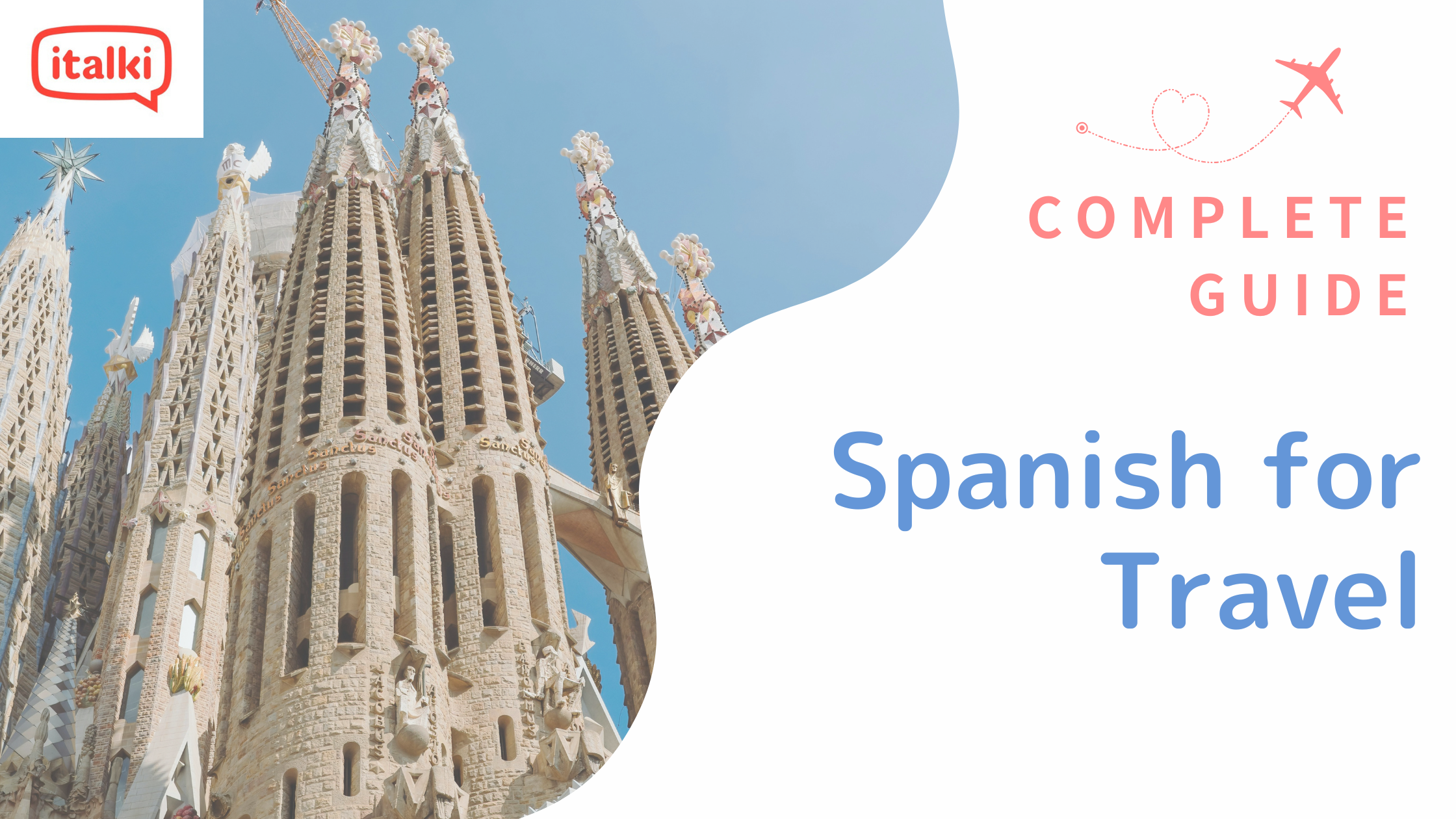
If you want Spanish for travelers that actually helps on a trip, start with the words that save time, reduce stress, and get you unstuck: greetings, directions, food requests, hotel check-in, transportation, and simple problem-solving. You do not need perfect grammar to travel well. You need a few high-frequency phrases, good pronunciation, and the confidence to use them fast.
If you want live correction before you land, an Spanish tutor can help you practice real trip situations and fix the mistakes that matter most in airports, restaurants, and hotels. italki connects learners with 10M+ learners, 30,000+ teachers, and 150+ languages, so you can practice exactly what your itinerary needs.

Find Your Perfect Teacher
Your Spanish doesn’t have to sound like a textbook. Get personalized lessons from native tutors who’ll help you speak naturally, not just correctly.
Book a trial lesson
Key takeaways
- Focus first on survival Spanish: greetings, directions, food, transportation, and help phrases that solve real travel problems.
- For this topic, a Spanish tutor on italki helps you rehearse airport, hotel, and restaurant conversations so you can respond quickly instead of translating in your head.
- Good pronunciation matters more than long vocabulary lists, especially for names, numbers, times, and common requests.
- Use short practice sessions before departure and review phrases in context, not as isolated flashcards.
What to learn first
Travel Spanish works best when you learn by situation, not by textbook chapter. The first phrases you should know are the ones that help you move through a trip: saying hello, asking where something is, understanding prices and times, and getting help when plans change. This approach matches real-world travel and the kind of functional communication described in the CEFR Companion Volume and the ACTFL World-Readiness Standards.
Spanish-speaking destinations can vary in pace, accent, and formality, but the same core survival language appears again and again. Even official visitor information from the Spain official tourism portal centers the practical reality of getting around, booking services, and navigating cities. That is why your first goal should be clarity, not complexity.
| Travel situation | What you need to say | Why it matters |
|---|---|---|
| Airport | Gate, boarding, baggage, delayed, passport | Helps you understand instructions and ask questions quickly |
| Hotel | Reservation, check-in, key, room, breakfast | Makes arrival smoother and reduces confusion at the desk |
| Restaurant | Menu, allergy, water, bill, vegetarian | Lets you order what you want and avoid mistakes |
| Getting around | Bus, metro, taxi, left, right, far, near | Keeps you from getting lost and helps you confirm directions |
Begin with phrases you can say under pressure. If you can ask where the bathroom is, confirm your room number, and explain that you need help, you already have a strong travel base. For deeper confidence, a lesson on common Spanish phrases can give you the most useful expressions without overload.
Airport, hotel, food, and directions
These four categories cover most of the friction travelers feel on arrival. If you handle them well, the rest of the trip becomes easier. The goal is not to speak like a local. The goal is to communicate cleanly enough to move, eat, sleep, and ask for help.
Airport Spanish
At the airport, you need to understand announcements and ask for essentials. Learn the words for boarding pass, gate, luggage, security, passport, and delay. If you are going to Spain, the official tourism site is a good reminder that transport hubs and local transit are part of the everyday visitor experience, so airport Spanish pays off fast.
| Situation | Useful Spanish | Meaning |
|---|---|---|
| Asking for help | ¿Me puede ayudar? | Can you help me? |
| Finding your gate | ¿Dónde está la puerta de embarque? | Where is the boarding gate? |
| Baggage issue | Mi maleta no ha llegado. | My suitcase has not arrived. |
Numbers matter here. Practice dates, flight times, and terminal numbers out loud. A short session with Spanish pronunciation support can help you sound clear when asking staff for directions or confirming a time.
Hotel Spanish
Hotel Spanish is about checking in smoothly and fixing small issues quickly. Learn how to say reservation, passport, breakfast time, Wi-Fi, towels, key card, and room number. If something is wrong, you want to be able to explain it politely and simply.
A good traveler sentence is often short: “I have a reservation,” “My room is noisy,” or “Can I leave my bag here?” A tutor can role-play reception desk conversations so you are ready for real interactions instead of just recognizing phrases on paper.
Food Spanish
Food vocabulary is one of the most rewarding parts of Spanish for travelers. You do not need a huge menu vocabulary. Start with allergies, dietary preferences, water, the bill, and popular dish words. If you have food restrictions, practice how to explain them clearly and calmly.
Restaurant speech is often where confidence breaks down because accents, noise, and speed all get in the way. Live practice helps. If you already know the words but freeze when speaking, Spanish conversation practice can turn passive knowledge into fast replies.
Directions and transport Spanish
Directions are easier when you learn a few compass and location words: left, right, straight, near, far, entrance, exit, station, and stop. Taxi and transit conversations are usually short, so a small vocabulary goes a long way. Knowing how to ask “How do I get to…?” can save a lot of time.
If you are nervous about asking strangers for help, practice with a tutor first. That way you can rehearse both the question and the follow-up answer, which matters when someone gives directions quickly.
Phrases for problems and emergencies
The most important travel Spanish is not always the most glamorous. It is the language you use when something goes wrong. Missed trains, lost luggage, wrong orders, pharmacy needs, and basic safety concerns are exactly when clear Spanish becomes valuable.
For travel stress, keep your phrases short and functional. In many cases, the staff member is trying to solve the problem quickly, so the best skill is precision, not complexity. If you are traveling in Spain, the U.S. State Department Spain travel advisory is a useful reminder to stay aware of local conditions, pickpocketing risks in busy areas, and practical safety habits.
| Problem | What to say | Why it helps |
|---|---|---|
| Lost item | He perdido mi… | Lets you report a missing wallet, phone, or bag |
| Need a pharmacy | ¿Dónde hay una farmacia? | Helps you find medicine quickly |
| Urgency | Necesito ayuda | Communicates immediate need without extra words |
| Wrong bill | La cuenta está equivocada | Helps you resolve payment mistakes politely |
For safety-related or urgent issues, keep your sentences calm and direct. A tutor can help you practice what to say when you are stressed, because speaking under pressure is very different from reading a phrase list. That kind of rehearsal is one reason travelers like working with italki: you get live feedback, flexible scheduling, and one-on-one practice that matches your trip.
How to practice before your trip
The best travel prep is short, focused, and realistic. You do not need months. You need repeated exposure to the phrases you will actually use, plus speaking practice with immediate correction. That is where live lessons are especially useful, because you can ask follow-up questions in real time and get pronunciation feedback before you board.
Here is a simple way to prepare:
- Pick 5 travel situations: airport, hotel, food, directions, and problems.
- Learn 10 to 15 phrases for each situation.
- Practice saying them aloud with the correct rhythm and stress.
- Do one role-play per situation with a Spanish tutor.
- Review weak spots the next day instead of cramming everything at once.
If your trip is soon, focus on listening as much as speaking. You will hear questions, numbers, and place names in real life. A little Spanish listening practice helps your brain recognize familiar words faster, which reduces stress in noisy places like airports and markets.
Sample 7-day travel Spanish plan
Use this plan if your trip is one week away. It is light enough to fit into a busy schedule but focused enough to make a difference. The goal is to build usable phrases, not to master the whole language.
| Day | Focus | Task |
|---|---|---|
| 1 | Core greetings | Practice hello, please, thank you, excuse me, and yes/no |
| 2 | Airport | Say gate, baggage, passport, and flight time out loud |
| 3 | Hotel | Role-play check-in and ask for Wi-Fi, breakfast, and towels |
| 4 | Food | Practice ordering, allergies, and asking for the bill |
| 5 | Directions | Ask for stations, left/right, and how to get to a place |
| 6 | Problems | Practice lost-item, pharmacy, and emergency phrases |
| 7 | Full review | Do one mixed conversation with a tutor or speaking partner |
That last review session matters. It is where weak spots show up. A conversation practice lesson gives you a chance to correct them before departure, not after you are already at the airport.
Get travel-ready before you go
If you only learn a few Spanish phrases, make them the ones that help you move through the trip with less stress. Airports, hotels, food, directions, and problems are the moments when Spanish matters most. Short, confident practice now can save time and frustration later.
Ready to turn phrases into real travel skills? Book a lesson with Spanish tutor online who can role-play your trip and help you speak clearly when it counts.
With travel Spanish, italki helps you turn trip vocabulary into confident hotel, restaurant, and transport conversations. The platform supports 10M+ learners and has 30,000+ teachers across 150+ languages, so you can Book a trial lesson with a Spanish tutor and practice the situations you actually want to handle.
Find Your Perfect Teacher
Your Spanish doesn’t have to sound like a textbook. Get personalized lessons from native tutors who’ll help you speak naturally, not just correctly.
Book a trial lesson
FAQ
How much Spanish do I need for a short trip?
You need enough to greet people, ask for help, order food, and handle basic transport. A small set of high-use phrases is usually better than a big list of words you cannot say confidently.
Should I learn full grammar before traveling?
No. For travel, grammar is secondary to usable phrases and clear pronunciation. You can get very far with short sentence patterns and a few polite forms.
Is it better to learn phrases or vocabulary first?
Phrases are better at the start because they are ready to use. Vocabulary becomes more helpful once you already know how to ask questions and respond simply.
How can a Spanish tutor help before a trip?
A tutor can correct your pronunciation, role-play real travel situations, and help you respond naturally when someone speaks quickly. That is especially useful for airport, hotel, and restaurant interactions.
Want to learn a language at italki?
Here are the best resources for you!