Key takeaways:
- Knowing phrases isn’t enough, you need to understand what locals say back
- Complete conversation scripts prepare you for realistic back-and-forth exchanges
- Practicing dialogues with native speakers builds confidence faster than memorizing isolated phrases
- These scripts cover common travel situations from airport arrival to hotel checkout
- Why conversation practice matters
- Arriving at the airport
- Taking a taxi to your hotel
- Checking into your hotel
- Ordering breakfast
- Asking for directions
- Shopping at markets
- Making restaurant reservations
- Handling problems and complaints
- Emergency situations
- Hotel checkout
- What to do when you don't understand
- FAQs
Spanish travel phrases become useful only when you know what comes next. Most phrase guides teach you what to say, but they don’t prepare you for what locals say back, or how to respond naturally.
This guide gives you complete conversation scripts for common travel situations. You’ll see realistic exchanges from start to finish, including what to listen for and how to handle unexpected responses. Whether you’re buying train tickets, sorting out a restaurant mix-up, or dealing with a taxi driver who speaks quickly, these dialogues show you exactly how conversations unfold.
Each script includes what the other person will likely say, variations when things don’t go as planned, and tips for understanding rapid Spanish. Practice these conversations with Spanish tutors before your trip to build the confidence you need for real interactions.

Find Your Perfect Teacher
At italki, you can find your Spanish tutor from all qualified and experienced teachers. Now experience the excellent language learning journey!
Book a trial lesson
Why conversation practice matters
You’ve memorized basic Spanish for travel words like “¿Dónde está el baño?” (Where is the bathroom?) but freeze when the person responds in rapid Spanish. This happens because isolated phrases don’t prepare you for real conversations.
For a more complete trip-ready list, the Spanish travel phrasebook organizes essential phrases by hotels, restaurants, transport, directions, shopping, and emergencies.
Native speakers don’t pause after your question. They respond immediately, often with follow-up questions or additional information you didn’t expect. Conversation scripts train your ear to recognize common responses and your mouth to reply without thinking.
When you practice full dialogues, you learn:
- What locals typically say after your initial question
- How to handle follow-up questions you didn’t anticipate
- Which words to listen for in fast speech
- Natural ways to ask them to repeat or slow down
The dialogues below follow realistic patterns. Receptionists ask for passports. Waiters suggest specials. Taxi drivers confirm addresses. These predictable exchanges become automatic when you practice them as complete conversations.
Arriving at the airport
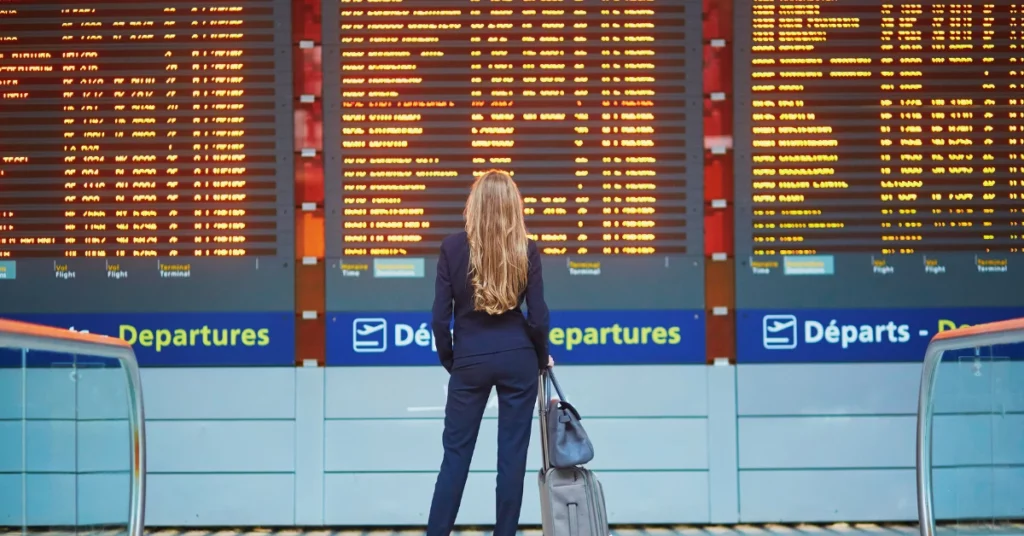
Passport control
YOU: Hola, buenas tardes.
(Hello, good afternoon.)
OFFICER: Buenas tardes. Pasaporte, por favor.
(Good afternoon. Passport, please.)
YOU: Aquí está.
(Here it is.)
OFFICER: ¿Cuál es el motivo de su visita?
(What’s the reason for your visit?)
YOU: Turismo.
(Tourism.)
OFFICER: ¿Cuánto tiempo va a estar?
(How long will you stay?)
YOU: Una semana.
(One week.)
OFFICER: Bienvenido/a. Que disfrute su estancia.
(Welcome. Enjoy your stay.)
LISTEN FOR:
- “Motivo de su visita” = reason for visit
- “Cuánto tiempo” = how long
- “Bienvenido” = welcome (you’re done)
When they ask unexpected questions
OFFICER: ¿Dónde se va a quedar?
(Where will you stay?)
YOU: En el Hotel Central.
(At Hotel Central.)
OR if you don’t understand:
YOU: ¿Puede repetir, por favor? Hablo español un poco.
(Can you repeat, please? I speak Spanish a little.)
Finding baggage claim
YOU: Disculpe, ¿dónde está la recogida de equipaje?
(Excuse me, where is baggage claim?)
PERSON: Siga todo recto y a la derecha.
(Go straight ahead and to the right.)
YOU: Gracias.
(Thank you.)
LISTEN FOR:
- “Recto” = straight
- “Derecha” = right
- “Izquierda” = left
- “Allí” or “allá” = over there (usually with pointing)
Taking a taxi to your hotel

Getting a taxi
YOU: Necesito un taxi al centro, por favor.
(I need a taxi to downtown, please.)
DRIVER: Sí, claro. ¿A qué dirección?
(Yes, of course. What address?)
YOU: Al Hotel Reforma, en la calle Juárez.
(To Hotel Reforma, on Juárez street.)
DRIVER: Perfecto. ¿Tiene equipaje?
(Perfect. Do you have luggage?)
YOU: Sí, una maleta.
(Yes, one suitcase.)
DRIVER: Vale, vamos.
(Okay, let’s go.)
Confirming the price
YOU: ¿Cuánto cuesta?
(How much does it cost?)
DRIVER: Son como 200 pesos, más o menos.
(It’s about 200 pesos, more or less.)
YOU: ¿Aceptan tarjeta?
(Do you accept card?)
DRIVER: Sí, sin problema.
(Yes, no problem.)
OR
DRIVER: Solo efectivo.
(Only cash.)
YOU: Ah, vale. Tengo efectivo.
(Ah, okay. I have cash.)
LISTEN FOR:
- “Más o menos” = approximately
- “Sin problema” = no problem (yes)
- “Solo efectivo” = cash only
ProTip: If the driver quotes a price that seems high, you can say “¿Puede usar el taxímetro?” (Can you use the meter?). In most cities, taxis are required to use meters.
When the driver can’t find your hotel
DRIVER: ¿Tiene la dirección exacta?
(Do you have the exact address?)
YOU: Sí, un momento. [show phone] Aquí está.
(Yes, one moment. Here it is.)
DRIVER: Ah, ya sé dónde es.
(Ah, I know where it is.)
Checking into your hotel
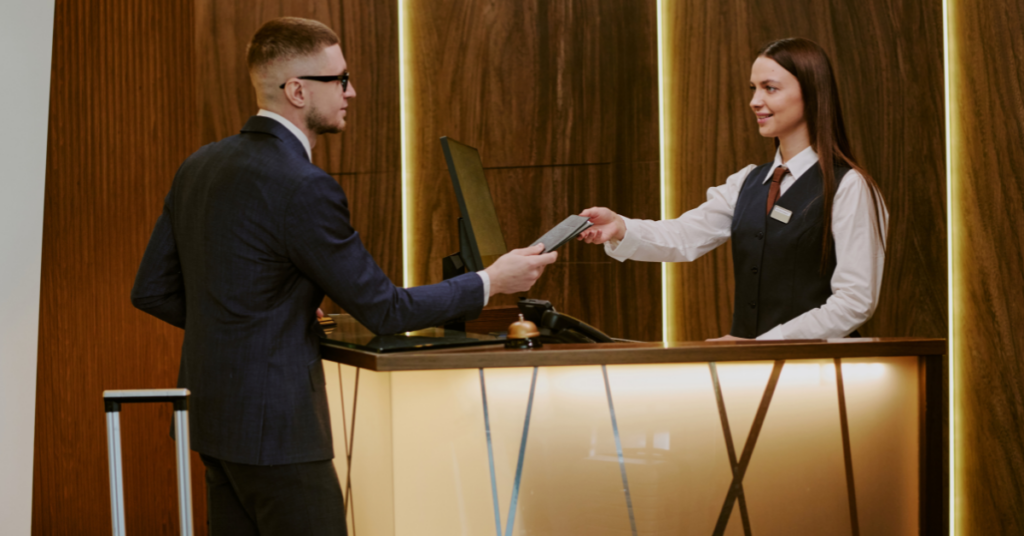
Basic check-in
YOU: Hola, buenas tardes. Tengo una reserva a nombre de Johnson.
(Hello, good afternoon. I have a reservation under Johnson.)
RECEPTIONIST: Buenas tardes. Sí, aquí la tengo. ¿Para cuántas noches?
(Good afternoon. Yes, I have it here. For how many nights?)
YOU: Para tres noches.
(For three nights.)
RECEPTIONIST: Perfecto. ¿Me puede mostrar su pasaporte, por favor?
(Perfect. Can you show me your passport, please?)
YOU: Sí, claro. Aquí está.
(Yes, of course. Here it is.)
RECEPTIONIST: Gracias. Está en la habitación 305, tercer piso. Aquí tiene su llave.
(Thank you. You’re in room 305, third floor. Here’s your key.)
YOU: Gracias. ¿A qué hora es el desayuno?
(Thank you. What time is breakfast?)
RECEPTIONIST: De siete a diez de la mañana, en el restaurante del primer piso.
(From seven to ten in the morning, in the restaurant on the first floor.)
LISTEN FOR:
- “Aquí la tengo” = I have it here (they found your reservation)
- “Tercer piso” = third floor
- “Primer piso” = first floor
- Time phrases: “de… a…” = from… to…
When they don’t have your reservation
RECEPTIONIST: Lo siento, no encuentro su reserva.
(I’m sorry, I can’t find your reservation.)
YOU: ¿Puede buscar a nombre de J-O-H-N-S-O-N?
(Can you search under J-O-H-N-S-O-N?)
RECEPTIONIST: Ah sí, aquí está. Disculpe.
(Ah yes, here it is. Sorry.)
OR if they still can’t find it:
YOU: Tengo el correo de confirmación. [show phone]
(I have the confirmation email.)
Asking about hotel services
YOU: ¿Tiene wifi?
(Do you have wifi?)
RECEPTIONIST: Sí, la contraseña es “hotel2025”.
(Yes, the password is “hotel2025”.)
YOU: ¿Hay restaurante en el hotel?
(Is there a restaurant in the hotel?)
RECEPTIONIST: Sí, está abierto hasta las once de la noche.
(Yes, it’s open until eleven at night.)
Busy travelers need flexible scheduling to fit language practice into unpredictable routines. Spanish teachers on italki offer 24/7 availability across all time zones, making consistent study possible where traditional classes fail.
Ordering breakfast
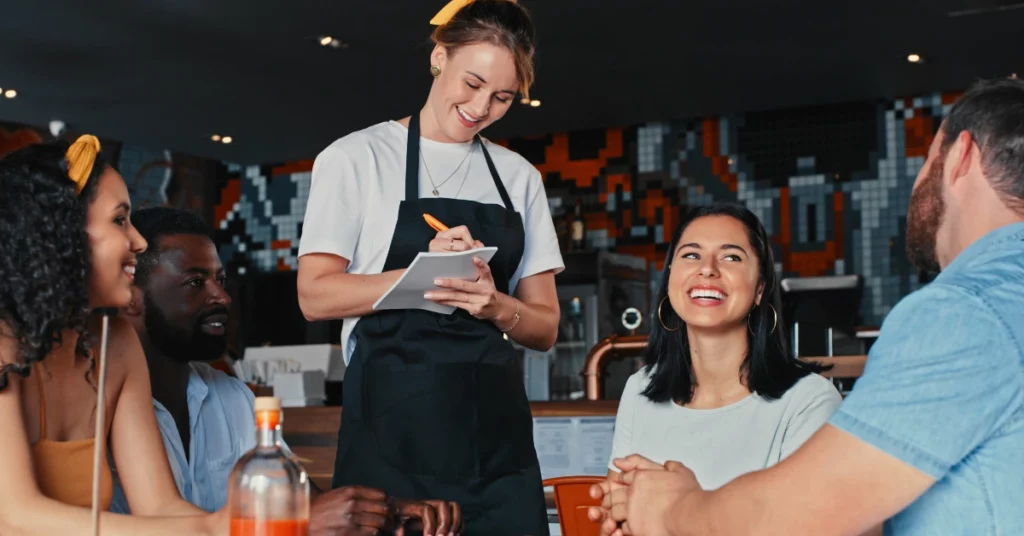
At the hotel restaurant
WAITER: Buenos días. ¿Qué desea tomar?
(Good morning. What would you like?)
YOU: Buenos días. Café con leche y tostadas, por favor.
(Good morning. Coffee with milk and toast, please.)
WAITER: ¿Algo más?
(Anything else?)
YOU: Sí, también huevos revueltos.
(Yes, also scrambled eggs.)
WAITER: Perfecto. ¿Jugo de naranja?
(Perfect. Orange juice?)
YOU: Sí, gracias.
(Yes, thank you.)
WAITER: Enseguida se lo traigo.
(I’ll bring it right away.)
LISTEN FOR:
- “¿Qué desea?” = What would you like?
- “¿Algo más?” = Anything else?
- “Enseguida” = right away (your food is coming soon)
When you have dietary restrictions
WAITER: ¿Qué desea tomar?
(What would you like?)
YOU: Soy vegetariano. ¿Qué opciones tienen?
(I’m vegetarian. What options do you have?)
WAITER: Tenemos tortilla de verduras, tostadas con aguacate, o yogur con frutas.
(We have vegetable omelet, toast with avocado, or yogurt with fruit.)
YOU: La tortilla de verduras, por favor.
(The vegetable omelet, please.)
OR for allergies:
YOU: Soy alérgico a las nueces. ¿Este plato tiene nueces?
(I’m allergic to nuts. Does this dish have nuts?)
WAITER: No, no tiene.
(No, it doesn’t have any.)
OR
WAITER: Sí, lleva almendras. Puedo sugerirle…
(Yes, it has almonds. I can suggest…)
Asking for directions

On the street
YOU: Disculpe, ¿dónde está el museo?
(Excuse me, where is the museum?)
PERSON: Siga todo recto dos cuadras, y luego a la izquierda.
(Go straight two blocks, then left.)
YOU: ¿Está lejos?
(Is it far?)
PERSON: No, como cinco minutos a pie.
(No, about five minutes on foot.)
YOU: Muchas gracias.
(Thank you very much.)
PERSON: De nada.
(You’re welcome.)
LISTEN FOR:
- “Recto” = straight
- “Cuadras” = blocks (in Latin America) / “manzanas” in some regions
- “A la izquierda” = to the left
- “A la derecha” = to the right
- “A pie” = on foot
- “Como” = about/approximately
When you need to repeat
PERSON: Siga recto hasta la plaza, doble a la derecha en el semáforo, pase dos calles más y está en la esquina.
(Go straight to the plaza, turn right at the light, pass two more streets and it’s on the corner.)
YOU: Perdón, ¿puede repetir más despacio?
(Sorry, can you repeat more slowly?)
PERSON: Sí, claro. Recto… hasta la plaza… [speaks slower]
(Yes, of course. Straight… to the plaza…)
YOU: Ah, perfecto. Gracias.
(Ah, perfect. Thank you.)
Using landmarks
YOU: ¿Dónde está la farmacia más cercana?
(Where is the nearest pharmacy?)
PERSON: ¿Ve ese edificio alto? Está justo al lado.
(Do you see that tall building? It’s right next to it.)
YOU: Sí, ya lo veo. Gracias.
(Yes, I see it. Thank you.)
LISTEN FOR:
- “¿Ve…?” = Do you see…?
- “Justo” = right/just
- “Al lado” = next to
- “Enfrente” = across from
- “Detrás” = behind
Shopping at markets

Asking for prices
YOU: Buenas tardes. ¿Cuánto cuestan estas camisetas?
(Good afternoon. How much are these t-shirts?)
VENDOR: Cien pesos cada una, o tres por 250.
(One hundred pesos each, or three for 250.)
YOU: ¿Tiene en talla mediana?
(Do you have medium size?)
VENDOR: Sí, ¿de qué color?
(Yes, what color?)
YOU: Azul, por favor.
(Blue, please.)
VENDOR: Aquí tiene.
(Here you go.)
Negotiating
YOU: ¿Puede hacer 200 por las tres?
(Can you do 200 for the three?)
VENDOR: Mmm, 220 es mi mejor precio.
(Mmm, 220 is my best price.)
YOU: Vale, me las llevo.
(Okay, I’ll take them.)
OR if too expensive:
YOU: Es un poco caro para mí. Gracias de todos modos.
(It’s a bit expensive for me. Thanks anyway.)
VENDOR: Espere, ¿cuánto puede pagar?
(Wait, how much can you pay?)
LISTEN FOR:
- “Cada una” = each one
- “Mi mejor precio” = my best price
- “Espere” = wait (they might negotiate)
- “¿Cuánto puede pagar?” = How much can you pay?
Paying
YOU: ¿Aceptan tarjeta?
(Do you accept card?)
VENDOR: Solo efectivo.
(Only cash.)
YOU: Vale, aquí tiene. [hands cash]
(Okay, here you go.)
VENDOR: Gracias. Aquí está su cambio.
(Thank you. Here’s your change.)
YOU: Gracias, hasta luego.
(Thank you, see you later.)
Making restaurant reservations

Calling ahead
YOU: Hola, buenas tardes. Quisiera hacer una reserva para esta noche.
(Hello, good afternoon. I’d like to make a reservation for tonight.)
HOST: ¿Para cuántas personas?
(For how many people?)
YOU: Para dos personas.
(For two people.)
HOST: ¿A qué hora?
(What time?)
YOU: A las ocho, si es posible.
(At eight, if possible.)
HOST: Un momento… Sí, tenemos disponibilidad. ¿A nombre de quién?
(One moment… Yes, we have availability. Under what name?)
YOU: A nombre de Smith.
(Under Smith.)
HOST: Perfecto, señor Smith. Los esperamos a las ocho.
(Perfect, Mr. Smith. We’ll expect you at eight.)
LISTEN FOR:
- “¿Para cuántas personas?” = For how many people?
- “Disponibilidad” = availability
- “Los esperamos” = we’ll expect you (confirmation)
When they’re fully booked
HOST: Lo siento, estamos completos a esa hora.
(I’m sorry, we’re full at that time.)
YOU: ¿Tienen mesa a las nueve?
(Do you have a table at nine?)
HOST: Sí, a las nueve sí tenemos.
(Yes, at nine we do have.)
YOU: Perfecto, a las nueve entonces.
(Perfect, at nine then.)
Ordering dinner
Starting the meal
WAITER: Buenas noches. ¿Qué les traigo para beber?
(Good evening. What can I bring you to drink?)
YOU: Una botella de agua con gas, por favor.
(A bottle of sparkling water, please.)
WAITER: Enseguida. ¿Ya saben qué van a comer?
(Right away. Do you already know what you’ll eat?)
YOU: Todavía no. ¿Qué recomienda?
(Not yet. What do you recommend?)
WAITER: El pescado del día está muy bueno, o el cordero.
(The fish of the day is very good, or the lamb.)
YOU: Me llevo el pescado. ¿Cómo viene preparado?
(I’ll take the fish. How is it prepared?)
WAITER: A la plancha, con verduras y papas.
(Grilled, with vegetables and potatoes.)
YOU: Perfecto, ese por favor.
(Perfect, that one please.)
LISTEN FOR:
- “¿Qué les traigo?” = What can I bring you?
- “¿Ya saben?” = Do you already know?
- “Del día” = of the day (daily special)
- “A la plancha” = grilled
Asking questions about the menu
YOU: ¿Qué lleva este plato?
(What does this dish have?)
WAITER: Lleva pollo, arroz, frijoles y plátano frito.
(It has chicken, rice, beans, and fried plantain.)
YOU: ¿Es picante?
(Is it spicy?)
WAITER: No, no es picante.
(No, it’s not spicy.)
OR
WAITER: Un poco, pero puedo pedir que lo hagan sin picante.
(A little, but I can ask them to make it without spice.)
Requesting the check
YOU: La cuenta, por favor.
(The check, please.)
WAITER: Enseguida se la traigo.
(I’ll bring it right away.)
[brings check]
YOU: ¿Está incluida la propina?
(Is the tip included?)
WAITER: No, la propina no está incluida.
(No, the tip is not included.)
YOU: Vale, gracias. [leaves tip]
(Okay, thank you.)
Learning restaurant vocabulary takes practice with real conversations, not just memorized lists. Book a trial lesson with a Spanish tutor to role-play ordering scenarios and get immediate feedback on pronunciation and natural phrasing.
Handling problems and complaints

Room issues at the hotel
YOU: Disculpe, tengo un problema con mi habitación.
(Excuse me, I have a problem with my room.)
RECEPTIONIST: ¿Qué sucede?
(What’s happening?)
YOU: No funciona el aire acondicionado.
(The air conditioning doesn’t work.)
RECEPTIONIST: Lo siento mucho. Voy a enviar a alguien enseguida.
(I’m very sorry. I’ll send someone right away.)
YOU: ¿Cuánto tiempo tarda?
(How long will it take?)
RECEPTIONIST: Unos 15 minutos, máximo.
(About 15 minutes, maximum.)
LISTEN FOR:
- “¿Qué sucede?” or “¿Qué pasa?” = What’s happening?
- “Enseguida” = right away
- “Voy a enviar” = I’m going to send
- “Máximo” = maximum/at most
Other common problems
YOU: No hay agua caliente.
(There’s no hot water.)
YOU: Falta una toalla.
(A towel is missing.)
YOU: La llave no funciona.
(The key doesn’t work.)
YOU: Hay mucho ruido.
(There’s a lot of noise.)
RECEPTIONIST: Lo siento. ¿Quiere cambiar de habitación?
(I’m sorry. Do you want to change rooms?)
YOU: Sí, por favor.
(Yes, please.)
At a restaurant – wrong order
WAITER: Aquí tiene su comida.
(Here’s your food.)
YOU: Disculpe, esto no es lo que pedí.
(Excuse me, this isn’t what I ordered.)
WAITER: Ah, perdón. ¿Qué pidió usted?
(Ah, sorry. What did you order?)
YOU: Pedí el pescado, no el pollo.
(I ordered the fish, not the chicken.)
WAITER: Tiene razón, disculpe. Se lo cambio ahora mismo.
(You’re right, sorry. I’ll change it right now.)
Emergency situations

Medical emergency
YOU: ¡Ayuda! Necesito un médico.
(Help! I need a doctor.)
PERSON: ¿Qué pasó?
(What happened?)
YOU: Mi amigo se siente muy mal.
(My friend feels very sick.)
PERSON: Voy a llamar una ambulancia.
(I’m going to call an ambulance.)
YOU: Gracias. ¿Dónde está el hospital más cercano?
(Thank you. Where is the nearest hospital?)
PERSON: A dos kilómetros, pero mejor esperar la ambulancia.
(Two kilometers away, but better to wait for the ambulance.)
LISTEN FOR:
- “¿Qué pasó?” = What happened?
- “Voy a llamar” = I’m going to call
- “Mejor esperar” = better to wait
At the pharmacy
YOU: Necesito medicina para el dolor de cabeza.
(I need medicine for a headache.)
PHARMACIST: ¿Qué tan fuerte es el dolor?
(How strong is the pain?)
YOU: Moderado.
(Moderate.)
PHARMACIST: Le recomiendo este. Tome una cada ocho horas.
(I recommend this one. Take one every eight hours.)
YOU: ¿Cuánto cuesta?
(How much does it cost?)
PHARMACIST: 85 pesos.
(85 pesos.)
Reporting theft
YOU: Me han robado la mochila.
(My backpack has been stolen.)
POLICE: ¿Dónde ocurrió?
(Where did it happen?)
YOU: En el metro, hace como 20 minutos.
(On the metro, about 20 minutes ago.)
POLICE: ¿Qué llevaba dentro?
(What did you have inside?)
YOU: Mi pasaporte, dinero y tarjetas.
(My passport, money, and cards.)
POLICE: Tiene que hacer una denuncia. Venga conmigo.
(You have to file a report. Come with me.)
LISTEN FOR:
- “¿Dónde ocurrió?” = Where did it happen?
- “¿Qué llevaba?” = What did you have?
- “Denuncia” = report/complaint
- “Venga conmigo” = come with me
Hotel checkout
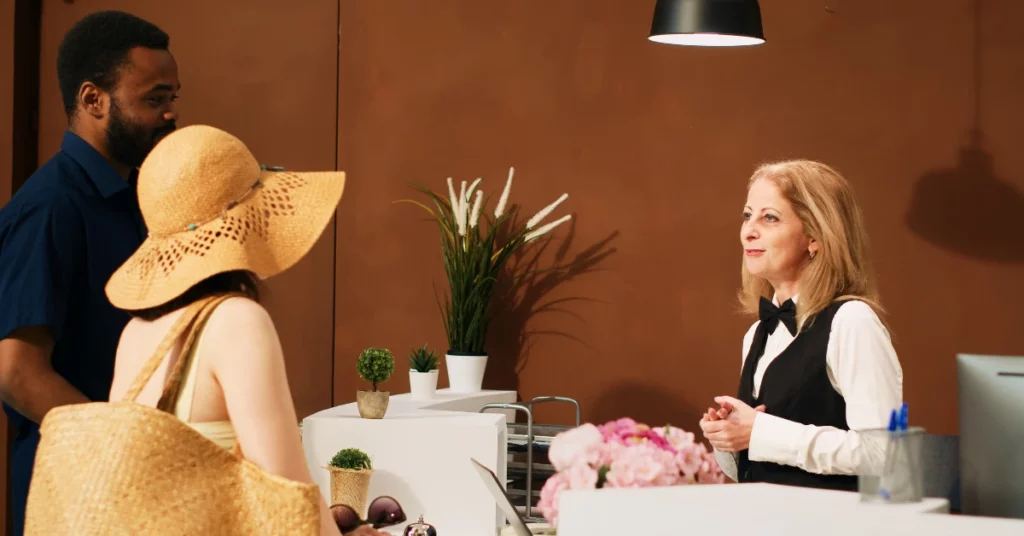
Standard checkout
YOU: Buenos días. Quisiera hacer el checkout de la habitación 305.
(Good morning. I’d like to check out of room 305.)
RECEPTIONIST: Buenos días. ¿Cómo estuvo su estadía?
(Good morning. How was your stay?)
YOU: Muy bien, gracias.
(Very good, thank you.)
RECEPTIONIST: Me alegro. ¿Consumió algo del minibar?
(I’m glad. Did you use anything from the minibar?)
YOU: No, nada.
(No, nothing.)
RECEPTIONIST: Perfecto. Su total es 450 dólares. ¿Cómo desea pagar?
(Perfect. Your total is 450 dollars. How would you like to pay?)
YOU: Con tarjeta.
(With card.)
RECEPTIONIST: Aquí tiene su recibo. ¿Necesita taxi al aeropuerto?
(Here’s your receipt. Do you need a taxi to the airport?)
YOU: Sí, por favor.
(Yes, please.)
RECEPTIONIST: Lo llamo ahora. Estará aquí en cinco minutos.
(I’ll call one now. It will be here in five minutes.)
LISTEN FOR:
- “¿Cómo estuvo…?” = How was…?
- “¿Consumió?” = Did you use/consume?
- “Su total es” = Your total is
- “Lo llamo ahora” = I’ll call one now
When there’s a billing problem
YOU: Creo que hay un error en la cuenta.
(I think there’s an error in the bill.)
RECEPTIONIST: ¿Qué es lo que no coincide?
(What doesn’t match?)
YOU: Aquí dice que usé el spa, pero no lo usé.
(Here it says I used the spa, but I didn’t use it.)
RECEPTIONIST: Déjeme verificar… Tiene razón, fue un error. Voy a corregirlo.
(Let me verify… You’re right, it was an error. I’m going to correct it.)
YOU: Gracias.
(Thank you.)
What to do when you don’t understand
Real conversations don’t always go smoothly. Here’s what to do when you’re lost.
Ask them to repeat
YOU: Perdón, ¿puede repetir?
(Sorry, can you repeat?)
OR
YOU: ¿Cómo? No entendí.
(What? I didn’t understand.)
Ask them to slow down
YOU: Más despacio, por favor. Hablo español un poco.
(More slowly, please. I speak Spanish a little.)
Most people will automatically slow down and simplify their Spanish.
Ask for clarification
YOU: ¿Qué significa “____”?
(What does “_____” mean?)
Use gestures and context
If someone points and says “allí” (over there), you know they’re giving you a location even if you missed other words.
If a waiter says “¿Algo más?” and makes a questioning gesture, they’re asking if you want anything else.
Context fills in what you don’t catch.
Have them write it down
YOU: ¿Puede escribirlo, por favor?
(Can you write it, please?)
This works well for addresses, phone numbers, or complex directions.
The universal rescue phrase
YOU: ¿Habla inglés?
(Do you speak English?)
Use this only after trying Spanish first. Most people appreciate the effort and will help you either way.
Protip: Even if someone speaks English, starting in Spanish shows respect and often leads to friendlier interactions. Try your Spanish first, then switch if needed.
Practice makes the difference between knowing phrases and using them naturally.
Learn Spanish faster with personal guidance from 1000+ expert Spanish tutors online trusted by over 5 million learners worldwide. Book a trial lesson today and start speaking Spanish with confidence before your trip.
Find Your Perfect Teacher
At italki, you can find your Spanish tutor from all qualified and experienced teachers. Now experience the excellent language learning journey!
Book a trial lesson
FAQs
How do I practice Spanish travel conversations before my trip?
Role-play scenarios with a native speaker. Have them play the hotel receptionist, waiter, or taxi driver while you practice your part. This builds muscle memory so responses come naturally when traveling. Spanish tutors on italki offer conversation practice focused on travel situations.
What should I do if I don’t understand what someone says back to me?
Say “¿Puede repetir más despacio, por favor?” (Can you repeat more slowly, please?). Most locals will slow down and use simpler Spanish. If you still don’t understand, ask “¿Puede escribirlo?” (Can you write it?) or use gestures to communicate the basics.
Do I need to memorize these entire conversations?
No. Focus on understanding the pattern, what locals typically ask and how to respond. The exact words will vary, but the flow stays similar. Practice the common exchanges (ordering food, asking directions) until they feel automatic.
Which conversations are most important for travelers?
Hotel check-in, ordering at restaurants, asking for directions, and handling taxi rides. These four situations make up most tourist interactions. Master these first, then add others based on your travel plans.
How long does it take to feel comfortable with travel conversations?
Most learners feel confident with basic exchanges after 2-3 weeks of consistent practice. Schedule 30-minute sessions with a tutor twice weekly to practice these scenarios. By your travel date, common conversations will feel natural rather than scripted.
Want to learn a language at italki?
Here are the best resources for you!