Key takeaways
- The CLEP Spanish exam allows you to earn college credit by demonstrating proficiency equivalent to 1-2 years of college Spanish study.
- It includes listening and reading sections, with an optional writing component in the Spanish with Writing version.
- Passing scores correspond to Level 1 and Level 2 credit, with different credit amounts depending on the exam version.
- Preparation involves focused practice in listening, reading, grammar, and writing skills, supported by resources like native tutors on italki.
- Over 2,900 colleges accept CLEP credit, but policies vary, so always verify your institution’s requirements before testing.
The CLEP Spanish exam is a standardized test administered by the College Board that allows students to demonstrate Spanish language proficiency and earn college credit without taking traditional coursework. This College Level Examination Program assessment measures knowledge equivalent to one to two years of college Spanish language study, making it an efficient path for Spanish speakers and dedicated learners to advance their education.
This guide covers the difference between the Spanish Language and Spanish with Writing exams, exact score thresholds, section-by-section structure, preparation strategies for listening, reading, and writing, and how to confirm credit acceptance at your target institution.
italki connects CLEP candidates with native Spanish speakers and native Spanish tutors with experience in CLEP exams. Trusted by over 10 million learners since 2007, italki gives you the conversation practice and targeted feedback that standardized test prep demands.

Find Your Perfect Teacher
Learn from native tutors who can help you tackle the exam with confidence. Focus on the vocabulary, grammar, and speaking skills that really matter for your test.
Book a trial lesson
Understanding CLEP Spanish Exams
The College Level Examination Program has offered credit-by-examination since 1967, allowing students to convert existing knowledge into college credit. The Spanish CLEP exams assess proficiency through listening and reading skills, with an optional writing component, targeting learners who have acquired Spanish through self-study, heritage exposure, travel, or informal learning.
Spanish Language Exam vs Spanish with Writing
The CLEP Spanish Language exam consists of approximately 121 questions to be completed in about 90 minutes, divided into three separately timed sections. This version focuses exclusively on listening and reading comprehension skills, with no productive language tasks. Test takers should be comfortable with Spanish grammar and vocabulary, focusing on listening and reading comprehension skills, as speaking and writing are not evaluated on the exam.
The Spanish with Writing exam includes 100 multiple-choice questions plus 2 writing tasks, with a total time of approximately 110 minutes. The writing section adds interpersonal writing (an email or message of at least 60 words in 10 minutes) and presentational writing (a composition of at least 100 words in 20 minutes). Writing portions are scored by at least two college Spanish faculty members, with results typically available 1-2 weeks after testing.
Credit differences matter significantly. ACE recommends 6 credits for a Level 1 score of 50 on either exam. For Level 2, the Spanish Language exam requires a score of 63 for 9 credits, while Spanish with Writing requires a score of 65 for 12 credits. Many colleges prefer Spanish with Writing for humanities or language major requirements, while others accept only the Language version for elective credit.
Exam Administration and Scheduling
CLEP exams offer flexibility through both physical testing centers and remote proctoring options. Remote proctoring requires a computer with a front-facing camera and a smartphone, with eligibility restrictions based on age and location. The remote proctoring fee is approximately $30 in addition to the standard exam fee.
Exams are available year-round through the College Board portal. The base exam fee is $93, rising to $95 as of July 1, 2025. Test administration fees vary by center ($10-$35) or remote proctoring ($30), bringing total costs to approximately $105-$130.
This cost comparison to traditional coursework reveals significant savings. A single CLEP exam costing around $120 can replace 6-12 credit hours of college Spanish, potentially saving hundreds or thousands of dollars depending on your institution’s per-credit tuition. Note that you must wait three months before retaking the same CLEP exam if needed.
Find Your Perfect Teacher
Learn from native tutors who can help you tackle the exam with confidence. Focus on the vocabulary, grammar, and speaking skills that really matter for your test.
Book a trial lesson
CLEP Spanish Exam Content and Structure
Understanding the exam structure allows you to allocate preparation time effectively across listening, reading, and writing components.
Spanish Language Exam Sections
The exam is divided into three distinct sections: listening rejoinders, listening dialogues and narratives, and reading comprehension. The exam includes two listening sections and one reading section, with each section contributing equally to the total score.
Section I: Listening Rejoinders (approximately 15%) presents short oral exchanges where you select the correct response or continuation. These questions test your ability to understand quick conversational exchanges and identify the appropriate answer in context.
Section II: Listening Dialogues and Narratives (approximately 25%) involves longer spoken selections, including conversations, announcements, and stories. Section I of the exam focuses on listening comprehension through short oral exchanges, while Section II involves longer spoken selections, and Section III assesses reading comprehension through passages and authentic materials. Listening sections play only once, requiring test-takers to be attentive while answering questions related to audio content.
Section III: Reading Comprehension (approximately 60%) divides into three parts:
- Part A (16%): Discrete sentences testing vocabulary and Spanish grammar
- Part B (20%): Short cloze passages requiring you to fill in gaps based on structure and vocabulary
- Part C (24%): Longer reading passages using authentic stimulus materials
The test includes discrete sentences, cloze passages, and reading comprehension questions that require understanding of authentic texts.
Spanish with Writing Exam Components
The Spanish with Writing version redistributes section weights while adding productive writing tasks:
- Listening Rejoinders: 10%
- Listening Dialogues and Narratives: 20%
- Reading Section: 45% (discrete sentences 13%, cloze passages 15%, authentic reading 17%)
- Writing Section: 25%
The writing component includes two tasks. Interpersonal writing requires an informal email or message to a friend (60+ words, 10 minutes). Presentational writing demands a more formal composition with introduction, body, and conclusion (100+ words, 20 minutes). Scoring combines multiple-choice results (75% weight) with faculty-evaluated writing (25% weight) for a final score on a 20-80 scale.
Score Requirements and Credit Levels
These ACE recommendations serve as guidelines, but institutions can set higher thresholds or different credit awards. Over 2,900 colleges and universities accept CLEP credit in some form, though specific acceptance for Spanish exams varies. Always verify your target institution’s credit-by-exam policy before testing.
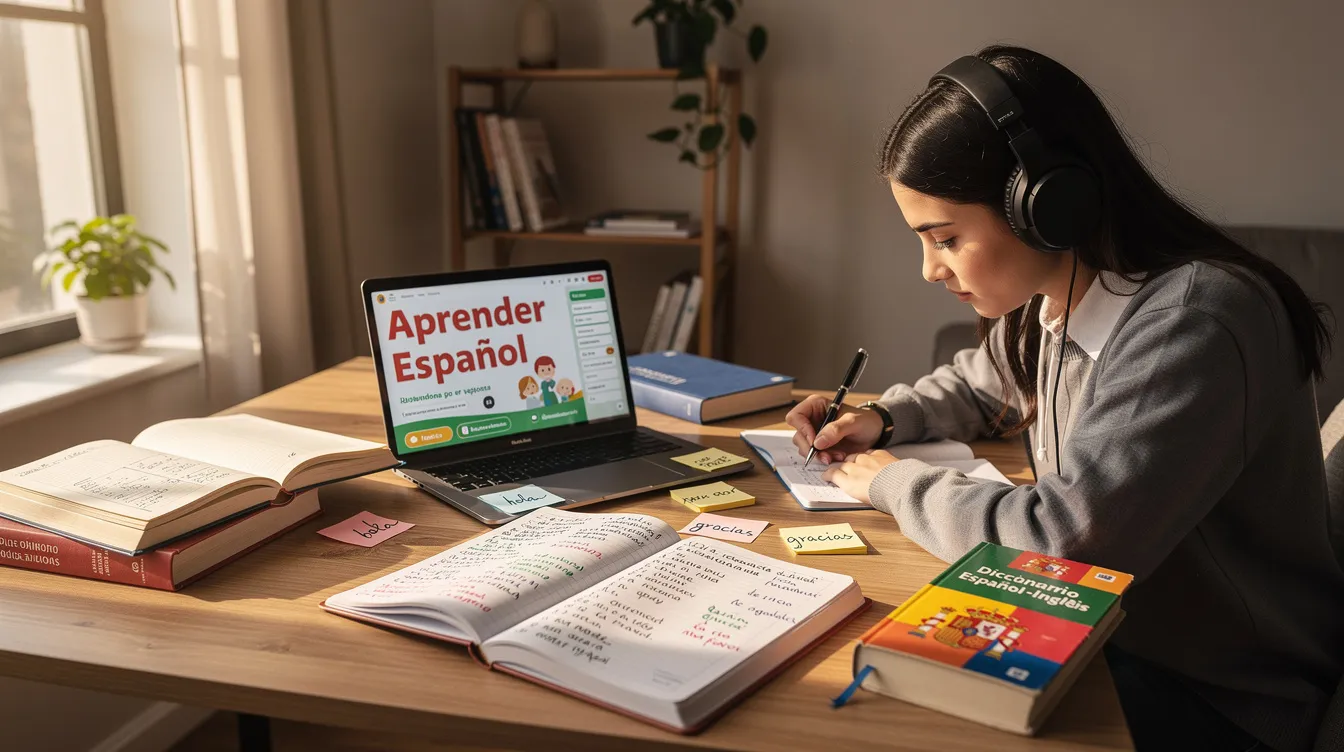
Ready to build the listening and reading skills these exams demand? Find a Spanish tutor on italki who specializes in exam preparation.
Effective CLEP Spanish Preparation Strategies
The exam assesses proficiency through various question types, including listening comprehension of dialogues and narratives, as well as reading comprehension of passages and authentic materials. This section provides targeted strategies for each skill area.
Building Listening Comprehension Skills
Intensive listening practice becomes essential when you struggle to understand audio portions at natural speed or encounter unfamiliar accents. The CLEP Spanish exam is designed to measure knowledge and ability equivalent to that of students who have completed one to two years of college Spanish language study, which means audio content reflects authentic speech patterns.
Practice with rejoinders and quick response selection. Train yourself to hear a short sentence and immediately identify the logical continuation. This skill requires processing Spanish in real-time without mental translation.
Develop comprehension for longer dialogues and narratives. Study methods suggested for success on the exam include utilizing native Spanish audio resources. Listen to podcasts, news broadcasts, and radio programs where native Spanish speakers discuss everyday topics. Start with transcriptions, then progress to unsupported listening.
Work with native speakers for realistic conversation practice. Exposure to varied accents from Latin America and Spain builds flexibility. One-on-one sessions with Spanish tutors allow customized listening practice, dialect exposure, and immediate comprehension checks that recorded materials cannot provide.
Find Your Perfect Teacher
Learn from native tutors who can help you tackle the exam with confidence. Focus on the vocabulary, grammar, and speaking skills that really matter for your test.
Book a trial lesson
Strengthening Reading and Grammar Proficiency
Grammar knowledge is heavily tested, specifically focusing on verb tenses such as past, future, conditional, and subjunctive forms, as well as pronoun usage and the difference between por and para. Reading authentic materials such as magazine articles, newspapers, and academic texts is recommended to enhance comprehension skills for the CLEP Spanish exam.
Vocabulary building techniques for academic Spanish. Focus on vocabulary relevant to travel, everyday situations, family, health, and work. Maintain a vocabulary journal organized by topic, adding new words encountered in reading practice.
Grammar review focusing on exam-tested structures. Priority areas include:
- Verb tenses: preterite vs. imperfect, present and past subjunctive, future, conditional
- Ser vs. estar distinctions
- Por vs. para usage
- Direct and indirect object pronouns
- Agreement in gender and number
Reading comprehension strategies for varied text types. Practice with both discrete-point grammar questions and short cloze passages to improve dealing with structure in context. Simulate timed reading conditions to build speed without sacrificing accuracy.
Study guides for the CLEP Spanish exam often include detailed explanations of answers to practice questions, which can help students understand their mistakes and improve their skills. Working with qualified Spanish teachers allows targeted grammar review based on your specific weak points.
Find Your Perfect Teacher
Learn from native tutors who can help you tackle the exam with confidence. Focus on the vocabulary, grammar, and speaking skills that really matter for your test.
Book a trial lesson
Writing Skills Development (for Spanish with Writing)
The writing section tests your ability to produce coherent Spanish under time pressure while demonstrating grammatical accuracy and appropriate register.
- Interpersonal writing: email and message formats. This task requires informal register, appropriate greetings and closings, and direct response to a prompt. Practice writing 60+ word messages in 10 minutes, addressing a friend about everyday topics.
- Presentational writing: essays and formal compositions. The 20-minute task demands organized structure with clear introduction, body paragraphs, and conclusion. Use more formal vocabulary and avoid contractions. Support your points with specific examples.
- Time management for the 30-minute writing section. Spend 1-2 minutes planning each response and reserve 2-3 minutes for proofreading. Common errors to catch include verb agreement, accent marks, and register mismatches.
Practice tests are available online to help students assess their readiness for the CLEP Spanish exam, with many resources offering multiple-choice questions similar to those on the actual exam. For writing feedback, book a lesson with a Spanish tutor who can correct your practice essays and identify recurring errors.
Common CLEP Spanish Challenges and Solutions
Preparation obstacles often fall into predictable categories. Addressing these challenges directly improves your exam readiness.
1. Insufficient Listening Practice
Many self-study learners encounter only slowed, classroom-style audio rather than natural speech. The solution involves structured listening practice with native speaker tutors who speak at authentic speeds. Focus on various Spanish dialects and regional accents, since exam audio includes speakers from different Spanish-speaking countries.
italki tutors can simulate the dialogues and narratives found on the CLEP exam, providing exposure to the types of audio content you’ll encounter on test day.
2. Grammar Gaps from Self-Study
Self-directed learning often leaves gaps in advanced grammar, particularly subjunctive mood, complex tense usage, and idiomatic expressions. Targeted grammar review with qualified Spanish teachers addresses these gaps efficiently. Tutors can diagnose specific weak points through practice questions and then provide context-based drilling rather than isolated rule memorization.
3. Writing Anxiety and Time Pressure
Producing coherent Spanish under strict time limits creates anxiety for many test-takers. The solution involves regular timed writing practice with feedback from native speakers. Start with untimed writing to build confidence, then progressively reduce available time until you can produce quality responses within exam constraints.
4. Limited Vocabulary for Academic Contexts
Conversational Spanish materials may not cover the formal registers or academic topics that appear in reading passages. Systematic vocabulary building through exposure to essay topics, academic articles, and newspaper opinion pieces fills this gap. Spanish conversation partners can introduce academic registers and assign tasks requiring formal vocabulary use.
Find Your Perfect Teacher
Learn from native tutors who can help you tackle the exam with confidence. Focus on the vocabulary, grammar, and speaking skills that really matter for your test.
Book a trial lesson
Study Timeline and Test Readiness
Effective preparation requires structured scheduling based on your current proficiency level.
3-Month Intensive Preparation Schedule (for learners with moderate Spanish):
- Weeks 1-2: Complete diagnostic exam; review grammar foundations including present vs. past tenses, basic subjunctive, and core vocabulary
- Weeks 3-6: Daily listening and reading with authentic materials; practice discrete grammar questions and short texts
- Weeks 7-9: Introduce writing tasks if taking Spanish with Writing; work with tutor for feedback; refine register and structure
- Weeks 10-12: Full-length practice exams under timed conditions; review weak areas; simulate test day environment
6-Week Focused Review (for advanced learners needing refinement):
- Weeks 1-2: Diagnostic assessment; identify specific grammar and vocabulary gaps
- Weeks 3-4: Targeted practice of weak skills; daily reading and listening with sample CLEP questions
- Weeks 5-6: Writing task practice; full timed simulations; polish speed and accuracy
Practice test benchmarks: Aim to score 50-60 on practice tests for confidence in earning Level 1 credit. For Level 2 credit, target scores of 63+ (Language) or 65+ (Writing) on practice exams.
Final Preparation Checklist:
- Confirm valid ID matches registration exactly
- Verify registration mode (in-person vs. remote) and technical requirements
- Rest adequately the night before; avoid cramming new grammar rules
- Budget time appropriately: writing tasks require 25-30 minutes; plan listening and reading pacing
Continuing study after earning credit: Successfully passing the CLEP Spanish exam demonstrates solid foundational skills. Many learners continue building fluency through advanced conversation practice, literature study, or professional Spanish development.
Learn Spanish faster with personal guidance from 30,000+ expert tutors trusted by over 10 million learners worldwide. Book a trial lesson with a Spanish tutor to start your CLEP preparation today.
Find Your Perfect Teacher
Learn from native tutors who can help you tackle the exam with confidence. Focus on the vocabulary, grammar, and speaking skills that really matter for your test.
Book a trial lesson
Frequently Asked Questions
Can I take both Spanish Language and Spanish with Writing exams?
Yes, but most students choose one version based on their writing readiness and institutional requirements. Both exams cover Level 1 and Level 2 content, so taking both typically provides redundant credit. Verify which version your target institution accepts for your specific major or general education requirements before deciding.
How long are CLEP Spanish scores valid for college credit?
CLEP scores do not expire under College Board policy. However, individual institutions may have their own age limits for accepting older scores. Always verify current acceptance policies with your college registrar before assuming older scores will transfer.
What Spanish proficiency level do I need to pass the exam?
Level 1 credit (score of 50) requires proficiency equivalent to completing first-year college Spanish. Level 2 credit demands second-year equivalent proficiency. You need strong listening comprehension, reading skills, and grammar knowledge; for the Writing version, add productive writing ability in both informal and formal registers.
Can I retake the CLEP Spanish exam if I don’t pass?
Yes. You must wait three months after taking the exam before retaking the same version. There is no limit on total attempts, allowing multiple opportunities to achieve your target score.
Do all colleges accept CLEP Spanish credits?
No. While over 2,900 colleges and universities accept CLEP credit in some form, acceptance for specific Spanish exams varies significantly. Some institutions accept only the Language version; others require Spanish with Writing. Some set higher minimum scores than ACE recommends. Always check your target institution’s credit-by-exam policy before testing.
Want to learn a language at italki?
Here are the best resources for you!