The DELE exam stands as the official Spanish language certification for non-native speakers worldwide. Administered by Instituto Cervantes on behalf of Spain’s Ministry of Education, this diploma proves your Spanish proficiency for universities, employers, and immigration authorities across more than 100 countries.
Key takeaways:
- The DELE exam is the official Spanish proficiency diploma issued by Spain’s Ministry of Education and managed by the Instituto Cervantes, available at six CEFR levels from A1 to C2.
- The exam tests four skills at every level: reading comprehension, listening comprehension, written expression, and oral expression.
- DELE diplomas have no expiration date and are recognized by universities, employers, and immigration authorities across Spain and 20 other Spanish-speaking countries.
- Targeted speaking practice and writing corrections from a qualified DELE tutor give you exam-level accuracy that self-study alone does not produce.
- Key takeaways:
- What Is the DELE Exam?
- DELE exam levels and what each tests
- What is on the DELE exam?
- How do you prepare for the DELE exam?
- Common DELE preparation mistakes
- DELE exam dates and registration deadlines 2026
- How much does the DELE exam cost?
- Can you take the DELE exam online?
- How to pass the DELE exam
- FAQ
The DELE exam is the most recognized official Spanish language proficiency certificate in the world, accepted by universities, employers, and immigration offices across Spain and Latin America. It tests real language use at six proficiency levels and certifies your Spanish with a diploma that does not expire.
This guide covers each CEFR level, what the four exam sections test, how to find an exam center, when registration deadlines fall, and how to structure a preparation plan that works under timed conditions.
For personalized support at your specific DELE level, italki connects you with experienced DELE tutors and certified Spanish teachers who specialize in DELE exam preparation. Practice realistic mock exams for your exact level, receive live speaking corrections, improve the grammar and vocabulary errors that cost candidates points, and build the confidence needed to pass the DELE exam successfully.
Ready to pass the exam with confidence? Book a trial lesson today

Ace the DELE Exam with a Spanish Pro
Get one-on-one guidance from expert Spanish tutors who know the DELE exam inside out. Practice smart, boost your confidence, and pass with flying colors!
Book a trial lesson
What Is the DELE Exam?
DELE (Diplomas de Español como Lengua Extranjera) represents Spain’s official foreign language certification system for language users who are not native speakers. The University of Salamanca designs and evaluates all exam content, while Instituto Cervantes coordinates administration across examination centres worldwide.
The DELE certification is used for academic, professional, and immigration purposes. A DELE certificate is often necessary for obtaining Spanish nationality or permanent residency in Spain.
Unlike time-limited tests, DELE diplomas carry no expiration date. Your certification remains valid for life, distinguishing it from alternatives like SIELE that require renewal. The C2 level represents the highest standard language proficiency achievable through this system.
If you’re starting with the entry-level A2 certificate, the DELE A2 exam guide covers the specific tasks, scoring, and preparation priorities for that level.
DELE exam levels and what each tests
In addition to the standard adult exams, Instituto Cervantes also offers DELE Escolar versions for younger learners aged 11–17. These exams assess the same CEFR levels but use topics and scenarios adapted to educational contexts.
Not sure which DELE level to take? italki’s DELE specialists can assess your Spanish level and help you prepare with confidence.
Ace the DELE Exam with a Spanish Pro
Get one-on-one guidance from expert Spanish tutors who know the DELE exam inside out. Practice smart, boost your confidence, and pass with flying colors!
Book a trial lesson
What is on the DELE exam?
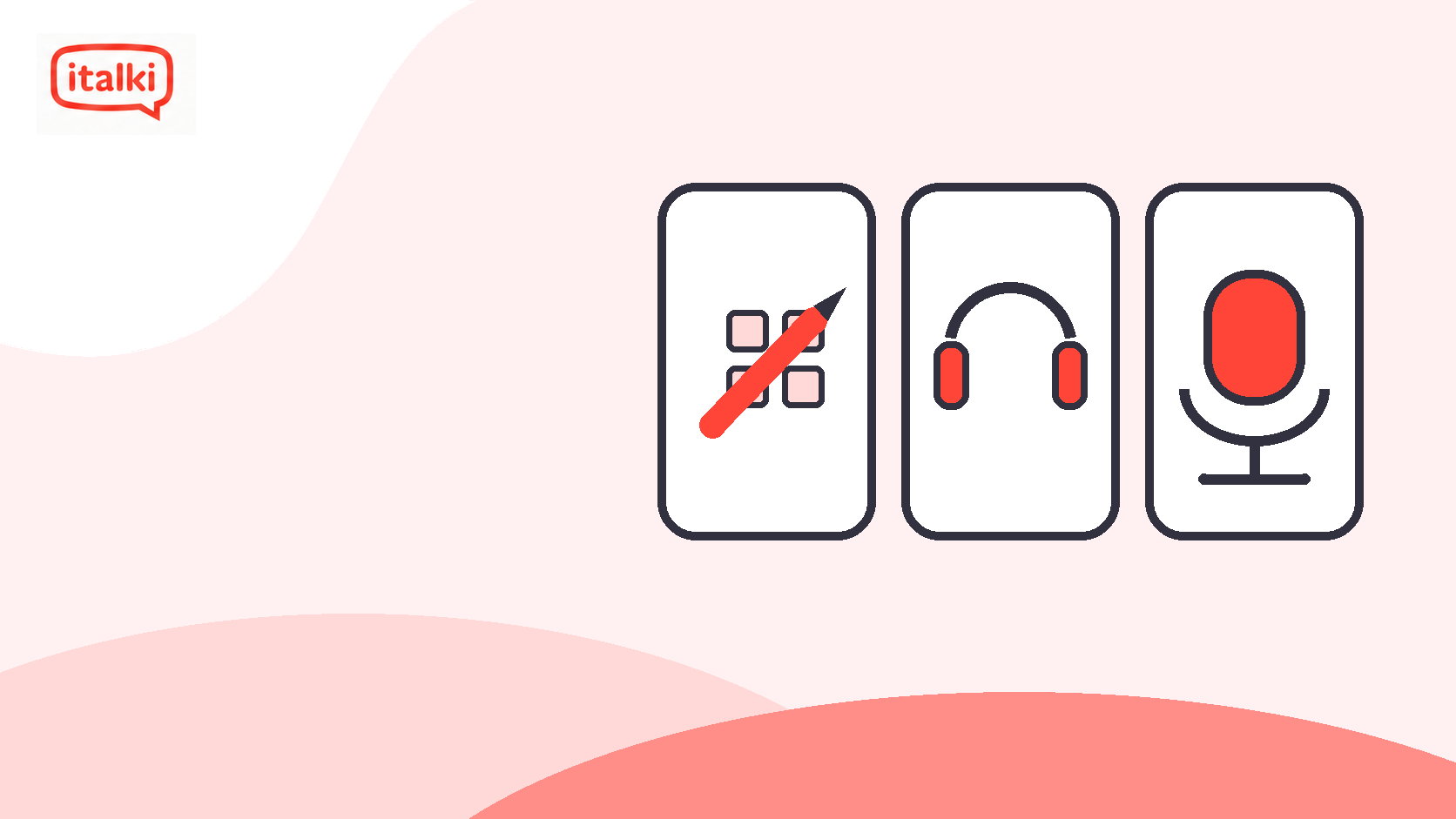
The DELE exam is structured into four parts: reading, writing, listening, and speaking, which assess different language skills through communicative tasks drawn from real-life scenarios.
Skills and task types:
- Reading: Multiple choice, gap-fills, matching exercises using articles and advertisements
- Listening: Note-taking from dialogues, interviews, and radio clips featuring Peninsular and Latin American accents
- Writing: From short emails (A1) to opinion essays and reports (C2) evaluating coherence and vocabulary
- Speaking: Photo description, topic monologue, and examiner interaction lasting 10–20 minutes
The total duration of the DELE exam varies by level, ranging from 115 minutes for the A1 level to 305 minutes for the C2 level, with scheduled breaks at official exam centres.
Grading Structure: Candidates must achieve a minimum of 30 points in each group to pass the DELE exam, which has a maximum score of 100 points. The two groups cover comprehension skills (reading + listening) and productive skills (writing skills + speaking). You need 60/100 overall to pass.
Get exam-ready with mock DELE speaking tests, writing corrections, and timed practice sessions with Spanish tutors.
Ace the DELE Exam with a Spanish Pro
Get one-on-one guidance from expert Spanish tutors who know the DELE exam inside out. Practice smart, boost your confidence, and pass with flying colors!
Book a trial lesson
How do you prepare for the DELE exam?
Strong DELE preparation combines four things: timed practice with official exam materials, skill-specific correction, consistent speaking practice, and feedback-driven review. The most effective DELE study plan is based on your weaknesses, not a generic study schedule.
Step 1: Take a timed diagnostic test
Begin with one complete practice set at your target DELE level, run under real exam conditions. Use official sample examination papers published by the Instituto Cervantes, not adapted study guides or textbook exercises. Record a speaking response. Write one timed answer to the written expression section.
Mark every error by type: vocabulary gaps, tense errors, incomplete listening comprehension, speaking responses that run short, or written answers that are grammatically correct but underdeveloped for the level. This list becomes your preparation target.
Step 2: Build skill-specific routines
Reading comprehension
DELE reading tasks test your ability to:
- understand commonly used language
- identify tone and intent
- draw conclusions from clear texts
- process information under time pressure
The best way to improve DELE reading comprehension is through repeated practice with authentic exam-style question formats. Review every incorrect answer carefully to understand why it was wrong rather than simply memorizing vocabulary.
Listening comprehension
DELE listening recordings include a range of Spanish accents from Spain and Latin America, including speakers from regions such as Mexico and Argentina.
To improve listening comprehension:
- do a Spanish listening practice with different Spanish accents
- train with interviews, podcasts, and radio clips
- complete listening tasks under timed conditions
- review transcripts after practice sessions
Consistent exposure helps you adapt to the variety of accents used on the DELE exam.
Writing skills
Writing improvement depends heavily on regular correction and revision.
At beginner levels, writing tasks may involve short emails or simple responses. At advanced levels, candidates must produce well-structured opinion essays, reports, and formal arguments using appropriate vocabulary and connectors.
A strong DELE writing routine includes:
- one timed writing task per week
- revision using examiner-style corrections
- focused work on grammar and sentence structure
- vocabulary development specific to your CEFR level
Many candidates lose points because their answers are grammatically correct but lack depth, organization, or level-appropriate language.
Speaking fluency
The speaking section is often the most difficult part of the DELE exam because it requires spontaneous communication under pressure.
The examiner may:
- ask unexpected follow-up questions
- change the direction of the conversation
- evaluate fluency and pronunciation in real time
- assess whether your language matches your claimed CEFR level
Passive study methods such as flashcards, grammar review, or recorded responses cannot fully simulate this pressure.
Working with a DELE preparation tutor gives you live speaking practice before exam day. On italki, DELE-specialist tutors run realistic oral exam simulations, correct fluency and pronunciation issues, and help you improve the specific speaking mistakes that lower scores.
For learners building baseline proficiency before beginning DELE-level study, online Spanish classes give you the structured exposure and feedback needed before intensive exam-specific preparation starts.
Step 3: Simulate real exam conditions
n the final four weeks before your exam, shift your focus from learning new material to improving execution under timed conditions.
At this stage:
- complete full mock exams regularly
- review mistakes immediately after practice
- refine pacing and time management
- practice speaking without preparation time
- use official DELE scoring criteria for self-review
Adding large grammar lists or memorizing new vocabulary in the final days is usually less effective than improving task performance and consistency.
Ace the DELE Exam with a Spanish Pro
Get one-on-one guidance from expert Spanish tutors who know the DELE exam inside out. Practice smart, boost your confidence, and pass with flying colors!
Book a trial lesson
Common DELE preparation mistakes
Many candidates study for months but still underperform because they prepare inefficiently. Common DELE exam mistakes include:
- Studying grammar without timed practice
- Ignoring speaking practice until the final weeks
- Using only textbook Spanish instead of authentic listening materials
- Memorizing vocabulary without learning how to use it in context
- Practicing reading and listening passively instead of reviewing errors
- Writing responses that are grammatically correct but too short for the level
- Focusing on new content instead of full exam simulations before test day
- Avoiding live speaking interaction with teachers or tutors
Avoiding these mistakes can significantly improve your DELE exam performance.
DELE exam dates and registration deadlines 2026
Instituto Cervantes sets DELE exam dates annually with major global sessions concentrated in May and November. Not all levels appear in every session or at every examination centre.
2026 Overview:
- February 13: A2 adults
- April 17: A1/A2/B1/B2/C1 (Spain-focused)
- May 22–23: Escolar versions and full A1–C2 adults
- July 10: A2/B1/B2/C1
- September 18: A2
- October 16–17: A2/B1/B2/C1/C2
- November 13–14: Escolar + full adult range
Registration deadlines typically close 4–8 weeks before each exam date. Always verify your next exam date and registration deadlines on the official Instituto Cervantes Exam Site.
Oral exams may occur within 1–2 days before or after the written test, with appointments confirmed about 2–3 weeks in advance.
How much does the DELE exam cost?
The registration fees for the DELE exam vary depending on the level of the test and the country where the examination is taken. Higher levels cost more due to increased marking complexity.
2026 fee examples:
- Spain: A1 approximately €112, B2 about €204, C2 around €240
- Mexico: Ranges from roughly $105 (A1) to $180 (C2)
- DELE Escolar: Often slightly lower than adult equivalents
In the UK, the official rates for the DELE exam are not fixed and can vary by level and examination center.
Registration Process:
- Create an account on the Instituto Cervantes exam portal
- Select your level and preferred date
- Choose an examination centre
- Upload valid ID (passport recommended)
- Complete payment online or via local methods
Register 8–10 weeks before your target date, as popular sessions fill quickly. Keep confirmation emails and verify your name spelling matches your ID exactly—this appears on your final diploma.
Can you take the DELE exam online?
No. The DELE exam is not available online. All candidates sit the exam in person at an official Instituto Cervantes accredited examination centre on the designated exam dates.
Registration and fee payment are completed through the Instituto Cervantes online exam portal, but the exam itself requires physical attendance. The oral expression section is conducted face-to-face by trained examiners, and this format is a core part of how the Instituto Cervantes certifies sufficient linguistic competence at each level.
How to pass the DELE exam
Passing the DELE exam requires more than knowing Spanish grammar and vocabulary. To succeed, you need to perform accurately and fluently across reading, listening, writing, and speaking tasks under real timed exam conditions.
Many candidates fail the DELE exam not because they lack knowledge, but because they prepare passively without enough live speaking practice, timed simulations, or examiner-style feedback.
italki’s DELE-specialist teachers help you prepare with targeted practice for your exact CEFR level, from A1 to C2.
Lessons can include:
- timed writing corrections
- mock DELE speaking exams
- listening comprehension drills
- pronunciation and fluency feedback
- examiner-style follow-up questions
- corrections based on official DELE scoring criteria
Because many italki Spanish teachers specialize specifically in DELE preparation, they understand the common mistakes candidates make at each level and help you correct them before exam day.
Unlike generic language apps or self-study textbooks, italki gives you live, personalized feedback and structured exam preparation tailored to your goals, strengths, and weaknesses.
Trusted by over 10 million learners worldwide, italki helps DELE candidates build a consistent study routine with personalized lessons, mock speaking exams, writing corrections, and expert feedback from experienced Spanish teachers.
Ready to pass DELE with flying colors?
Learn Spanish faster with personalized guidance from 30,000+ expert teachers trusted by millions of learners worldwide. italki’s online DELE preparation lessons are tailored to your CEFR level and focused on the exact skills tested on exam day -including reading, writing, listening, and speaking. Book a trial lesson today.
Ace the DELE Exam with a Spanish Pro
Get one-on-one guidance from expert Spanish tutors who know the DELE exam inside out. Practice smart, boost your confidence, and pass with flying colors!
Book a trial lesson
FAQ
Is the DELE exam worth it?
The DELE is worth taking if you need verifiable, permanent Spanish language certification for academic, professional, or immigration purposes. The diploma is recognized across 21 Spanish-speaking countries and accepted by universities, government agencies, and employers in Spain, Mexico, and the wider Spanish-speaking world.
How long does it take to receive DELE exam results?
Results for the DELE exam are typically published within two to three months of the exam date. High-demand sessions like May and November may take closer to three months. Access results via the Instituto Cervantes portal using your candidate code. Once confirmed as “APTO” (pass), your diploma ships to the exam centre for collection.
Can I cancel or change my DELE exam date after registering?
Policies vary by examination centre and country. Check terms before paying, as many centres only permit changes within limited windows requiring documented justification. Contact your centre early if needed-administrative fees typically apply, and some fees become non-refundable after registration deadlines pass.
Where do you take the DELE exam?
DELE exams are held at Instituto Cervantes accredited examination centres in more than 100 countries. The highest concentration of centers is in Spain, Mexico, and other Spanish-speaking regions of Latin America, but candidates in North America, Europe, Asia, and Africa all have access to a local examination centre. Candidates register at the center serving their city or region, not through a central booking system.
Which DELE level should I choose for my Spanish proficiency?
Take an online placement test or review CEFR descriptors to estimate your level. Try sample papers at two neighboring levels to gauge realistic task completion within time limits. Many exam centres offer diagnostic sessions to help candidates produce clear assessments of their readiness.
Is DELE better than SIELE for proving Spanish proficiency?
DELE offers permanent diplomas through fixed exam dates, while SIELE provides computer-based flexibility with time-limited validity. DELE remains the preferred Spanish proficiency exam by Spanish universities and public institutions requiring lifetime certification. Check your target institution’s specific requirements before choosing.
Can native or heritage speakers of Spanish take the DELE exam?
DELE targets non-native speakers, though heritage speakers may sit exams if they need official proof. Rules about eligibility vary by centre. Heritage speakers often target C1 or C2 and should still practice well structured responses using sample papers, as DELE assesses formal academic writing skills beyond everyday fluency.
Want to learn a language at italki?
Here are the best resources for you!