FrenchFrench phrases
Oui Meaning in French: Pronunciation, Usage, and Examples
Learn oui meaning in French, pronunciation, usage, alternatives, polite responses, and natural conversation examples.
Learn oui meaning in French, pronunciation, usage, alternatives, polite responses, and natural conversation examples.
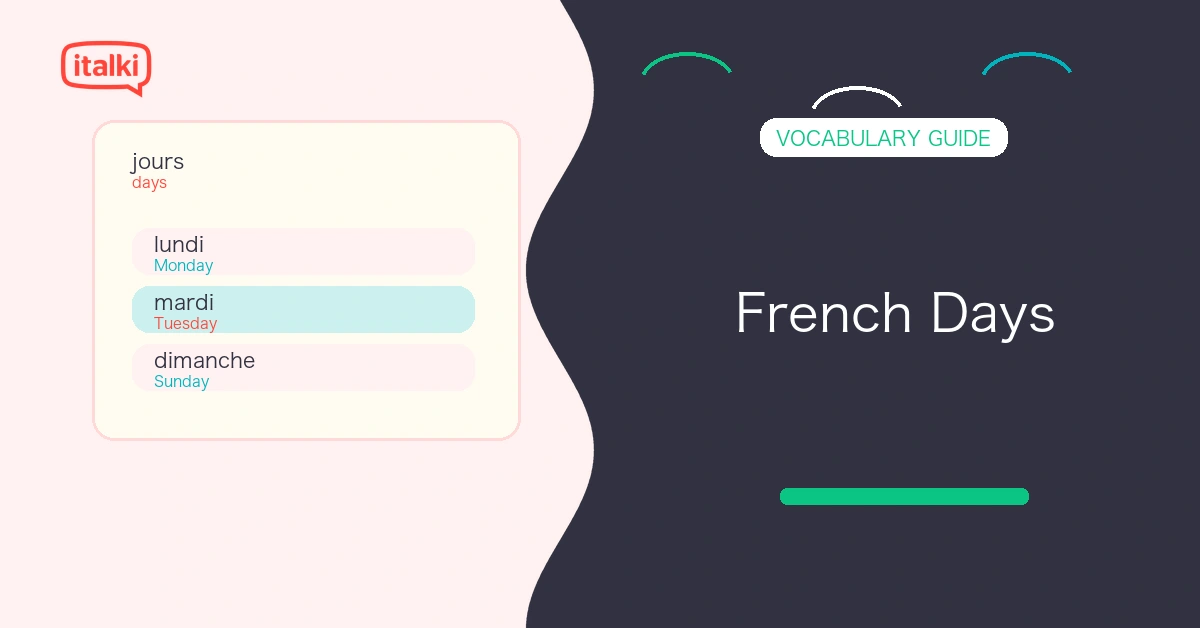
Learn days name in French, pronunciation, meanings, grammar patterns, schedule phrases, and common examples.
Find the best cartoons for learning French by level, with listening tips and ways to turn shows into practice.
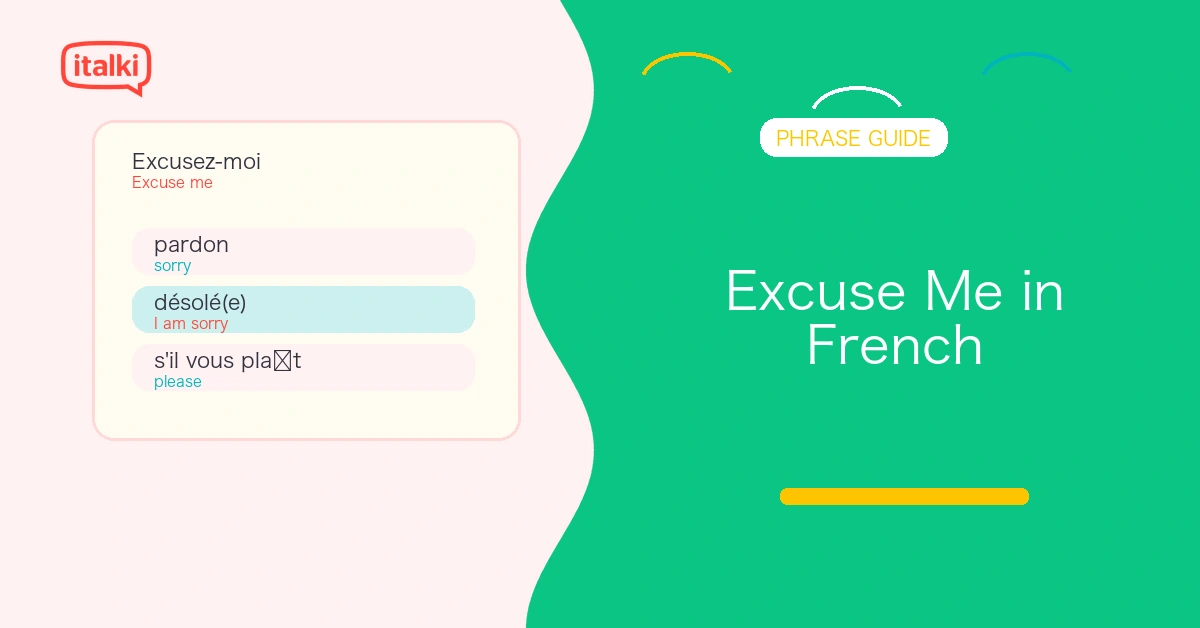
The two most common French phrases for “excuse me” are Excusez-moi (to get attention or pass by someone) and Pardon (to apologise for a minor collision or.
French does not have a dedicated greeting that precisely means “good afternoon.” Bonjour is used throughout the day.
The combined greeting Joyeux Noël et Bonne Année (Merry Christmas and Happy New Year) is the most common form in both written and spoken use.

The fuller greeting Bonne Année et Meilleurs Voeux (Happy New Year and best wishes) is common in both spoken and written contexts.
The four main irregular verbs in French are avoir (to have), être (to be), aller (to go), and faire (to do/make). Every French learner needs to know all.
French reflexive verbs use a reflexive pronoun (me, te, se, nous, vous, se) to show the subject acts on itself.
Regular -IR verbs follow a consistent pattern in the present tense using endings: -is, -is, -it, -issons, -issez, -issent.
The futur proche (immediate future) is formed with: conjugated aller (present tense) + infinitive of main verb.
Partir (to leave) is an irregular -IR verb and does not follow the regular -IR conjugation pattern.
“Could” in French is expressed primarily through two forms: the conditionnel of pouvoir and the imparfait of pouvoir.
Opening with the wrong formula, for example, using “Monsieur” when the reader is female, creates a poor first impression.
Venir (to come) is an irregular verb: the stem changes across persons in the present tense.